Owner’s manual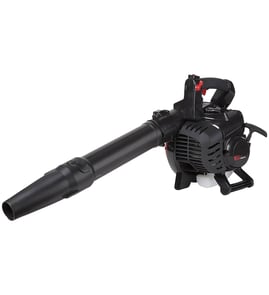

How to find Craftsman leaf blower model number?
Your Craftsman gas leaf blower’s model number is printed on a factory ID label; on model 358797251, the operator’s manual lists it as 358.797251. Check the label on the blower housing or engine casing, then match the digits to what you see in the 358797251 operator’s manual.
Where to look on the blower
On Craftsman handheld blowers like 358797251, the model/serial label is usually on a flat spot that is easy to scan and stays visible during use.
- Side of the engine or motor casing (near the starter/recoil area)
- Rear of the housing near the handle or trigger
- Near the fuel tank area (outer housing surface)
- Around the blower tube connection point
- Under dirt shields or along a seam line in the plastic housing
What the model number looks like
Craftsman outdoor power equipment model numbers are commonly shown in a dotted format.
| You might see | What it means | Use it for |
|---|---|---|
| 358.797251 | Model number format used in the manual | Identifying the correct parts list |
| 358797251 | Same model number without the dot | Searching parts diagrams and parts |
| Serial number | Unique unit identifier | Warranty and production tracking |
Tips to read the label successfully
- Wipe the area with a damp rag first; oil and dust can hide digits.
- Use a flashlight at a low angle to make stamped or faded print stand out.
- Take a photo and zoom in; it is often easier than reading it in place.
- Write down the full model number exactly as shown (including dots or dashes).
Why it matters
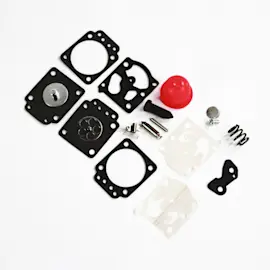
The model number locks in the correct parts diagram and maintenance specs for your exact blower. That prevents ordering the wrong fuel line, primer bulb, or carburetor parts when you are troubleshooting starting, leaking gas, or running rough.
Last updated: February 2026
What is the life expectancy of a gas leaf blower?
A gas leaf blower like the Craftsman 358797251 typically lasts about 8 to 10 years with normal homeowner use and routine maintenance; with excellent care (clean fuel system, correct 2-cycle mix, and regular tune-ups), 10+ years is common. See the maintenance schedule in the 358797251 operator's manual.
What affects lifespan the most
- Fuel quality and storage: old fuel and ethanol-related varnish shorten carburetor life.
- Correct 2-cycle fuel mix: wrong ratio can cause smoking, plug fouling, or engine wear.
- Airflow maintenance: a dirty air cleaner makes the engine run rich and hot.
- Cooling and exhaust condition: clogged screens or carbon buildup raise operating temps.
- Vibration and fasteners: loose screws and worn mounts accelerate wear.
Maintenance checklist to reach 10+ years
- Use fresh, properly mixed fuel; avoid storing mixed fuel for long periods.
- Inspect fuel lines for cracking and replace as needed (common wear item).
- Replace the in-tank fuel filter if flow seems restricted.
- Keep the air cleaner clean and the unit free of debris.
- Follow safe fueling and handling practices listed in the manual.
| Maintenance item | Typical interval | What it prevents |
|---|---|---|
| Fresh fuel and correct mix | Every use | Hard starting, piston wear |
| Fuel system inspection | Seasonally | Leaks, lean running |
| Air cleaner service | Seasonally (more in dust) | Power loss, overheating |
| General fastener check | Seasonally | Excessive vibration, damage |
Parts that commonly wear first (and shorten blower life)
If your blower starts running rough, leaking gas, or becomes hard to start, these are frequent culprits:
- Ayp lawn & garden equipment fuel line, large 530069216 (cracks, leaks, air leaks)
- Poulan lawn & garden equipment fuel line, small 530069247 (brittle lines, poor fuel delivery)
- Craftsman lawn & garden equipment engine fuel filter 530095646 (restricted fuel flow)
- Ayp lawn & garden equipment engine carburetor primer bulb 530047721 (won’t prime, fuel seepage)
Why it matters
Most “dead” gas blowers fail from fuel-system neglect, not from the engine wearing out. Keeping fuel fresh and the fuel lines, primer bulb, and filter in good shape is the most reliable way to extend the service life of your Craftsman 358797251.
Last updated: February 2026
What is the oil to gas ratio for a 2 stroke leaf blower?
For the Craftsman gas blower model 358797251, mix unleaded gasoline with 2-cycle air-cooled engine oil at a 40:1 ratio (that is 3.2 oz of oil per 1 gallon of gas). Use 2-cycle oil only; automotive or boat oil can damage the engine (see the 358797251 operator's manual).
Quick mix chart (40:1)
Use this as a fast reference when you are mixing smaller batches.
| Gasoline amount | 2-cycle oil needed (40:1) |
|---|---|
| 1 gallon | 3.2 oz |
| 1/2 gallon | 1.6 oz |
| 1 quart | 0.8 oz |
How we recommend mixing fuel
Mixing correctly helps starting, power, and long-term carburetor health.
- Use a clean, approved fuel can
- Add about half the gasoline first
- Measure and add the correct amount of 2-cycle (air-cooled) oil
- Add the remaining gasoline
- Cap and shake briefly to fully blend
- Mix only what you will use soon; fresh fuel runs best
Fuel and storage tips that prevent hard starting
Old fuel and moisture are common causes of “won’t start” and “runs rough” symptoms.
- Avoid alcohol-blended fuel sitting in the tank for long periods
- If storing 30 days or longer, drain the tank and run the engine until it stops
- Start the next season with fresh 40:1 fuel mix
- If you suspect fuel delivery issues, inspect fuel lines and the primer bulb for cracks
Parts that often get replaced when fuel problems show up
If the blower is hard to start, leaks gas, or will not stay running, these fuel-system parts are common fixes.
- Ayp lawn & garden equipment fuel line, large 530069216 (fuel supply/return line)
- Poulan lawn & garden equipment fuel line, small 530069247 (fuel line inside tank or to carburetor)
- Craftsman lawn & garden equipment engine fuel filter 530095646 (in-tank filter that can clog)
- Ayp lawn & garden equipment engine carburetor primer bulb 530047721 (helps pull fuel into the carburetor)
Why it matters
A 2-stroke engine depends on the oil mixed into the gas for lubrication. Too little oil can score the piston and cylinder; too much oil can cause heavy smoke, fouled spark plugs, and poor performance.
Last updated: February 2026
Why does my Craftsman leaf blower keep dying?
On Craftsman gas blower model 358797251, repeated stalling is usually caused by a fuel delivery problem (old fuel, clogged fuel filter, cracked fuel lines) or an out-of-adjustment carburetor. Start by confirming fresh 40:1 fuel mix and then inspect the filter, lines, and primer system using the 358797251 operator's manual.
Quick checks that fix most “starts then dies” problems
- Drain old fuel; refill with fresh unleaded gas mixed 40:1 with 2-cycle air-cooled engine oil (3.2 oz oil per 1 gallon gas).
- Make sure the fuel cap is venting; a blocked vent can starve the carburetor.
- Inspect the primer bulb for cracks or stiffness; a leaking bulb pulls air instead of fuel.
- Check fuel lines for soft spots, splits, or loose connections at the tank and carburetor.
- Replace a restricted in-tank fuel filter.
- Clean the air intake and keep vents and tubes free of debris.
Parts that commonly cause stalling on this model
If the blower runs briefly and quits, these parts are the most common culprits:
| Symptom | Most likely cause | Part to consider |
|---|---|---|
| Starts, then dies when you squeeze the throttle | Fuel starvation | Engine fuel filter 530095646 |
| Primer won’t fill or feels collapsed | Air leak in primer circuit | Engine carburetor primer bulb 530047721 |
| Runs only with choke partly on | Air leak or restricted fuel flow | Fuel line, small 530069247 and fuel line, large 530069216 |
Why fuel and storage matter
This 2-cycle engine is sensitive to fuel quality. The manual notes that alcohol-blended fuels can attract moisture and form acids during storage, which can damage the fuel system. For storage of 30 days or longer, empty the tank and run the engine until the fuel lines and carburetor are empty.
When to move on to carburetor service
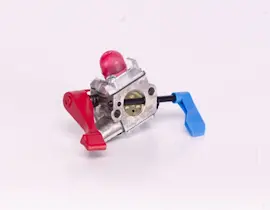
If you have fresh fuel, good lines, a good primer bulb, and a clean filter but it still dies, the carburetor may need rebuilding or replacement. Follow the adjustment and service guidance in the 358797251 operator's manual, and use the symptom steps in leaf blower running rough to narrow it down.
Last updated: February 2026