Owner’s manual
 Error Codes



How to identify an IKEA fridge?
To identify your Ikea refrigerator, we use the model number from the rating plate; on the Ikea ISC23CDEXY01 side-by-side refrigerator, it’s typically inside the fresh food compartment on a side wall, ceiling area, or near the crisper (salad) drawers. For model-specific label locations and diagrams, check the owner's manual.
Check these common spots first (use a flashlight and look for a sticker or metal plate):
- Inside the refrigerator section on the left or right interior wall
- On the ceiling area inside the refrigerator compartment
- Behind or beside the crisper (salad) drawers after you pull them out
- Along the door frame area when the refrigerator door is open
- On the back exterior panel near the lower area (less common, but possible)
Record the information exactly as shown; it helps us match the correct refrigerator parts and diagrams for your unit.
| What to capture | Example format | Why it matters |
|---|---|---|
| Model number | ISC23CDEXY01 | Ensures correct parts fit |
| Serial number | Letters and numbers | Helps identify production variation |
| Type/engineering code (if listed) | Short code | Can affect part compatibility |
These details prevent ordering the wrong part for your Ikea side-by-side refrigerator:
- Copy characters exactly (watch for O vs 0, I vs 1)
- Take a clear photo of the label before it fades or smears
- Use the full model number, not just the brand name “Ikea”
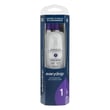
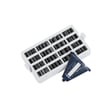
- If you are troubleshooting odors or airflow, confirm the model before buying items like the refrigerator air filter W10311524
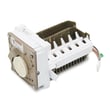
Ikea refrigerators are often built by major manufacturers under Ikea branding, so the model number is the only reliable way to match the correct components (for example, an ice maker assembly, water inlet valve, or electronic control board) to your exact refrigerator.
Last updated: February 2026
How to reset an IKEA freezer?
For an Ikea ISC23CDEXY01 side-by-side refrigerator, the most reliable “reset” is a power reset: turn the unit off by unplugging it (or switching the circuit breaker off), wait about 5 minutes, then restore power and allow the freezer time to stabilize temperatures.
- Unplug the refrigerator from the wall outlet, or switch the dedicated breaker off.
- Wait 5 minutes (this lets the control board fully power down).
- Restore power.
- Set the freezer to your normal setting (most homes target 0°F).
- Wait 24 hours for temperatures to fully recover before judging results.
A reset only clears minor control glitches; it will not fix airflow, defrost, or sealed-system problems. Check these common causes next:
- Make sure vents are not blocked by food packages.
- Listen for the evaporator fan; no airflow often points to a fan issue.
- Look for heavy frost on the back freezer panel (defrost problem).
- Confirm the doors close tightly and gaskets seal all the way around.
- Clean dust from the condenser area to improve heat release.
If troubleshooting points to a specific failure, these model-matched parts are commonly involved:
| Symptom you notice | What it often indicates | Example model-matched part |
|---|---|---|
| Warm freezer, weak airflow | Evaporator fan not running | Refrigerator evaporator fan motor WP2315549 |
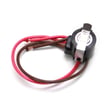
| Heavy frost buildup, warming temps | Defrost system not clearing ice | Refrigerator defrost bi-metal WPW10225581 |
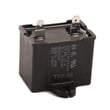
| Compressor will not start, clicking | Start components or compressor circuit issue | Refrigerator run capacitor WPW10662129 |
A power reset is a fast first step, but temperature problems usually come from airflow restrictions, defrost ice buildup, or a cooling-system component. Checking those areas early helps prevent food spoilage and reduces run time and energy use.
For model-specific operating details (controls, temperature settings, and recommended wait times), follow the ISC23CDEXY01 owner's manual.
Last updated: February 2026
What are the most commonly replaced parts in a refrigerator?
In an Ikea side-by-side refrigerator like model ISC23CDEXY01, the most commonly replaced parts are the ones that handle airflow, defrosting, water and ice, and door sealing. These parts wear out from normal use, mineral buildup, temperature cycling, and door openings; they are also the first places we check when cooling or ice issues start.
- Water and ice system parts: water inlet valve, ice maker, ice bin, dispenser couplers and seals
- Airflow parts: evaporator fan motor and fan blade (keeps cold air moving)
- Defrost parts: defrost bi-metal/thermostat (prevents frost buildup that blocks airflow)
- Controls and electrical: electronic control board (can cause erratic temps, no cooling, or no defrost)
- Door sealing and alignment: door gaskets and hinge bushings (warm air leaks cause frost and poor cooling)
- Odor control: air filter (helps reduce food odors)
Here are examples of common, high-impact parts available for this model:
| Symptom you notice | Part category to check first | Example part for ISC23CDEXY01 |
|---|---|---|
| No ice or slow ice production | Water and ice | Refrigerator ice maker assembly WPW10251076 |
| Water dispenser weak or not dispensing | Water supply | Refrigerator water inlet valve WPW10238100 |
| Warm fridge or uneven temps | Airflow | Refrigerator evaporator fan motor WP2315549 |
| Frost buildup, warm temps, fan noise | Defrost/airflow | Refrigerator defrost bi-metal WPW10225581 |
| Odors in fresh food section | Odor control | Refrigerator air filter W10311524 |
- Confirm temperature settings are at normal targets (about 37°F fresh food, 0°F freezer).
- Make sure vents inside the compartments are not blocked by food packages.
- Listen for the evaporator fan; it typically runs when the compressor is running.
- Inspect door gaskets for gaps, tears, or areas that do not seal flat.
- For ice and water issues, verify the household shutoff valve is fully open and the supply line is not kinked.
Replacing the right “high-wear” part first (fan, defrost component, inlet valve, gasket, or control) restores cooling efficiency and prevents secondary problems like heavy frost, water leaks, or compressor overwork.
For model-specific diagrams, part locations, and maintenance steps, use the ISC23CDEXY01 owner's manual.
Last updated: February 2026
What is the disadvantage of a side-by-side fridge?
A key disadvantage of a side-by-side refrigerator like the Ikea ISC23CDEXY01 is the narrow, tall compartment layout; wide items (pizza boxes, party trays) fit poorly, and you often have to bend to reach fresh-food items stored low. See the ISC23CDEXY01 owner's manual for your model’s storage and airflow guidance.
- Narrow shelves can limit wide platters and large containers.
- More bending for produce and fresh items stored in lower refrigerator bins.
- Freezer organization can feel “stacked” (items get lost front-to-back).
- Door bins can crowd interior space when doors are loaded with bottles.
- Temperature can vary more top-to-bottom if vents are blocked by food.
- Keep the air vents clear so cold air circulates evenly.
- Store wide items on adjustable shelves or split them into smaller containers.
- Use bins to group categories (snacks, deli, breakfast) so items do not disappear.
- Set the refrigerator to about 37°F and the freezer to 0°F, then fine-tune after 24 hours.
- Replace odor-control parts on schedule; a fresh air filter helps the narrow compartment stay pleasant (see refrigerator air filter W10311524).
| Feature | Side-by-side | French door |
|---|---|---|
| Fits wide trays | Lower | Higher |
| Eye-level access to fresh food | Medium | Higher |
| Freezer access | Full-height | Drawer-style |
| Door swing clearance | Often better | Often needs more |
Most “side-by-side frustration” comes from space shape, not total capacity. Once you organize around narrow shelves and keep airflow paths open, cooling performance and food visibility improve, and you waste less time searching for items.
Last updated: February 2026