

How to force a Kenmore Elite washer to drain?
To force-drain a Kenmore washer model 11092588210, we remove power, then manually empty water through the drain system and clear the most common blockage points (hose and pump). This safely gets the tub empty so you can restart or diagnose a no-drain problem.
- Unplug the washer (or switch off the breaker) to prevent the pump from starting unexpectedly.
- Bail out the tub with a cup or small container into a bucket if the tub is full.
- Lower the drain hose into a shallow pan or bucket (keep it below tub water level) to let gravity siphon water out.
- Check the standpipe or laundry sink for a clog; a blocked standpipe can look like a washer drain failure.
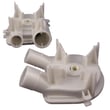
- If water will not siphon, inspect the pump area for a clog and consider replacing the drain pump if it is seized or leaking: washer drain pump WP3363394.
- Kinked, crushed, or frozen drain hose
- Coin, sock, or lint jam at the pump inlet
- Suds lock from too much detergent (run a rinse and spin after draining)
- Loose pump wiring or a failed lid switch preventing drain/spin
| What happens | Most likely cause | What we do next |
|---|---|---|
| Hums but no water moves | Pump jammed or seized | Check for blockage; replace pump if needed |
| Drains slowly | Partial clog in hose/pump/standpipe | Clear restriction; verify strong flow |
| Won’t drain and won’t spin | Lid switch or drive issue | Test lid switch; then check drive components |
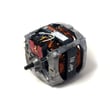
Standing water can cause odor, overflow risk, and can keep the washer from advancing to spin. Draining first also makes it safer to access components like the pump, coupling, and clutch.
Last updated: February 2026
How to read Kenmore washer model numbers?
Kenmore washer model numbers are structured so the first three digits identify the manufacturer, the next group identifies the base design, and the remaining digits show feature or production variations. For your Kenmore washer model 11092588210, the 110 prefix is the key to matching the correct parts.
Most Kenmore washer model numbers follow this pattern:
- Prefix (first 3 digits): manufacturer code (example: 110)
- Middle digits: base model platform or series
- Ending digits: version details such as color, feature set, or engineering changes
| Section | Example from 11092588210 | What it tells us |
|---|---|---|
| Manufacturer prefix | 110 | Who built the washer for Kenmore |
| Base model digits | 92588 | Core design family used for parts matching |
| Variation digits | 210 | Specific revision or configuration |
On most Kenmore top-load washers, we typically see the model/serial tag in one of these spots:
- Under the lid, around the tub opening
- On the underside of the lid
- On the back panel of the cabinet
- Inside the control console area (less common)
Kenmore washers can look identical but use different internal parts (agitator components, drive system, drain pump, timer). Using the full model number helps us match the exact fit.
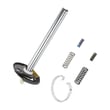
If you are troubleshooting agitation or a weak wash action on model 11092588210, common wear items include the agitator dog 80040 and agitator cam 285748.
- Use the full model number, not just the 110 prefix
- Match letters and digits exactly (no spaces)
- If your washer has a second tag with a “type” or “series,” keep that info with your model number
- When symptoms point to a specific system (drain, spin, agitate), confirm the part by function before ordering
Last updated: February 2026
Is it worth repairing a Kenmore washing machine?
Yes, repairing a Kenmore washer is worth it when the fix restores reliable washing and spinning for far less than replacing the machine. For Kenmore model 11092588210, many common failures involve serviceable parts like the drain pump, motor coupling, or lid switch.
Use this quick rule: repair it when the total repair cost is under about 50% of the price of a comparable new washer and the tub and cabinet are in good shape.
Check these cost drivers first:
- What failed (wear part vs. major drive system)
- How many symptoms you have (one issue vs. multiple)
- Leak history (repeated leaks often lead to bigger repairs)
- Noise and vibration (can indicate suspension or gear case wear)
- Downtime (parts availability and labor time)
These are frequent, straightforward fixes on many Kenmore top-load designs:
- Won’t drain or leaves water behind: washer drain pump WP3363394
- Agitates poorly or not at all: agitator dog 80040
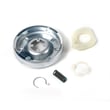
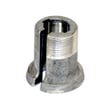
- Won’t spin or makes a grinding/rattling drive noise: coupling 285753A
- Won’t start or stops when the lid opens: switch 285671
Bigger drive and tub-related repairs can still be worth it, but they push cost higher:
| Repair area | Typical impact | When it’s still worth it |
|---|---|---|
| Drive system (transmission/gear case) | Higher parts and labor | Washer is otherwise quiet, no leaks, good basket/tub condition |
| Tub and seal area | Can involve teardown | Leak is isolated and caught early |
| Multiple failures at once | Costs add up fast | You can address all issues in one service visit |
A well-chosen repair can extend the life of a solid Kenmore washer and avoid the learning curve and installation hassles of a replacement. Targeting the root cause (drain, spin, agitation, or lid safety circuit) prevents repeat breakdowns.
Last updated: February 2026
What are the signs of a failing washer valve?
A failing water inlet valve on Kenmore washer model 11092588210 typically shows up as slow filling, no filling, or filling with only hot or only cold water. You may also hear a buzzing or humming during the fill portion of the cycle because the valve is energized but not opening correctly.
- Washer fills very slowly or times out before reaching the right water level
- No water enters even though the cycle is set to wash and the lid is closed
- Only hot or only cold water flows (temperature selection does not match)
- Intermittent filling (works sometimes, fails other times)
- Buzzing or humming sound during fill with little or no water flow
- Water continues to seep in after the washer is off (valve not sealing)
- Confirm both supply faucets are fully open.
- Check for kinked, crushed, or frozen fill hoses.
- Clean the inlet screen filters at the valve ports (sediment can restrict flow).
- Verify household water pressure is strong at both hoses (hot and cold).
- If the washer overfills or never stops filling, suspect a pressure switch or air dome hose issue in addition to the valve.
| Symptom | Most likely cause | What we recommend |
|---|---|---|
| Slow fill on both temps | Clogged inlet screens or weak supply | Clean screens; verify pressure |
| Only hot or only cold works | One solenoid side failed or blocked | Replace the valve assembly |
| Buzzing with no water | Valve coil energized but stuck/blocked | Check screens; replace valve if clear |
| Water seeps in when off | Valve not sealing | Replace the valve assembly |
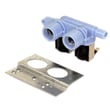
If your checks confirm the valve is the issue, the correct replacement for this model is the inlet valve 285805.
A weak or leaking inlet valve can cause long cycle times, poor wash performance, temperature problems, or unwanted water entering the tub. Catching it early helps prevent overflow risks and reduces wear on the timer and drive system.
Last updated: February 2026
What is the life expectancy of a Kenmore washer?
A Kenmore washer typically lasts 10 to 12 years with normal household use and basic maintenance. For Kenmore model 11092588210, keeping the drive system, drain path, and suspension in good shape is what most often determines whether you reach (or exceed) that range.
Most top-load Kenmore washers fail early due to wear in a few high-stress areas:
- Overloading and frequent heavy loads (blankets, jeans) that strain the drive and suspension
- Poor draining (coins, lint, small socks) that overworks the pump
- Unbalanced loads that increase vibration and tub wear
- Hard water and excess detergent that leave residue and increase friction
- Delayed repairs after early symptoms (burning smell, slipping, loud spin)
If your washer agitates weakly, won’t spin reliably, or won’t drain, these are common wear items for this model:
- Coupling 285753A (motor-to-transmission drive connection)
- Washer drain pump WP3363394 (moves water out during drain)
- Clutch 285785 (helps the basket reach and hold spin speed)
- Washer suspension spring WP63907 (controls tub movement and balance)
| Symptom | Most likely area | Example part for this model |
|---|---|---|
| Agitates but won’t spin | Drive connection or clutch | Coupling, clutch |
| Hums but won’t drain | Drain pump or blockage | Drain pump |
| Bangs or walks in spin | Suspension/balance | Suspension spring |
| Burning rubber smell | Slipping drive components | Coupling, clutch |
A washer that is close to the 10 to 12 year mark can still be a good repair candidate when the issue is a single wear part (like a coupling or pump). Catching problems early prevents secondary damage to the gear case, basket drive, and tub components.
Last updated: February 2026