Owner’s manual
 Error Codes


Why is my GE side by side freezer freezing up?
On the GE PSC23NSWASS, freezer frost or ice buildup usually happens when moist air keeps getting into the freezer (door not sealing, door left ajar, or frequent openings) or when the defrost system is not clearing frost off the evaporator. Start by confirming the freezer is set near 0°F and the door closes tightly; then check for signs of a defrost problem. See the PSC23NSWASS owner's manual for control settings and troubleshooting.
- Make sure the freezer temperature is set around 0°F; allow 24 hours for temperatures to stabilize after changes.
- Check that no food packages or bins are preventing the freezer door from closing fully.
- Inspect the door gasket for gaps, folds, or areas that are not sealing.
- Reduce long door openings; humid air quickly turns into frost on the evaporator.
- Look for heavy frost on the back freezer panel; that often points to a defrost issue.
| What you notice | Likely cause | What we do next |
|---|---|---|
| Frost mainly near the door or on shelves | Door not sealing or door left open | Re-seat items, clean gasket, confirm door alignment |
| Thick frost behind rear freezer panel | Defrost system problem | Test heater, thermostat, and related wiring |
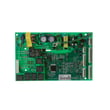
| Freezer temp swings, odd behavior | Sensor or control issue | Check sensor readings and control board outputs |
If you see heavy frost behind the rear panel or the freezer warms between defrosts, these model-matched parts are common suspects:
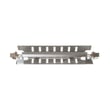
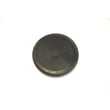
- Refrigerator defrost heater WR51X10055 (melts frost off the evaporator during defrost)
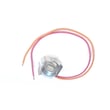
- Refrigerator defrost bi-metal thermostat WR50X10069 (helps control/limit defrost heat)
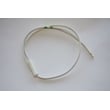
- GE profile refrigerator temperature sensor WR55X10025 (reports temperature to the control)
When frost builds up on the evaporator, airflow drops. That can cause warmer freezer temps, soft ice cream, poor ice production, and the refrigerator section warming because cold air cannot circulate properly.
Last updated: February 2026
How to reset GE side by side refrigerator?
To reset your GE PSC23NSWASS side-by-side refrigerator, we recommend a simple power reset first: unplug the refrigerator (or turn off the breaker) for about 2 to 5 minutes, then restore power. This clears minor control glitches and restarts normal cooling cycles; see the PSC23NSWASS owner's manual for control-specific features like TurboCool.
- Power cycle reset: Unplug for 2 to 5 minutes, then plug back in.
- Breaker reset: Turn the refrigerator circuit breaker OFF, wait 2 to 5 minutes, then turn it ON.
- Control check: Make sure the temperature controls are not set to OFF after power is restored.
- Wait for normal operation: After restoring power, allow time for the compressor and fans to stabilize.
These checks solve the most common “won’t run” or “not responding” complaints after a reset.
- Defrost cycle: If the refrigerator is in a defrost cycle, it may not run briefly; wait about 30 minutes.
- Showroom mode: If the unit is in showroom mode, unplugging and plugging back in can return it to normal operation.
- Door left open: Close doors fully; frequent openings can make the compressor run longer and can trigger beeping.
- Outlet power: If lights and controls are dead, check the house fuse or breaker.
| What you notice | What it usually means | What to do |
|---|---|---|
| Compressor starts, then cycles | Normal restart behavior | Let it run and stabilize |
| Longer run times | Normal after warm door openings or loading food | Allow up to 24 hours for full cool-down |
| Beeping | Door open | Close door, check for packages blocking it |
A reset is a safe first step because many cooling and dispenser issues are caused by temporary control logic glitches or a power interruption. Resetting also helps you confirm whether the problem is electrical (no power) or operational (defrost, door, settings).
If you’re resetting due to warm temperatures, also check airflow and frost buildup; a failed defrost component such as the refrigerator defrost heater WR51X10055 can cause cooling problems that a reset will not fix.
Last updated: February 2026
Are GE side by side refrigerators good?
GE side-by-side refrigerators like model PSC23NSWASS are a solid, dependable choice for most homes; they are designed for consistent cooling, convenient freezer access, and long-term food preservation when they are installed correctly and maintained (cleaning, airflow, and water system care). See the PSC23NSWASS owner's manual for model-specific use and care details.
A “good” GE side-by-side typically delivers these day-to-day benefits:
- Stable temperatures in both compartments when doors seal well and airflow is clear
- Convenient freezer organization (vertical shelves and bins)
- Built-in water and ice features (common on this style)
- Normal operating sounds that can differ from older refrigerators (hums, whooshes, clicks)
- Serviceable design with replaceable parts such as sensors, fans, and defrost components
| Category | Typical strength | Typical tradeoff |
|---|---|---|
| Freezer access | Easy access to frozen foods | Narrower shelves for wide items |
| Fresh food storage | Good visibility and organization | Less full-width shelf space than some French-door models |
| Water and ice | Convenient dispensing | More components to maintain (filter, dispenser parts) |
| Noise | Modern systems can be efficient | Sounds may be more noticeable than older units |
We see the best reliability when these basics are followed:
- Clean correctly: avoid hot water on cold glass shelves; do not put plastic refrigerator parts in the dishwasher
- Move it safely: pull the refrigerator straight out to avoid floor damage; push straight back in
- Protect the water line: leave extra slack so the unit can move without stressing the supply line
- Vacation prep: for long absences, unplug, clean with a baking soda solution, leave doors open, and turn off the icemaker and water supply
- Replace wear items: change the water filter on schedule and address icing or airflow issues early
Most “bad refrigerator” complaints come from preventable issues: restricted airflow, dirty components, water line problems, or ignored defrost symptoms. Staying ahead of those items helps your GE PSC23NSWASS cool evenly, run efficiently, and avoid nuisance problems.
If you are comparing repair vs. replace, checking common service parts can help you gauge cost and effort; for example, a failed temperature sensor can affect cooling accuracy (see GE profile refrigerator temperature sensor WR55X10025). You can also search parts by model on Sears PartsDirect.
Last updated: February 2026
What is the most common problem with a GE refrigerator?
The most common GE refrigerator complaint is not cooling properly. On your GE PSC23NSWASS side-by-side, the usual causes are airflow or defrost issues (frosted evaporator), a failed fan, or a temperature-sensing/control problem; our PSC23NSWASS owner's manual helps you confirm settings and safe checks.
- Fresh food warm, freezer cold: restricted airflow or a stuck air damper
- Both sections warm: condenser airflow problem, compressor/start issue, or control problem
- Frost buildup on back wall of freezer: defrost system problem
- Ice maker buzzing or no ice: water supply off, filter restriction, or ice maker switched on with no water connected
- Small or hollow ice cubes: clogged water filter
- Verify temperature controls are set correctly (avoid setting controls to 0/Off for troubleshooting).
- Make sure doors fully close and nothing is holding a door open.
- If ice is affected, confirm the water supply is on and the ice maker is on only when water is connected.
- Look for heavy frost in the freezer that could block airflow.
- Unplug the refrigerator before any inspection or repair.
| Symptom | Likely system | Example part on this model |
|---|---|---|
| Frosted evaporator cover, warming temps | Defrost system | Refrigerator defrost heater WR51X10055 or refrigerator defrost bi-metal thermostat WR50X10069 |
| Warm temps, weak airflow in freezer | Evaporator airflow | Refrigerator evaporator motor WR60X10307 |
| Temps swing, inconsistent cooling | Sensing/control | GE profile refrigerator temperature sensor WR55X10025 |
When cooling is weak, food safety and ice production are affected quickly. Catching airflow or defrost problems early can prevent long run times, excess frost, and temperature swings that stress the sealed system.
You can order PSC23NSWASS replacement parts from the parts list for this model, or search by model number on Sears PartsDirect.
Last updated: February 2026