Owner’s manual
 Error Codes

How do you reset the flow sensor on a LG dryer?
On the LG DLG7201WE dryer, the Flow Sense (duct blockage) alert usually clears only after you fix the airflow restriction; then you can reset the control by unplugging the dryer (or switching off the breaker) for about 5 minutes and restoring power. See the venting and duct-check steps in the DLG7201WE owner’s manual.
Reset steps we recommend (DLG7201WE)
- Turn the dryer off.
- Unplug the power cord (or turn off the circuit breaker).
- Wait 5 minutes.
- Restore power.
- Run a short cycle and confirm airflow at the outside vent hood.
- If your model offers an installation test/duct check, run it to verify the vent system.
Fix the cause first: airflow checks
Flow Sense is designed to warn about restricted exhaust airflow, not just a “bad sensor.” Before you expect the alert to stay off, we recommend:
- Clean the lint screen before every load; replace it if it is torn or warped.
- Inspect and clean the lint screen housing and lint screen cover area.
- Check the entire vent run for crushed duct, long runs, or too many elbows.
- Make sure the outside vent hood opens fully and is not blocked.
- Use 4-inch rigid or semi-rigid metal duct where possible; avoid plastic or thin foil.
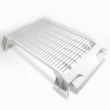
If your lint screen is damaged or not sealing well, replacing it can improve airflow; use the compatible dryer lint screen by LG 5231EL1001C.
Quick symptom guide
| What you notice | Most likely issue | What to do next |
|---|---|---|
| Long dry times + Flow Sense alert | Vent restriction | Clean/shorten vent, confirm strong exhaust outside |
| Dryer runs but airflow is weak | Lint buildup or crushed duct | Inspect behind dryer, check hood damper |
| Alert returns quickly after reset | Hidden blockage or blower issue | Re-check duct path; inspect blower area if needed |
Why it matters
Restricted venting can cause long dry times, overheating, and repeated shutdowns. Getting the venting right helps the DLG7201WE dry faster and reduces wear on heating and airflow components.
Last updated: January 2026
Are LG gas dryers any good?
LG gas dryers are generally a good choice for most households, and the LG DLG7201WE is designed with features that support strong everyday performance (sensor drying, airflow monitoring, and a large-capacity drum). Long-term satisfaction usually comes down to correct venting, routine lint cleaning, and proper cycle selection; see the DLG7201WE owner’s manual.
What “good” typically means for the DLG7201WE
When we evaluate gas dryers like the LG DLG7201WE, we focus on real-world results: dry times, even drying, noise, and reliability of key systems (heat, airflow, and drum support).
- Drying performance: Gas heat typically recovers quickly between tumbles.
- Efficiency: Sensor cycles can reduce over-drying when airflow is correct.
- Convenience features: LG EasyLoad-style door design is included on some versions in this series.
- Maintenance needs: Lint filter and venting upkeep matter more than most people expect.
- Repairability: Common wear items (rollers, belt, thermostats) are replaceable.
Common pros and cons we see with LG gas dryers
| Area | What owners often like | What can cause complaints |
|---|---|---|
| Drying results | Fast heat and good capacity | Sensor cycles may stop early if airflow is restricted |
| Noise | Smooth tumbling when drum support parts are healthy | Thumping/squealing when rollers or belt wear |
| Ownership | Modern controls and features | Extra maintenance if lint builds up in venting |
Why it matters (and how to get the best results)
A gas dryer can seem “not that good” when the real issue is restricted exhaust airflow. The DLG7201WE includes duct blockage sensing, but you still need a clean lint screen and a properly sized, short vent run.
Quick checks that improve performance
- Clean the lint screen before every load.
- Avoid crushing or kinking the 4-inch vent duct.
- Keep the vent run short with minimal elbows.
- Do not overload; bulky loads need room to tumble.
- Use timed dry to compare results if sensor dry seems inconsistent.
Parts that commonly affect performance (when symptoms show up)
If the dryer starts taking longer to dry or begins making noise, these model-compatible parts are often involved:
- Dryer lint screen by LG 5231EL1001C (airflow through the lint filter area)
- Dryer drum support roller 4581EL2002L (thumping or rumbling)
- LG dryer idler pulley 4561EL3002A (squealing, belt tension issues)
- LG dryer burner igniter 5318EL3001A (no-heat or intermittent heat symptoms)
Last updated: January 2026
Why is my LG steam dryer not drying?
When an LG DLG7201WE steam dryer runs but clothes stay damp, the most common cause is restricted airflow (lint screen, blower area, or vent duct). Less often, the dryer is not heating correctly due to a failed thermostat or gas ignition component. Use the checks below to pinpoint the issue.
Quick checks (most fixes)
- Clean the lint screen before every load; wash it with warm water if you use dryer sheets (film can block airflow). If the screen is torn or won’t seat correctly, replace the dryer lint screen by LG 5231EL1001C.
- Confirm strong airflow at the outside vent hood while the dryer runs; weak flow usually means a crushed hose, lint-packed duct, or blocked vent hood.
- Make sure the load is not overfilled; tightly packed loads dry slowly even when the dryer heats.
- Use the right cycle; sensor cycles can end early if the moisture sensor bars are coated with residue.
- If you see a duct restriction indicator, treat it as an airflow problem first.
Model-specific airflow details for DLG7201WE
Your DLG7201WE uses a 4-inch vent system and is designed for short, smooth duct runs. The manual also notes that long duct runs and extra elbows reduce drying performance. For venting limits, duct routing tips, and the built-in duct check, follow the DLG7201WE owner’s manual.
Airflow vs heat symptoms
| What you notice | Most likely cause | What to check first |
|---|---|---|
| Clothes warm but still damp, long dry times | Vent restriction | Lint screen, vent hose, wall duct, outside hood |
| Clothes cool, no heat | Heating problem | Gas ignition, thermostats, airflow (still check) |
| Dries small loads, struggles with towels | Airflow or overloading | Venting, cycle selection, load size |
If the dryer tumbles but does not heat (gas model)
DLG7201WE is a gas dryer model family; if there’s no heat, common suspects include:
- Failed igniter: LG dryer burner igniter 5318EL3001A
- Failed radiant sensor: dryer radiant sensor 6501EL3001A
- Overheat protection opening due to poor airflow: dryer high-limit thermostat AGM30045804 or dryer blower thermostat 6931EL3002M
Why it matters
Drying depends on two things working together: heat and airflow. Even with a good burner, a restricted vent traps moisture and makes cycles run long, wastes energy, and can trigger temperature limits that shut heat down.
Last updated: January 2026
What is the most common problem with LG dryers?
For the LG DLG7201WE dryer, the most common issue we see is clothes taking too long to dry because airflow is restricted (lint screen buildup, crushed or long vent runs, or a blocked exterior vent hood). The next most common complaint is noise or vibration from normal wear in drum support components.
Quick checks that fix many “not drying” complaints
- Clean the lint screen before every load; replace a torn or warped screen such as the dryer lint screen by LG 5231EL1001C.
- Inspect the lint screen housing and grille for lint mats; clean gently and confirm the cover closes fully.
- Check the vent behind the dryer for kinks, crushing, or loose connections.
- Confirm the outside vent hood opens freely and is not blocked.
- Run the built-in duct check guidance in the DLG7201WE owner’s manual (often labeled as an installation test or duct check).
Common symptoms and the parts most often involved
If airflow is good but performance or noise continues, these are typical wear points on LG dryers like the DLG7201WE:
| Symptom | What it often points to | Example model-compatible part to inspect |
|---|---|---|
| Long dry times, hot cabinet | Vent restriction or overheating protection opening | Dryer high-limit thermostat AGM30045804 |
| Rattling, thumping, rumbling | Drum support wear | Dryer drum support roller 4581EL2002L |
| Squealing or belt slip | Idler pulley wear | LG dryer idler pulley 4561EL3002A |
| Loud humming, weak airflow | Blower wheel issue or lint buildup | Dryer blower wheel 5835EL1002A |
Why it matters
Restricted airflow can cause longer cycles, higher energy use, and overheating shutdowns. Catching airflow problems early also helps protect key components like thermostats, the blower housing, and drum support parts.
Helpful related DIY content
Last updated: January 2026