Installation guide
 Owner’s manual
 Error Codes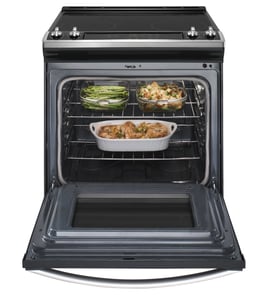
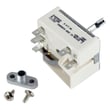


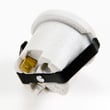
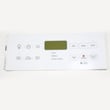
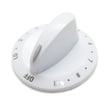
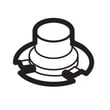
How to change Kenmore spark electrode igniter?
On the Kenmore 79046584500 electric range, there is no spark electrode igniter to replace; spark electrodes are used on gas burners. If you are troubleshooting a burner that will not heat, focus on the surface element, receptacle, or control switch, and follow the safety steps in the 79046584500 installation guide.
We use this quick check to avoid replacing the wrong part:
- Electric range: surface elements glow red or heat under a smooth glass top; no clicking igniter
- Gas range: burner has a flame and often makes a rapid clicking sound during ignition
- Model tag should read 79046584500 and indicate electric range
If a surface burner is not heating, these are the most common causes:
- Surface element is open or damaged (swap with a similar element to test)
- Element receptacle/terminal is burned or loose (look for discoloration or melted plastic)
- Infinite switch (surface element control) has failed
- Wiring connection is loose or overheated
- Power supply issue (tripped breaker, loose cord/terminal connections)
If your symptoms match, these model-compatible parts are typical fixes:
| Symptom | Most likely area | Example part for this model |
|---|---|---|
| Burner will not heat at all | Surface element | Cooktop surface element 318372211 |
| Burner cuts in and out, overheats, or will not regulate | Control switch | Control switch (infinite switch) for that burner |
| Burner works only when wiggled | Receptacle/connection | Support 5303935058 |
We follow these steps any time we touch range wiring:
- Turn off power at the breaker (240V)
- Verify the cooktop is cool
- Pull the range forward carefully to avoid cord damage
- If inspecting the cord/terminal area, follow the access steps in the 79046584500 installation guide
Electric ranges heat through high-current components (elements, switches, terminal connections). Targeting the correct part prevents repeat failures and reduces the chance of overheated wiring at the terminal block.
Last updated: February 2026
What causes a Kenmore oven to stop working?
A Kenmore 79046584500 electric range oven usually “stops working” because it is not getting the right power, the oven controls are in a lockout or fault state, or a key heating component (bake element, sensor, or wiring connection) has failed. Use the checks below to pinpoint the cause safely.
- Confirm power at the range: a tripped breaker can leave the display on but prevent heating (or vice versa). Reset both poles of the range breaker.
- Cancel and reset the control: press STOP/CLEAR to stop cooking and clear many fault conditions.
- Check for error codes and beeping: if the control beeps and shows F1, F3, or F9, clear it and note the code for troubleshooting.
- Verify the oven is actually trying to heat: during BAKE at 350°F, the lower element should glow red; during BROIL, the upper element should glow red.
- Do not run the oven during a power failure; turn the oven off so it does not restart unexpectedly when power returns.
| Symptom | Likely cause | What to check next |
|---|---|---|
| Oven will not heat in Bake | Failed bake element, wiring issue | Look for a break, blister, or no red glow on the lower element; inspect connections |
| Oven heats unevenly or temps are off | Temperature sensor out of range | Test/replace the sensor if readings are incorrect |
| Control beeps, shows F1/F3/F9 | Electronic control fault detected | Clear code, retry; if it returns, service is typically needed |
| Oven light works but oven will not heat | Heating circuit problem | Element, sensor, terminal block, or control issue |
- Frigidaire range bake element 318255401 (primary heat source for Bake)
- Frigidaire range oven temperature sensor 316217002 (tells the control the oven temperature)
- Terminal block 5304409888 (power connection point; loose/burnt connections can stop heating)
An oven that stops heating is often a simple power or component failure, but continuing to run the range with a fault code, damaged wiring, or unstable power can create unsafe temperatures and unreliable cooking results.
For control functions, lockout behavior, and what to expect during Bake, Broil, and Self-Clean, follow the 79046584500 owner's manual. For power hookup and post-install checks, use the 79046584500 installation guide.
Last updated: February 2026
Where can I find my Kenmore electric range model number?
On Kenmore electric range model 79046584500, the model and serial number are printed on the serial plate on the oven front frame, typically behind the oven door; on some versions it’s behind the storage drawer. Use the exact model number when ordering parts or scheduling service; see the 79046584500 owner’s manual.
Check these common label locations first:
- Open the oven door and look along the front frame/door jamb area
- Look behind the oven door on the oven front frame
- Pull out the storage drawer and look on the frame behind it (some models)
- Use a flashlight and look for a silver or white serial plate with model and serial fields
Record the information exactly as shown on the serial plate:
- Model number (for this page: 79046584500)
- Serial number
- Lot number or letter (often printed near the model/serial)
The model number narrows your range to the correct wiring, controls, and heating parts. For example, it helps match items like the range oven light bulb 316538904 or the correct bake element and temperature sensor for your exact build.
| If you see this | It usually means |
|---|---|
| “Model No. 790…” | You’re on the right serial plate for Kenmore 790-series ranges |
| A long number plus letters | That’s typically the serial number |
| A separate lot code/letter | Helps identify production run details for parts matching |
Last updated: February 2026
Why is my Kenmore electric oven not getting hot?
If your Kenmore electric range model 79046584500 oven is not getting hot, the most common causes are a failed bake heating circuit (bake element or wiring), a bad oven temperature sensor, or a control problem that is not sending power to the element. Use the checks below to pinpoint the failure.
- Confirm the range has full power (electric ovens typically need 240V; a tripped breaker can leave you with lights but no heat).
- Make sure you are using Bake (not Delay Start, Sabbath, or a timed feature).
- Allow a full preheat; the manual notes preheating affects cooking results and can make food seem undercooked if started too soon.
- Avoid foil on the oven bottom; the manual warns against lining the oven bottom because it can cause overheating and poor baking performance.
- If the oven recently sat in a cold area, let it warm to room temperature; electronic controls can act up in cold conditions.
A broken or open bake element is the top cause of “won’t heat” on electric ranges.
- Look for blisters, cracks, or a burned spot.
- If you have a multimeter, unplug power and check continuity.
- Replace the element if it is visibly damaged or tests open.
Helpful part: frigidaire range bake element 318255401
If the sensor reads wrong, the control can limit or stop heating.
- If the oven heats inconsistently or never reaches set temp, suspect the sensor.
- Test resistance at room temperature and compare to the spec in the 79046584500 owner's manual.
Helpful part: frigidaire range oven temperature sensor 316217002
| Symptom | Most common cause | Next step |
|---|---|---|
| No heat at all in Bake | Bake element, power supply, control relay | Check breaker, then test element |
| Broil works but Bake does not | Bake element or bake relay | Test/replace bake element first |
| Heats but never reaches temp | Temperature sensor, calibration, door seal | Test sensor; inspect seal |
| Long preheat, weak heat | Element partially failed, sensor drifting | Test element and sensor |
An oven that is not heating correctly can lead to undercooked food and longer run times, which increases wear on the control and heating components. Fixing the root cause restores normal preheat and baking performance.
Last updated: February 2026