Owner’s manual
 Error Codes



How do I tell what model Kenmore fridge I have?
To identify your Kenmore refrigerator model, look for the model and serial number label on the cabinet liner inside the fresh food section or freezer. For Kenmore model 10674264401, the label is typically on an inside wall, behind the crisper area, or near the lower front (kickplate) area.
Where to look first (fastest checks)
- Inside the refrigerator compartment on a side wall near the top shelf
- Inside the freezer compartment on a side wall
- On the wall behind or just above the lower crisper drawers
- Along the door frame (hinge side) when the door is open
- Behind the lower front kickplate or grille
What the label looks like and what to write down
The tag is usually a white or silver sticker or plate. Record these exactly:
- Model number (example format: 106.74264401 or 10674264401)
- Serial number
- Electrical rating (often listed as 115V, 60Hz)
If the model number includes a period (106.74264401), we recommend entering it without punctuation (10674264401) when searching parts.
Why the exact model number matters
Kenmore refrigerators in the 106 model family can use different door gaskets, ice maker assemblies, controls, and water system parts depending on the exact model. Using the full model number helps us match the correct replacement part the first time.
| If you find this on the tag | Use it for | Example |
|---|---|---|
| Model number | Parts lookup and diagrams | 10674264401 |
| Serial number | Production details and service history | (varies) |
| Electrical rating | Basic power checks and compatibility | 115V, 60Hz |
Helpful next step once you find it
Use the model number to confirm operating and care details in the 10674264401 owner's manual.
Last updated: February 2026
How many cubic feet is my Kenmore refrigerator by model number?
Your Kenmore refrigerator model 10674264401 has its exact capacity (cubic feet) listed on the model and serial number label inside the fresh food compartment, and it may also be shown in the specifications section of the owner's manual. This is the most accurate way to match capacity to your exact configuration.
Where to find the cubic feet (fastest checks)
Use these checks in order; the first one is usually quickest and most reliable:
- Look for the model and serial number label on the inside wall of the refrigerator compartment; capacity is often printed with the specs.
- Check the specifications pages in the owner's manual for capacity and electrical requirements.
- Compare cabinet size and layout (shelf count, crisper style, ice maker presence) to confirm you are reading the correct label.
- If the label is hard to read, take a clear photo and zoom in; glare and frost can hide the capacity line.
If you cannot find the capacity on the label
When the rating label does not list cubic feet clearly, we use a practical cross-check:
| What you can confirm | What it tells us | What to do next |
|---|---|---|
| Model number is 10674264401 | You have a Kenmore 106-series top-mount platform | Use the owner's manual specs section to confirm capacity |
| Ice maker installed | Cabinet may have added rear clearance needs | Verify installation clearances and water line routing |
| Interior layout matches manual diagrams | You are using the correct documentation | Use the manual’s spec pages for the exact cubic feet |
Why it matters
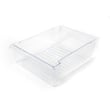
Knowing the correct cubic feet helps us match the right refrigerator parts (like shelves, crisper pans, door gaskets, and ice maker components) and helps you compare performance expectations such as cooling recovery and storage space.
Last updated: February 2026
Can you still get parts for Kenmore refrigerators?
Yes. We still offer replacement parts for Kenmore refrigerators, including model 10674264401; you can match parts by model number and then choose the exact component you need (for example, an ice maker, door gasket, or water inlet valve) from the parts list and diagrams.
How to make sure you get the right part
Use your refrigerator’s model number (10674264401) and confirm the part’s location in the diagrams before ordering.
- Find the model tag (commonly inside the fresh food section on a side wall or ceiling)
- Match the part by part ID/part number, not just by description
- Compare color and finish when ordering gaskets (white, black, bisque)
- Check whether your unit is equipped with an ice maker or water system
- Use the troubleshooting and parts identification details in the owner's manual
Common Kenmore 10674264401 parts customers replace
These are examples of parts available for this model that commonly solve everyday issues.
| Symptom | Likely part to check | Example part available for this model |
|---|---|---|
| No ice or poor ice production | Ice maker or water supply components | Ice maker assembly - refrigerator ice maker by whirlpool 4317943 |
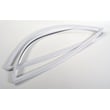
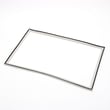
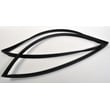
| Door not sealing, moisture or frost | Door gasket | Gasket panel (white) 2159061 |
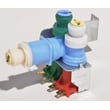
| No water to ice maker (if equipped) | Water inlet valve | Refrigerator water inlet valve WP2188808 |
| Light stays on or won’t turn on | Door/light switch | Refrigerator light switch W11384469 |
Why it matters
Using the correct model-specific part helps restore proper cooling, prevents air leaks that cause frost and high energy use, and avoids repeat repairs caused by mismatched components.
Last updated: February 2026
What are the most common problems with Kenmore refrigerators?
On Kenmore refrigerators like model 10674264401, the most common problems are poor cooling from airflow or defrost issues, water leaks from a clogged defrost drain or water line problem, ice maker not making ice, and unusual noises from fans. Many fixes start with cleaning, leveling, and checking water supply setup in the owner's manual.
Most common symptoms and what usually causes them
- Not cooling or warm temperatures: blocked air vents, dirty condenser coils, evaporator fan issues, or frost buildup from a defrost problem.
- Water leaking or puddles: clogged defrost drain, cracked/kinked water tubing, or a leaking inlet valve.
- Ice maker not working: water supply shutoff closed, kinked supply line, clogged filter, or ice maker failure.
- Noisy operation: normal operating sounds, condenser fan noise, evaporator fan noise, or vibration from an unlevel cabinet.
- Doors not sealing well: dirty or warped gaskets, door misalignment, or bins/pans out of position.
Quick checks we recommend first (fast, no parts)
- Confirm airflow: keep vents clear and avoid overpacking; the manual calls out “ensuring proper air circulation.”
- Verify installation clearances: allow about 1/2 inch on the sides and top, and about 2 inches by a fixed wall for door swing (typical guidance in the manual).
- Level and align doors: wobble and misalignment can cause noise, warm spots, and gasket leaks.
- Check water supply basics (if you have an ice maker or dispenser): shutoff valve open, no kinks, and good household water pressure.
- Listen for fan noise patterns: noise that changes when doors open or when the compressor cycles often points to a fan or airflow restriction.
Parts that commonly solve these problems on 10674264401
| Problem | Common part involved | Example part on this model page |
|---|---|---|
| Ice maker not making ice | Ice maker module/assembly | Ice maker assembly - refrigerator ice maker by whirlpool 4317943 |
| Water leaking or no water to ice maker | Water inlet valve or tubing | Refrigerator water inlet valve WP2188808, refrigerator water tube W10823511 |
| Frost buildup, warm fridge | Defrost thermostat (bi-metal) | Defrost bi-metal WP4387503 |
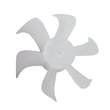
| Noise or poor airflow | Fan blade or condenser fan | Fan blade WP2163777, refrigerator condenser fan W11578915 |
Why it matters
Cooling, ice production, and leak issues usually trace back to airflow, door sealing, or water supply. Fixing the root cause protects food temperatures, prevents floor damage, and reduces compressor run time.
Last updated: February 2026
What's the average lifespan of a Kenmore refrigerator?
Most Kenmore refrigerators, including top-mount models like Kenmore 10674264401, last 10 to 15 years. With consistent maintenance (especially keeping airflow and door sealing in good shape), it’s common for a top-mount refrigerator to reach the upper end of that range.
Typical lifespan and what affects it
A refrigerator’s life is mostly determined by heat management, door sealing, and how hard the sealed system has to work.
- 10 to 15 years is the typical lifespan for a household refrigerator
- Dirty condenser coils and poor ventilation shorten compressor life
- Worn door gaskets cause longer run times and temperature swings
- Ice maker and water system issues can create leaks and icing that stress cooling
- Prompt repair of small issues prevents major failures later
Maintenance checklist that extends life
We recommend these habits for Kenmore top-mount refrigerators:
- Clean dust from the condenser area regularly (more often with pets)
- Keep doors closing tightly; clean gasket surfaces and the cabinet surface they touch
- Avoid overpacking; leave space for air circulation in the fresh food and freezer sections
- Keep the refrigerator level so doors self-close properly
- Fix water leaks quickly to prevent ice buildup and corrosion
For model-specific care and adjustment steps, use the owner's manual.
Common “end-of-life” symptoms (and what they usually mean)
| Symptom | Most common cause | What to check first |
|---|---|---|
| Warm fridge, freezer OK | Airflow/defrost issue | Frost buildup, vents blocked |
| Both sections warm | Sealed system or control issue | Condenser fan, compressor running |
| Loud humming or clicking | Start components struggling | Run capacitor, relay, airflow |
| Water leaking | Water line/valve issue | Tubing routing, inlet valve |
If cooling performance is declining and the compressor struggles to start, a failed start component such as the run capacitor WPW10662129 is a common repair item on many refrigerators.
Why it matters
Once a refrigerator starts running longer to hold temperature (often from dirty coils or gasket leaks), energy use rises and the compressor wears faster. Simple upkeep protects the sealed refrigeration system, which is the most expensive part of the appliance.
Last updated: February 2026