 Owner’s manual




Is it worth repairing a Kenmore washing machine?
Yes, it’s usually worth repairing a Kenmore washer, especially a proven model like 11047512603, when the fix is a common wear item (belt, door boot, latch) and the total repair cost is clearly less than replacing the washer. Use the 11047512603 owner’s manual to match symptoms to likely causes before buying parts.
When repair is the smart choice
- The washer still fills, drains, and spins, but has a specific issue (leak, noise, door won’t lock).
- The problem points to a normal wear item (the manual notes filters and belts are expendable items).
- The cabinet and tub are in good shape (no severe rust, no cracked outer tub).
- You can do a DIY repair safely, or you can get a clear diagnosis first.
- The repair restores reliable operation for several more years.
When replacement makes more sense
- Multiple major systems are failing at once (control, motor, tub, suspension).
- The washer has repeated leaks that return after seal or hose repairs.
- The repair requires several high-cost assemblies at the same time.
Common repairs for this model (examples)
| Symptom | Often involved part | Example part for model 11047512603 |
|---|---|---|
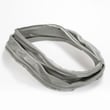
| Won’t spin or slips under load | Drive system | Washer drive belt WP8540101 |
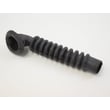
| Water leaking at the door | Door seal | Washer door boot WPW10111435 |
| Door won’t lock or won’t start | Door lock | Latch WPW10253483 |
Why it matters
A targeted repair on the Kenmore 11047512603 often costs far less than a new washer and avoids replacing an appliance that may only need routine maintenance. The manual also emphasizes safe servicing practices, including only attempting repairs you understand and have the skills to carry out.
Last updated: February 2026
How to identify a Kenmore washer model?
Your Kenmore washer model number is printed on the appliance’s model and serial tag; on Kenmore model 11047512603, you’ll typically find it around the door opening (front-load) or under the lid (top-load), and sometimes on the rear panel. Use that exact number to match the correct parts and manual.
Where to look on the washer
Check these common tag locations first:
- Inside the door opening on the cabinet frame (front-load washers)
- Under the lid along the rim of the opening (top-load washers)
- On the back panel near the power cord entry
- Along the side of the control console or behind the lower access panel
If the tag is worn, wipe it gently with a damp cloth and read it under a bright light.
What the model number looks like (Kenmore)
Kenmore washer model numbers often start with 110 and include a longer string of digits (like 11047512603). Record the full model number exactly as shown.
| What to capture | Example for this washer | Why it matters |
|---|---|---|
| Model number | 11047512603 | Ensures parts diagrams match your exact build |
| Serial number | (varies) | Helps confirm production series for some parts |
| Type | Washer | Prevents ordering parts for a dryer or combo unit |
Why it matters for parts and troubleshooting
The model number ties your washer to the correct component set (door boot, drive belt, controls, and drain system). For example, if you’re diagnosing leaks at the door opening, the correct fit depends on the exact model when selecting a door seal like the washer door boot WPW10111435.
Use the manual to confirm identification and features
Once you have the model number, match it to the documentation for operating steps, cleaning, and troubleshooting. We recommend using the 11047512603 owner's manual to confirm cycle features (HE detergent use, dispenser layout) and error-code guidance.
Last updated: February 2026
What does F33 mean on a washer?
On Kenmore washer model 11047512603, an F33 code points to an electrical communication problem in the drain system, most often a lost connection between the drain pump circuit and the main control (CCU). Start by resetting power, then check drain performance and wiring connections.
What to do first (safe reset and quick checks)
- Press STOP/CANCEL twice to clear the code.
- Unplug the washer (or switch off the breaker) for 1 minute, then restore power.
- Run Rinse/Drain & Spin to see if it drains normally.
- If there is standing water, follow the error-code steps in the 11047512603 owner's manual.
Common causes of F33
- Loose or corroded wire harness connection at the drain pump
- Pinched or damaged wiring between the pump and main control
- Drain pump motor failure (pump not running or drawing abnormal current)
- Drain restriction that overloads the pump (coins, lint, small socks)
Drain-related symptoms and what they suggest
| What you notice | Most likely direction | What we check next |
|---|---|---|
| Hums but won’t drain | Blockage or failing pump | Pump area, hoses, filter/coin trap |
| Drains slowly | Partial restriction | Filter, drain hose, standpipe |
| Intermittent drain | Loose connection | Harness at pump and control |
| No pump sound | Electrical or pump failure | Wiring, control output, pump |
Parts that are commonly involved
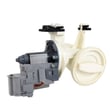
If you confirm a drain restriction or you find debris in the pump area, the pump filter is a frequent service point on front-load designs. For this model, use the correct replacement part when needed: filter WPW10730972.
Why it matters
When the washer cannot reliably run the drain pump circuit, it may stop mid-cycle, leave water in the tub, or repeatedly display electrical “F” codes (the manual groups F01 to F34 as electrical problems). Addressing drain flow and pump wiring early helps prevent repeat shutdowns.
Last updated: February 2026
What is the average lifespan of a Kenmore washer?
A Kenmore washer typically lasts 10 to 15 years with normal household use. For Kenmore model 11047512603, routine care (especially cleaning and periodic checks) helps you reach the longer end of that range; heavy loads and skipped maintenance shorten it. See the 11047512603 owner's manual for the model’s care schedule.
Typical lifespan by use
| Use pattern | Typical lifespan | What usually shortens life |
|---|---|---|
| Light (few loads/week) | 12 to 15 years | Long idle storage, hose aging |
| Average (most households) | 10 to 15 years | Overloading, poor leveling |
| Heavy (daily, large loads) | 7 to 12 years | Wear on bearings, belt, motor |
Maintenance that extends washer life
We recommend these habits because they reduce leaks, odor, vibration, and premature wear:
- Clean the washer regularly (tub, dispenser areas, and door seal on front-load designs).
- Check water inlet hoses for bulges, cracking, or seepage; replace at the first sign of wear.
- Keep the washer level and stable; re-check leveling after moving or flooring changes.
- Avoid chronic overloading; it strains the drive system and suspension.
- Use the right detergent amount; excess suds can cause longer run times and extra stress.
Parts that commonly wear over time
Some items are considered normal-wear components (filters and belts are common examples). If performance drops, these are frequent suspects:
- Drain or pump filtration issues; clean or replace the filter WPW10730972 if your model uses it for debris capture.
- Drive system wear; a slipping or squealing belt can point to the washer drive belt WP8540101.
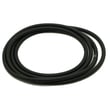
- Door sealing leaks; inspect the boot for tears and the clamp for looseness (for example, washer door boot WPW10111435 and washer door boot spring clamp WP8540108).
- Control or interface problems; intermittent operation can involve the electronic control or user interface.
Why it matters
Planning around a 10 to 15 year lifespan helps you decide when maintenance is worth it versus when repeated repairs (leaks, vibration, no-drain, no-spin) signal end-of-life wear.
Last updated: February 2026



