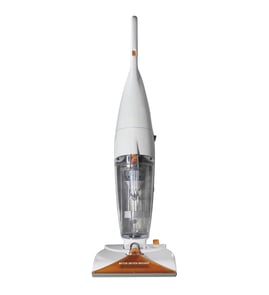

Is it better to steam or shampoo carpet?
For most routine carpet care, it’s better to steam clean (hot water extraction) because it rinses soil out of the fibers with minimal residue and typically dries faster. Shampooing can help with very heavy, greasy, or localized stains, but leftover detergent can attract dirt and cause re-soiling.
- Steam cleaning (hot water extraction): flushes and lifts embedded soil, then extracts it.
- Shampooing: uses detergent and agitation to break up grime; it may not fully rinse out.
- Best overall approach: pre-treat spots, then steam clean to rinse and remove loosened soil.
| Method | Best for | Main downside | Typical dry time |
|---|---|---|---|
| Steam cleaning | Whole-room deep cleaning, allergens, general maintenance | Over-wetting if you use too much water | Often 2 to 8 hours |
| Shampooing | Very dirty traffic lanes, oily residues, specific stains | Detergent residue, longer dry time | Often 6 to 24 hours |
- Vacuum thoroughly first; dry soil removal is half the job.
- Pre-treat spots (pet, food, tracked-in grime) before any wet cleaning.
- Use the minimum solution needed; too much soap increases residue.
- Make extra “dry passes” (suction only) to pull out more moisture.
- Keep airflow moving (fans, HVAC) until fully dry.
Residue and slow drying are the two biggest reasons carpets look dirty again quickly. Steam cleaning is usually the better maintenance method because it focuses on extraction and rinsing, which helps carpets stay cleaner longer.
If you need help confirming you have the right replacement items or accessories for your cleaner, use how to find your appliance model number (and what it means for parts).
Last updated: February 2026
Do home carpet cleaners work as well as professional carpet cleaners?
Home carpet cleaners can clean well for routine maintenance and fresh spills, but professional carpet cleaning typically removes more embedded soil and moisture from deep in the pile. With a Bissell 1653-2 little green clean machine, we recommend thinking of it as a strong spot and small-area cleaner rather than a full-room deep-clean replacement.
- Best for spots, stairs, upholstery, car interiors, and small carpeted areas
- Good results when you pre-treat stains and do slow, overlapping passes
- More likely to leave some moisture behind if you over-wet the carpet
- Performance depends heavily on technique, water temperature, and how well you extract
Professionals typically use higher-powered extraction and faster airflow drying, which helps pull out deeper soil and reduces the chance of lingering dampness.
Professional cleaning is the better choice when you have:
- Heavy traffic lanes or large areas that look gray or matted
- Pet odor issues that have soaked into pad or subfloor
- Recurring stains (they reappear after drying)
- Allergy concerns where deeper soil removal matters
| Factor | Home carpet cleaner | Professional cleaning |
|---|---|---|
| Best use | Spots and small areas | Whole-room deep cleaning |
| Soil removal depth | Moderate | High |
| Drying time | Often longer | Often faster |
| Risk if done wrong | Residue, over-wetting | Lower (with proper service) |
- Vacuum thoroughly first; dry soil removal is half the job
- Use the correct carpet/upholstery formula and measure it carefully (too much leaves residue)
- Make 1 wet pass, then 2 to 4 dry extraction passes
- Avoid soaking; multiple light passes clean better than flooding
- Speed-dry with fans and good ventilation
Over-wetting and leftover detergent are the two biggest reasons DIY cleaning can look good at first but then attract dirt quickly. Strong extraction and fast drying help carpets stay cleaner longer and reduce odor risk.
For more general DIY repair and safety tips that apply to powered cleaning equipment, see are diy appliance repairs safe.
Last updated: February 2026
Is the Bissell 1653-2 a steam cleaner?
No. The Bissell 1653-2 is a Little Green Clean Machine style portable spot cleaner that sprays cleaning solution and uses suction to lift stains from carpet and upholstery; it does not heat water to create steam.
This model works like a compact carpet and upholstery extractor: you apply solution with the spray, agitate lightly with the tool, then recover dirty liquid into the dirty tank.
- Uses a clean-water/solution tank and a separate dirty-water tank
- Sprays solution through a hose and tool
- Uses suction to pull liquid and soil back into the recovery tank
- Best for spot cleaning and small areas (stairs, car interiors, furniture)
- No heat-up time and no steam output
If it sprays but does not pick up well, or it will not spray consistently, these checks solve most issues.
- Empty the dirty tank before it reaches the max line; reseat it firmly
- Rinse the dirty tank and lid; clear any foam or debris blocking airflow
- Check the hose and tool for clogs (lint, pet hair) and flush with warm water
- Confirm the clean tank cap is tight and the tank is seated so it can feed the pump
- Clean the tool nozzle opening so spray and suction paths stay clear
| Feature | Steam cleaner | Bissell 1653-2 spot cleaner |
|---|---|---|
| Heat source | Heats water to make steam | No heater; no steam |
| Primary action | Steam loosens soil | Spray solution plus suction extraction |
| Best surfaces | Sealed hard surfaces, some fabrics (tool dependent) | Carpet, rugs, upholstery, auto interiors |
| Maintenance focus | Descaling, steam nozzle | Rinsing tanks, clearing clogs, keeping seals tight |
Using steam-cleaner expectations (heat-up, descaling, steam output) leads to the wrong troubleshooting. For the Bissell 1653-2, performance depends on clear hoses/tools, good tank seals, and strong suction recovery.
For help identifying the exact model number on your unit before ordering parts, use how to find your appliance model number (and what it means for parts).
Last updated: February 2026
Do steam cleaners really work on carpets?
Steam can help on carpets in limited situations, but most “carpet steam cleaning” is actually hot-water extraction, not true steam. The Bissell 1653-2 Little Green Clean Machine is a portable carpet and upholstery extractor that sprays cleaning solution and suctions it back up; it is designed for spots and small areas.
Carpet results depend more on controlled moisture plus strong suction than on steam.
- True steam: high-heat vapor; better for sealed hard surfaces and sanitizing, not ideal for most carpet backings
- Hot-water extraction (what most people call steam cleaning): spray, agitation, and suction; best for carpet fibers
- Portable spot extractor (like Bissell 1653-2): great for spills, pet spots, stairs, and upholstery; slower for whole rooms
| Method | Best for | Watch out for |
|---|---|---|
| True steam | Tile, grout, sealed surfaces | Can overheat or over-wet carpet backing |
| Hot-water extraction | Deep carpet cleaning | Long dry times if over-wet |
| Portable extractor | Spot cleaning, upholstery | Not efficient for wall-to-wall rooms |
Use a process that removes dry soil first and limits over-wetting.
- Vacuum thoroughly before using the machine
- Pre-treat stains with a carpet-safe spot cleaner
- Use short, overlapping wet passes; do not soak one spot
- Make extra suction-only passes to pull out moisture
- Speed drying with fans and airflow; keep traffic off until dry
When carpet stays wet too long, soils can wick back up and the pad can hold moisture. Using the Bissell 1653-2 as a spot extractor (not a steam cleaner) helps you clean effectively while keeping dry time under control.
For ordering help and account features, see top questions about Sears and Sears PartsDirect.
Last updated: February 2026
