


How to replace the blade on an edger?
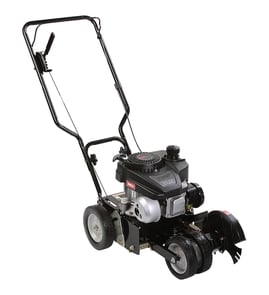
To replace the blade on your Craftsman 536787541 3-hp edger, disconnect the spark plug wire, lock the blade from turning, then remove the blade fastener(s), swap in the new blade, and tighten everything securely before testing for vibration.
Safety first
- Let the engine cool completely.
- Disconnect the spark plug wire and secure it away from the plug.
- Wear heavy gloves; edger blades are sharp.
- Work on a flat surface and block the wheels so the edger cannot roll.
Steps to replace the blade
- Tip the edger safely to access the blade area (keep the air filter/carburetor side up to reduce fuel leakage).
- Hold the blade from turning using a block of wood against the blade and guard area.
- Remove the blade nut and any washers/spacers.
- Slide the old blade off and clean the mounting surfaces.
- Install the new blade in the same orientation as the old one.
- Reinstall the washer(s) and nut; tighten firmly.
- Reconnect the spark plug wire and test-run briefly.
Important note about the blade nut
Many edgers use a reverse-thread (left-hand) blade nut. If the nut will not loosen in the normal direction, try turning it the opposite way while holding the blade securely.
Parts you may need (common wear items)
If your hardware is rounded off, stripped, or missing, replace it instead of reusing it:
- Washer blade 22265MA
- Nut 703333
- Blade guard 336555MA (replace if cracked or bent)
Quick check after installation (why it matters)
A loose blade can cause heavy vibration, poor edging, and damage to the crankshaft or belt drive. After the first minute of use, shut the edger off and recheck tightness.
| Symptom after blade change | Most likely cause | What to do |
|---|---|---|
| Vibration | Blade installed backward or debris on hub | Reinstall correctly; clean hub |
| Blade slips/stops | Nut not tight or wrong washer stack | Recheck washer order; tighten |
| Poor cut | Blade dull or wrong orientation | Verify orientation; replace blade |
Last updated: February 2026
What engine is on a Craftsman edger?
For the Craftsman lawn edger model 536787541 (a 3-hp edger), the engine is a small gasoline engine in the 3-horsepower class; the exact engine manufacturer and model vary by production run and are best confirmed from the engine ID tag on your unit.
How to identify the exact engine on model 536787541
Look for the engine identification label directly on the engine (not the edger frame). Common locations include the blower housing, valve cover area, or near the muffler shield.
- Clean the label area so the numbers are readable.
- Record the engine model, type, and code (or serial) exactly as shown.
- Match those numbers when ordering engine-specific parts (carburetor, ignition coil, air filter, recoil starter).
- If the label is missing, use the edger’s parts breakdown to confirm chassis parts and then identify the engine by mounting pattern and shaft style.
- Replace damaged safety shielding before operating; a missing guard can expose the blade area.
Parts on this model that relate to engine-driven operation
Even when the engine details differ, the drive and cutting hardware on the Craftsman 536787541 is consistent for this model.
| What you’re troubleshooting | What to check first | Example part on this model |
|---|---|---|
| Blade will not spin or slips | Belt condition and tension | V-belt 32668MA |
| Excess vibration near blade | Blade hardware tightness | Washer blade 22265MA |
| Debris exposure near blade | Guard condition and mounting | Blade guard 336555MA |
Why it matters
The edger model number (536787541) helps you get the correct frame, belt, and blade-area parts, but engine parts must match the engine’s own ID numbers. Using the engine tag prevents ordering the wrong carburetor or ignition parts.
Last updated: February 2026
What size blade is a Craftsman 536787541 edger?
The Craftsman 536787541 3-hp edger uses a circular edging blade; the exact blade diameter is determined by the blade and guard setup used on your unit. For a correct match, we recommend identifying the blade by measuring the existing blade and confirming it against the parts diagram and hardware used with it.
How to measure the blade size (quick and accurate)
- Disconnect the spark plug wire and let the engine cool completely.
- Tip the edger safely so the blade is accessible and stable.
- Measure straight across the blade from edge to edge (diameter), not the cutting depth.
- Note the center hole size and any extra mounting holes or slots.
- Compare your measurements to the blade mounting hardware used on your model.
Parts that affect blade fit on model 536787541
Even when two blades share the same diameter, the mounting style must match. These model-specific parts help you confirm the correct setup:
- Blade guard 336555MA (helps confirm blade clearance and mounting area)
- Washer blade 22265MA (sets spacing and helps secure the blade)
- Lock nut 41529MA (common blade-retaining hardware)
Common blade size expectations (what most owners see)
Most walk-behind lawn edgers in this class commonly use blades around 7 to 9 inches in diameter, but the only reliable way to confirm your Craftsman 536787541 is to measure the blade currently installed and match the mounting pattern.
| What to check | Why it matters |
|---|---|
| Blade diameter | Determines cutting path and guard clearance |
| Center hole / mounting pattern | Ensures the blade seats correctly on the arbor |
| Washer and nut style | Prevents loosening and wobble |
Why it matters
Using the wrong blade diameter or mounting pattern can cause blade wobble, poor edging performance, or contact with the blade guard. Matching the blade to the correct washer and lock nut setup keeps the edger cutting cleanly and safely.
Last updated: February 2026
Which is better, string or blade edger?
A blade edger is better when you want crisp, straight edges along sidewalks and driveways; a string edger (string trimmer) is better for quick touch-ups and tight spots. Since the Craftsman 536787541 is a blade-style 3-hp edger, it is built for clean, defined borders.
Quick comparison
| Feature | String edger (string trimmer) | Blade edger (like Craftsman 536787541) |
|---|---|---|
| Best for | Light edging, trimming, detail work | Deep, straight, “crisp” edges |
| Surface tolerance | More forgiving around rocks and irregular edges | Best along hard edges (concrete, asphalt) |
| Finish quality | Good, but can look slightly wavy | Very clean, defined line |
| Debris | Usually less chunking | Can throw more dirt and debris |
| Maintenance | Replace line often | Maintain blade and blade hardware |
When a string edger is the better choice
- You want one tool for trimming grass, weeds, and occasional edging.
- You edge around beds, fences, trees, and uneven borders.
- You prefer a lighter tool with quick “touch-up” capability.
When a blade edger is the better choice
- You edge along sidewalks, curbs, and driveways and want straight lines.
- Your edge has grown over and you need to “re-cut” a trench.
- You want consistent depth and a more manicured look.
Why it matters for parts and upkeep
A blade edger’s results depend heavily on the cutting system being tight, aligned, and guarded. If edging quality drops (wandering line, vibration, uneven cut), we check blade-area wear items first:
- Blade guard 336555MA for safety and debris control
- Washer blade 22265MA and blade fasteners for a secure blade stack-up
- V-belt 32668MA if the blade slows, slips, or stalls under load
Last updated: February 2026