 Installation guide
 Owner’s manual




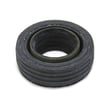
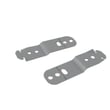
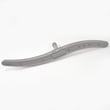
Can I still use my appliance with an E22 error?
Yes, but we recommend fixing the cause first. On a Bosch dishwasher like model SHX43R55UC, an E22 error commonly points to a drain or filter restriction, so running cycles can leave dirty water in the tub and strain the drain system. Use the SHX43R55UC user manual steps to clear the blockage before normal use.
- Turn off power at the breaker before accessing internal parts.
- Remove and rinse the filter area; clear food debris and labels.
- Check the sink drain and garbage disposal inlet (if connected) for clogs.
- Inspect the drain path for kinks or pinches.
- If the dishwasher recently moved or was installed, confirm the drain hose routing meets the installation requirement.
Bosch installation guidance requires the drain hose to be installed with a portion at least 20 inches (508 mm) above the cabinet floor; otherwise the dishwasher may not drain properly. Use the SHX43R55UC installation guide to confirm the high loop or air gap setup.
| What you see | Most likely cause | What to do |
|---|---|---|
| Water standing in bottom after cycle | Filter or drain restriction | Clean filter area; check drain path |
| Humming during drain, little water movement | Drain pump struggling | Clear blockage; inspect pump inlet |
| Drains sometimes, not always | Hose kink or improper high loop | Re-route hose; secure high loop |
If cleaning and hose routing are correct and E22 returns, a failed drain component is a common next step.
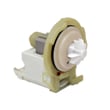
- If the dishwasher will not pump water out, the drain pump 00642239 is a frequent replacement.
- If the unit fills but seems to struggle with water movement and cleaning, the recirculation system may be involved.
E22 is a protection signal that the dishwasher is not moving water the way it should. Clearing the restriction first helps prevent poor cleaning, odors, and unnecessary wear on the drain pump and seals.
Related help: Bosch dishwasher error codes
Last updated: January 2026
Is the Bosch Silence Plus a good dishwasher?
Yes. Bosch SilencePlus dishwashers are a strong choice when you want very quiet operation and consistent cleaning performance; for your Bosch SHX43R55UC, the best results come from correct installation, proper draining setup, and routine filter care (all covered in the SHX43R55UC installation guide).
We evaluate “good” based on the things most owners care about day to day:
- Low noise during wash and drain (a key SilencePlus benefit)
- Reliable fill, wash, and drain performance
- Solid rack usability and loading flexibility
- Easy maintenance (filters, spray arms, seals)
- Reasonable repairability with available Bosch parts
A great dishwasher can still underperform if setup or maintenance is off. For this model, focus on these basics:
- Install the drain hose with a high loop; a portion must be at least 20 inches off the cabinet floor to help prevent draining problems.
- Run hot water at the sink before starting a cycle if your kitchen line runs cool at first.
- Clean the filter area regularly to prevent poor cleaning and slow draining.
- Load so spray arms can spin freely; avoid blocking the detergent cup.
- Use the right cycle for the soil level; longer cycles typically clean better.
| Symptom | Most common cause | Parts that often relate |
|---|---|---|
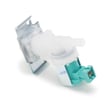
| Not filling or fills slowly | Water supply issue or inlet valve problem | Dishwasher water inlet valve 00622058 |
| Not draining | Drain path restriction or drain pump issue | Drain pump 00642239 |
| Leaves food behind | Filter/sump restriction or circulation issue | Sump filter 00441905 |
| Leaks at the door | Worn or mis-seated seal | Door seal 00432490 |
SilencePlus models are designed to be quiet and efficient, but they depend on correct installation and a clear drain path. When the drain hose routing or filtration is neglected, you can see poor cleaning, standing water, odors, or longer cycle times.
Last updated: January 2026
What's the most common problem with a Bosch dishwasher?
The most common Bosch dishwasher problems are poor cleaning and draining issues, and they are usually caused by maintenance items (filters, spray arms, loading) or water supply problems. On the Bosch SHX43R55UC, start with the filter system and drain path before replacing parts; many “failures” are simple clogs.
- Not cleaning well: clogged filter, blocked spray arms, low water temperature, heavy soil overload
- Not draining: debris in sump/filter area, kinked or restricted drain hose, drain pump obstruction
- Not filling: shutoff valve partially closed, inlet screen clogged, failed inlet valve
- Not drying: rinse aid empty, plastic items holding water, door opened too soon (condensation drying)
- Stops mid-cycle or beeps: error condition, door not fully latched, water/heating fault
Use these steps in order; they solve the majority of “common problem” calls.
- Clean the filter area and remove any standing debris.
- Confirm the sink drain and garbage disposal inlet are clear (new disposals often have a knockout plug).
- Inspect the drain hose routing for kinks and ensure it has a proper high loop/air gap per the installation guide.
- Run hot water at the kitchen faucet until it is hot, then start the cycle.
- Verify rinse aid level and load so spray arms can spin freely.
If the basic checks do not change the symptom, these parts are common culprits on dishwashers like the SHX43R55UC.
| Symptom | Most likely part area | Example part for this model |
|---|---|---|
| Won’t fill or fills slowly | Water inlet valve or inlet screen | Dishwasher water inlet valve 00622058 |
| Won’t drain, hums, or drains weakly | Drain pump or drain hose restriction | Drain pump 00642239 |
| Leaves grit, recirculation seems weak | Circulation system or filter | Sump filter 00441905 |
Bosch dishwashers are efficient, so small restrictions (a partially clogged filter, a kinked drain hose, or low incoming water temperature) can cause noticeable performance problems. Fixing the root cause prevents repeat clogs, poor wash results, and unnecessary part replacement.
- Use the Bosch dishwasher error codes guide to match any displayed code to the most likely cause and next steps.
Last updated: January 2026





