Installation guide
 Owner’s manual
 Error Codes


How to tell if a dryer gas valve is bad?
On Kenmore dryer model 11077632600, a bad gas valve usually shows up as no heat even though the dryer runs; common signs include the igniter glowing with no flame, a flame that lights then drops out, or repeated clicking with long dry times. Confirm basics first using the installation guide.
We rule out the most common, easiest-to-fix causes first.
- Make sure the gas supply shutoff valve is fully open (handle parallel to the gas pipe).
- Run the dryer about 5 minutes, then open the door and feel for heat.
- Check for restricted airflow (lint screen and venting); poor venting can mimic heating problems.
- Listen for normal gas valve clicking; clicking alone is not a failure.
- If the dryer has been unused for a while, expect a few minutes of odd sounds at startup.
On many Kenmore gas dryers, the gas valve coils fail more often than the valve body.
| What you observe | Most likely cause | What to do next |
|---|---|---|
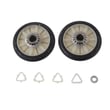
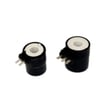
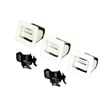
| Igniter glows, no flame | Weak/open gas valve coils | Test coils; replace with dryer valve coil kit 279834 if failed |
| Flame lights, then goes out quickly and won’t stay lit | Coils heating up and dropping out | Replace coils; recheck heat |
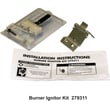
| No igniter glow at all | Igniter/sensor/control issue | Check igniter circuit; consider igniter 279311 and dryer radiant sensor WP338906 |
| Heat is intermittent and airflow is poor | Vent restriction overheating the system | Clean venting; retest |
- Unplug the dryer before accessing internal components.
- Verify the shutoff valve is open; then run the 5-minute heat check from the installation guide.
- If the igniter glows but there’s no steady flame, ohm-test the coils with a multimeter (compare readings between coils; an open circuit indicates failure).
- If coils test good and symptoms persist, the gas valve assembly becomes the next suspect; consider dryer gas valve WP8318277.
A dryer that tumbles but does not heat wastes energy and can overwork components (timer, motor, and cycling system). Correct diagnosis also prevents replacing the full valve when the coil kit is the real fix.
You can order replacement parts for your Kenmore 11077632600 from the parts list for this model, or search by model number on Sears PartsDirect.
Last updated: February 2026
How to tell if a dryer start switch is bad?
On our Kenmore 11077632600 dryer, a bad start switch is likely when you have power and a cycle selected, but the dryer only runs while you hold PUSH TO START, or it will not start at all. Confirm by testing the switch for continuity per the 11077632600 owner's manual.
A start switch problem can look like other “won’t start” issues. Use this checklist first:
- Door is fully closed and latching
- A cycle is selected (not sitting in an Off area)
- You pressed PUSH TO START firmly
- Power is present (no tripped breaker or blown fuse)
- The dryer is not in a setting that prevents starting
- Button feels loose, sticks, or does not “click” normally
- Dryer does nothing when you press PUSH TO START
- Dryer starts only while the button is held in (then stops when released)
Unplug the dryer before accessing internal parts.
- Remove the control console access needed to reach the start switch
- Label wires before removing them from the switch terminals
- With the button not pressed, the switch should read open (no continuity)
- With the button pressed, the switch should read closed (continuity)
If the reading never changes when you press the button, the start switch is bad.
| Check | What it tells you | What to do next |
|---|---|---|
| Door closes firmly | Door switch circuit likely OK | If not, inspect door switch and latch |
| Breaker/fuses OK | Power supply likely OK | Reset/replace as needed |
| Cycle selected correctly | Timer/control is allowing start | Move dial off Off area and retry |
| Start switch continuity | Confirms switch condition | Replace switch if it fails |
A failing start switch can interrupt the motor start circuit, so the dryer will not run even though the timer, motor, and heat system are fine. Testing the switch first prevents unnecessary part replacement.
If your dryer has an electronic control and is showing codes, use our Kenmore 110 series electronic control model dryer error codes guide to narrow the cause before replacing parts.
Last updated: February 2026
How do I know if my dryer thermistor is bad?
On a Kenmore 11077632600 dryer, a bad thermistor usually shows up as no heat, overheating, or wildly inconsistent drying times because the control is getting the wrong temperature signal. Confirm the basics first, then test the thermistor circuit using the checks in the 11077632600 owner's manual.
A thermistor problem often looks like a heating or cycling issue, not a total mechanical failure.
- Dryer runs but clothes stay damp (little or no heat)
- Dryer heats briefly, then heat drops out mid-cycle
- Dryer overheats and shuts down early (safety devices may trip)
- Cycles take much longer than normal
- Heat seems inconsistent from load to load
These items cause the same symptoms and are faster to rule out.
- Power supply (electric models): the drum can tumble with only one leg of power; heat needs full 240V
- House fuses/breakers: many dryers use 2 fuses or 2 breakers; one can trip and you lose heat
- Gas supply (gas models): confirm the shut-off valve is open
- Airflow: a restricted vent can cause overheating, shutdowns, and long dry times
| What you see | What to check first | Why it matters |
|---|---|---|
| Drum turns, no heat | 2 fuses/breakers (electric) or gas valve open (gas) | Heat circuit is separate from motor circuit |
| Dryer will not run | Door closed, Start pressed, cycle selected | Basic interlocks can mimic “failed sensor” symptoms |
- Unplug the dryer (or shut off power at the breaker) before accessing internal components.
- Inspect wiring at the thermistor and along the harness for loose connectors or heat damage.
- Test resistance with a multimeter and compare readings at room temperature versus warmed slightly (a healthy thermistor changes resistance smoothly).
- If your model uses an electronic control, a drifting thermistor can also cause odd cycling; in that case, inspect related control components such as the dryer electronic control board WPW10476828 if other causes are ruled out.
The thermistor is the dryer’s temperature feedback sensor. When it reads wrong, the dryer can underheat (wet clothes) or overheat (shutdowns and repeated cycling), which increases dry time, energy use, and wear on heating components.
You can order replacement parts for your Kenmore 11077632600 from the parts list for this model, or search by model number on Sears PartsDirect.
Last updated: February 2026
What is the lifespan of a Kenmore dryer?
A Kenmore dryer typically lasts 10 to 13 years. With consistent lint and vent cleaning and timely replacement of wear items (belt, rollers, idler), many Kenmore 11077632600 dryers run 15 years or longer in normal household use; maintenance is what makes the difference.
- Airflow and venting: restricted exhaust makes the dryer run hotter and longer.
- Lint removal: clean the lint screen every load; clean internal lint buildup periodically.
- Wear parts: drum support parts and the belt wear gradually and can be replaced.
- Load size: chronic overloading strains the motor, belt, and drum supports.
- Heat system condition (gas models): ignition and burner components must operate reliably.
Use your owner's manual for model-specific care steps; these intervals work well for most Kenmore dryers.
- Every load: clean the lint screen.
- Monthly: check the outside vent hood for strong airflow.
- Every 6 to 12 months: clean the full vent duct run (more often with long vents).
- About every 2 years: remove lint from inside the cabinet and inside the exhaust vent (the manual calls this out as a periodic need).
| Symptom | Most common cause | Typical repair type |
|---|---|---|
| Drum won’t turn, motor runs | Worn/broken belt | Replace belt |
| Loud thumping or squealing | Worn drum support parts | Rebuild drum support |
| Runs but no heat (gas) | Ignition or gas valve components | Diagnose heat circuit |
| Weak airflow, long dry times | Vent restriction or blower issue | Clean vent, inspect blower |
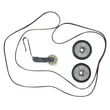
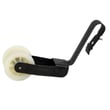
If your drum stops turning, the dryer drum belt 341241 is a common wear item for this model. For a full refresh of multiple wear components at once, the dryer repair kit 4392065 is often the most efficient approach.
A dryer that dries in one cycle with good airflow runs cooler and shorter; that reduces stress on the drive motor, drum supports, and heat system, which directly extends the service life.
You can order replacement parts for Kenmore 11077632600 from the parts list for this model, or search by model number on Sears PartsDirect.
Last updated: February 2026