Error Codes


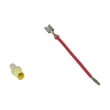
How to clear f3 E1 error code dryer?
On a Maytag MED3500FW1 electric dryer, the F3 E1 error points to an airflow or temperature-sensing problem. Clear it by restoring proper vent airflow first, then power-cycling the dryer; if the code returns, test the thermistor and related heat safety parts.
- Unplug the dryer (or switch off the breaker) for 2 minutes.
- Clean the lint screen and the lint screen housing.
- Disconnect the vent from the back of the dryer and remove lint buildup.
- Check the entire vent run to the outside; remove clogs and crushed sections.
- Reconnect the vent, restore power, and run a timed dry cycle for 5 to 10 minutes.
Restricted airflow is the most common cause; it overheats the dryer and can trigger sensor-related errors.
- Vent system: long runs, too many elbows, lint buildup, or a stuck exterior damper.
- Blower area: lint packed around the blower housing or a damaged wheel.
- Temperature sensing: a failed thermistor can misread temperature.
- Overheat protection: a blown thermal fuse or a tripped high-limit thermostat can be involved.
Helpful model-matched parts to consider during diagnosis:
- Dryer thermistor WP8577274
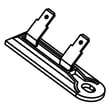
- Thermal fuse W10909685
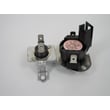
- Dryer high-limit thermostat WP8557403
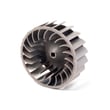
- Dryer blower wheel WP697772
| What you notice | Most likely cause | What to do first |
|---|---|---|
| Clothes take too long to dry | Vent restriction | Clean vent run and outside hood |
| Dryer gets very hot, shuts down | Poor airflow or sensor issue | Run briefly with vent off (only for testing), then check thermistor |
| Code returns immediately after reset | Thermistor or wiring issue | Inspect harness connections, then test thermistor |
Fixing airflow protects the heating element, prevents repeat shutdowns, and keeps drying times normal. A clean vent also reduces overheating that can damage components like the heating element and thermostats.
For more Maytag code context, use Maytag bravos dryer error codes.
Last updated: January 2026
What is the capacity of the MED3500FW1?
The Maytag MED3500FW1 electric dryer has a 7.4 cu. ft. capacity, which is a family-size drum designed to handle bulky items and larger loads more comfortably than compact dryers.
A 7.4 cu. ft. drum is built for fewer loads and better tumbling space, which helps clothes dry more evenly.
- Handles larger mixed loads without packing the drum tight
- Better airflow around towels and jeans for more consistent drying
- More room for bulky items (comforters, blankets) depending on fill level
- Helps reduce wrinkling by giving items space to tumble
Use this as a practical way to think about drum size.
| Dryer capacity | Typical use | Who it fits best |
|---|---|---|
| 3.4 to 4.4 cu. ft. | Compact loads | Apartments, small households |
| 6.5 to 7.4 cu. ft. | Full-size loads | Most families |
| 7.5+ cu. ft. | Extra-large loads | Large families, bulky laundry |
Capacity affects drying performance and fabric care. When the drum is overloaded, airflow drops and dry times increase. When loads are sized correctly, the heater and blower can move air efficiently and the dryer can shut off closer to the right time.
Capacity is only one piece of performance. These checks often make the biggest difference:
- Clean the lint screen before every load
- Confirm strong airflow at the outside vent hood
- Inspect and clean the vent duct for lint buildup or crushing
- Avoid overloading; leave space for tumbling
- If the dryer runs but does not heat, test common heating circuit parts such as the dryer heating element WP3387747 and the thermal fuse W10909685
Last updated: January 2026
What is the most common problem with Maytag dryers?
The most common Maytag dryer problem we see on the Maytag MED3500FW1 is no heat or long dry times caused by restricted airflow (lint buildup or a clogged vent). Poor airflow overheats the dryer and can blow a safety device, or it can make the heater cycle off too soon.
- Dryer won’t start: often a blown thermal fuse after overheating.
- Runs but no heat: failed heating circuit component or heater.
- Takes too long to dry: vent restriction, weak airflow, or a failing blower wheel.
- Squealing, thumping, or grinding: worn drum support rollers or idler pulley.
- Auto cycles end too soon or clothes still damp: dirty or failing moisture sensor.
- Clean the lint screen and the lint screen housing.
- Check airflow at the outside vent hood; it should be strong and steady.
- Inspect the vent path for kinks, crushed flex duct, or heavy lint.
- If the dryer overheated, test the safety devices and heater circuit.
| Symptom | Likely area | Example part for this model |
|---|---|---|
| Won’t start after overheating | Safety cutoff | Thermal fuse W10909685 |
| No heat | Heater circuit | Dryer heating element WP3387747 |
| Loud rumble or thump | Drum support | Dryer drum support roller WPW10314173 |
| Squeal or belt slack | Belt tension | Dryer idler pulley W10837240 |
| Long dry times, weak airflow | Air movement | Dryer blower wheel WP697772 |
Airflow problems do not just slow drying; they raise operating temperatures. That extra heat can shorten the life of key components like the heating element, thermostats, and thermal fuse.
- Dryer takes a long time to dry
- Electric dryer wont heat troubleshooting video
- What are the main parts of a clothes dryer
Last updated: January 2026