 Owner’s manual



What is the capacity of the wtw6400sw3?
The Whirlpool WTW6400SW3 washer is a Cabrio top-load model with a 4.6 cu. ft. capacity. That capacity helps you wash larger loads (like bulky towels) while still needing proper loading and cycle selection for best cleaning and spin performance.
Where to confirm capacity for your exact configuration
We recommend double-checking the published specs and cycle details in the WTW6400SW3 owner's manual. This is also where you will find loading guidance that affects real-world usable capacity.
How capacity affects day-to-day washing
A 4.6 cu. ft. top-load washer typically performs best when you load items loosely so water and detergent can circulate.
- Load items in loose heaps, not tightly packed
- Keep the load balanced (mix large and small items)
- Avoid filling above the top row of holes or the rim area
- Use HE detergent and measure carefully to prevent oversudsing
- Choose the right cycle and soil level for bulky loads
Quick reference: capacity and what it means
| Spec | What you can expect | Why it matters |
|---|---|---|
| 4.6 cu. ft. capacity | Larger loads than many standard top-loaders | Fewer loads, but overloading reduces cleaning and spin |
| Top-load design | Easier loading of bulky items | Load distribution impacts vibration and out-of-balance |
Why it matters
Capacity is a sizing number, but cleaning results depend on airflow and movement inside the basket. If the washer is overloaded, it can struggle to agitate properly and may leave detergent residue or end cycles with items still too wet.
Last updated: February 2026
What is the life expectancy of a Whirlpool Cabrio washer?
A Whirlpool Cabrio washer like model WTW6400SW3 typically lasts 10 to 14 years with normal household use. Consistent maintenance, correct loading, and fixing early symptoms (drain, spin, or balance problems) are what most often determine whether it reaches the high end of that range.
Typical lifespan and what changes it
Most Cabrio-style top-load washers reach their expected service life when they avoid chronic overloading and repeated out-of-balance spinning.
- Normal use: 10 to 14 years
- Heavy use (large family, daily loads): closer to 8 to 10 years
- Light use (few loads per week): can exceed 14 years
For model-specific operating and care guidance, follow the maintenance and use recommendations in the WTW6400SW3 owner's manual.
Signs your washer is nearing end of life
These symptoms usually point to wear in the drive, suspension, or drain system.
- Loud roaring or grinding during spin (bearing or drive wear)
- Repeated out-of-balance loads, walking, or banging (suspension wear)
- Won’t drain, drains slowly, or leaves water behind (pump or hose restriction)
- Lid won’t lock or unlock reliably (lid lock issue)
- Poor agitation or slipping, especially with heavier loads (hub or washplate wear)
Common repairs that extend life (WTW6400SW3)
When the washer is otherwise in good condition, these repairs often restore performance.
| Symptom | Common part to check | Example part on this model page |
|---|---|---|
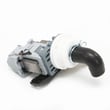
| Won’t drain / won’t spin | Drain pump, drain path | Water pump W10536347 |
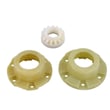
| Basket slips / won’t engage | Drive hub | Hub W10820039 |
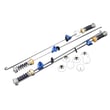
| Banging, off-balance | Suspension rods | Washer suspension W10820048 |
| Lid won’t lock | Lid lock assembly | Washer lid lock WPW10619844 |
Why it matters
Knowing the expected lifespan helps us decide whether a repair is a smart investment. If your WTW6400SW3 is within the 10 to 14 year window, fixing a single failed part (like a pump, hub, or lid lock) often restores reliable washing and prevents secondary damage from repeated failed cycles.
Last updated: February 2026
What is the most common problem with Whirlpool washers?
For Whirlpool washers like model WTW6400SW3, the most common issues we see are not draining, not spinning, and leaking. Many of these start with simple causes such as oversudsing from non-HE detergent, a kinked hose, clogged inlet screens, or an unbalanced load; they can also point to a worn drain pump or lid lock. See the WTW6400SW3 owner's manual for cycle behavior and troubleshooting steps.
Most common symptoms and what usually causes them
- Washer will not drain or leaves clothes wet: drain path restriction, pump issue, or oversudsing
- Washer will not spin: unbalanced load, lid not locking, or drive system issue
- Washer leaks: loose fill hoses, inlet valve seepage, or drain hose problems
- Washer will not fill or fills slowly: clogged inlet valve screens, kinked inlet hoses, faucets off
- Loud humming or gurgling during drain: often normal pump sound, but can worsen with a partial blockage
Quick checks we recommend first (fast, no parts)
- Confirm HE detergent: This washer is designed for High Efficiency (HE) detergent; regular detergent can cause oversudsing, longer cycles, errors, and poor rinsing.
- Check fill basics: Make sure both faucets are fully on and inlet hoses are not kinked.
- Clean inlet screens: Turn off water, remove inlet hoses, and clear any film or debris from the valve screens.
- Load and balance: Evenly distribute items; keep the load height below the top row of basket holes.
- Understand “low water”: Auto water level may not fully submerge clothes; that is normal for this wash system.
When a part is the likely fix
If the basics check out and the symptom repeats, these parts are common suspects for WTW6400SW3:
| Symptom | Common part to inspect | What it affects |
|---|---|---|
| Won’t drain / drains poorly | Water pump W10536347 | Removes water during drain and spin |
| Won’t start or won’t spin with lid closed | Washer lid lock WPW10619844 | Confirms lid is locked for operation |
| Off-balance, banging, walking | Washer suspension W10820048 | Stabilizes the tub during spin |
| Poor agitation, slipping, grinding | Hub W10820039 | Helps transfer drive motion to the wash system |
Why it matters
Drain, spin, and fill problems often look like “the washer is broken,” but they frequently come from detergent choice, water supply restrictions, or load balance. Fixing those first prevents repeat error conditions and reduces wear on the motor and pump.
Last updated: February 2026





