

How much does it cost to replace a washing machine lid switch?
For a Kenmore washer model 11091552210, the typical total cost to replace a lid switch is about $150 to $350 (parts plus labor). The switch itself is usually inexpensive; most of the cost is the service call, diagnosis, and installation.
Typical cost breakdown
Costs vary by location and whether you DIY or hire a technician.
- Lid switch part: commonly $15 to $60
- Labor/service call: commonly $100 to $250
- Total installed: commonly $150 to $350
- DIY total: commonly $15 to $60 (plus basic tools)
| Scenario | What you pay for | Typical total |
|---|---|---|
| DIY replacement | Part only | $15 to $60 |
| Local service company | Trip/diagnosis + part + labor | $150 to $350 |
| Complex visit | Extra time, additional issues found | $250 to $450 |
What affects the price most
- Service call minimums (many companies charge a flat trip/diagnostic fee)
- Access time (some cabinets and consoles take longer to open)
- Wiring damage (broken harness connectors can add time)
- Related failures (a bad timer or worn mechanical parts can mimic switch symptoms)
- After-hours scheduling (evenings/weekends often cost more)
When a lid switch is the likely culprit
A lid switch is a common cause when the washer:
- Fills and agitates but will not spin
- Drains but won’t start the spin cycle
- Acts “dead” only when the lid is closed or opened
- Starts intermittently when you press down on the lid
Why it matters
On top-load washers like the Kenmore 11091552210, the lid switch is a key safety interlock. If it fails, the washer may refuse to spin to prevent operation with the lid open.
If you’re troubleshooting spin or agitation problems and want to compare other common drive-system repairs, the coupling 285753A is another frequently replaced part on this style of Kenmore/Whirlpool-built washer.
Last updated: January 2026
What is the average lifespan of a Kenmore washer?
A Kenmore washer typically lasts 10 to 15 years. For Kenmore model 11091552210, lifespan depends most on load size, installation, and maintenance; common wear items include the drive system, drain pump, and water inlet components.
Typical lifespan by washer type
Most Kenmore washers fall into these real-world ranges:
| Washer type | Typical lifespan | What usually ends it first |
|---|---|---|
| Top-load (direct-drive style) | 12 to 15 years | Coupler, clutch, gear case wear |
| Front-load | 10 to 12 years | Bearings, door seal leaks, drain issues |
What shortens (or extends) washer life
We see these factors make the biggest difference:
- Overloading (stresses the drive system and suspension)
- Frequent unbalanced loads (increases wear on springs and drive components)
- Hard water (can shorten valve life and cause buildup)
- Poor draining (coins, lint, and small items strain the pump)
- Regular cleaning and correct detergent (reduces residue and odors)
Parts that commonly affect longevity on this model
If your washer is noisy, won’t spin, won’t drain, or agitates poorly, these model-matched parts are often involved:
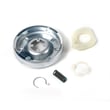
- Coupling 285753A (connects the motor to the transmission drive)
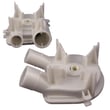
- Washer drain pump WP3363394 (moves water out during drain and spin)
- Clutch 285785 (helps the basket reach and hold spin speed)
- Washer water-level pressure switch WP3356467 (controls fill level and can affect cycle behavior)
Why it matters
Knowing the typical lifespan helps you decide whether to repair or replace. If your Kenmore 11091552210 is near the 10 to 15 year mark, fixing a single wear part (like a coupling or drain pump) often restores reliable operation without a full replacement.
Last updated: January 2026
How to force a Kenmore Elite washer to drain?
For Kenmore washer model 11091552210, we force a drain by canceling the cycle, removing as much water as possible through the drain path, and then clearing the most common blockage points (hose and pump). If the washer will not pump out at all, the drain pump is the first part to check.
Fast, safe way to get the water out
- Unplug the washer (or switch off the breaker) before touching hoses or the pump.
- Bail water from the tub into a bucket if it is full; this reduces spills when you open the drain path.
- Check the standpipe and drain hose for a kink, crushed section, or a clog at the wall drain.
- Lower the drain hose into a shallow pan (only if you can do it without flooding); gravity will often start a slow drain.
- If the washer still will not drain, inspect the pump inlet for debris and consider replacing the pump.
What usually prevents draining on this style of Kenmore washer
| Symptom | Most likely cause | What we do next |
|---|---|---|
| Hums but does not drain | Pump jammed with debris | Check pump inlet; replace washer drain pump WP3363394 if seized |
| Drains slowly | Partial clog in hose or pump | Clear hose, check pump for lint, coins, socks |
| Will not drain and will not run | Lid switch not closing | Test/replace switch 285671 |
Why it matters
A washer that cannot drain will usually stop before spin. Clearing the drain path protects the drive system, prevents water leaks, and helps the washer reach full spin speed so clothes come out less wet.
Quick checks before replacing parts
- Make sure the drain hose is not pushed too far into the standpipe (it can siphon or restrict flow).
- Confirm the standpipe is not clogged (a slow household drain can mimic a washer failure).
- Listen for the pump: no sound can point to a control/timer or switch issue; humming often means a jam.
- If the tub is full, avoid repeated restarts; overheating the pump motor can cause additional failure.
Last updated: January 2026
What is the capacity of a Kenmore 11091552210 washer?
The Kenmore 11091552210 washer is a classic Kenmore 110-series top-load design; washers in this style are typically in the 3.0 to 3.5 cu. ft. range. For best results, size loads by basket fill level instead of relying on a single cu. ft. number.
Practical load sizing (more accurate than a cu. ft. estimate)
Use these fill guidelines to prevent poor cleaning, out-of-balance spinning, and extra wear.
- Small load: about 1/3 full
- Medium load: about 1/2 full
- Large load: about 3/4 full
- Keep bulky items loose; do not pack them down
- Mix large and small items to help balance the spin
Why it matters
When a top-load washer is overloaded, water and detergent cannot circulate through fabrics correctly. That leads to poor cleaning, vibration, and strain on the drive system and drain components.
If overloading symptoms continue, check these common wear parts
If you already reduced load size and still have issues, these parts are frequently involved on this Kenmore/Whirlpool-built platform.
- Agitation or spin is intermittent
- Spin slips or struggles with heavier loads
- Water remains in the tub after drain
| Symptom | What it often points to | Example part for this model |
|---|---|---|
| Agitates/spins intermittently | Worn drive connection | Coupling 285753A |
| Spins weakly or slips | Clutch wear | Clutch 285785 |
| Won’t drain well | Pump restriction or failure | Washer drain pump WP3363394 |
Last updated: January 2026