Owner’s manual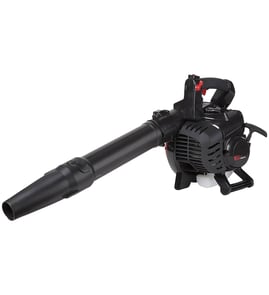







Why are gas-powered leaf blowers bad?
Gas-powered leaf blowers (including the Craftsman 358797130) are often considered “bad” because they create exhaust fumes, high noise levels, and can blow rocks and debris that may injure people or damage property. Used incorrectly, they also increase exposure risks in dusty or poorly ventilated areas.
Main downsides people complain about
- Exhaust exposure: Running a gas blower in a closed room or unventilated area can be dangerous because exhaust fumes can build up.
- Noise: Gas blowers can be loud enough to disturb neighbors; many communities restrict hours of use.
- Debris hazards: The air stream can throw or ricochet rocks, dirt, and sticks, which can hurt people or break glass.
- Dust and respiratory irritation: Dry, dusty conditions can kick up airborne particles; a respirator or face mask is recommended in dusty environments.
- Vibration exposure: Prolonged use of gasoline-powered hand tools can contribute to numbness or discomfort in hands and fingers.
How to reduce the “bad” parts (practical tips)
We recommend following the safety and operating guidance in the owner's manual and using these habits:
- Operate at the lowest throttle that still gets the job done.
- Use reasonable hours (many guidelines suggest daytime use) and follow local ordinances.
- Inspect the area first; remove rocks, glass, wire, and other hard objects.
- Wear Z87-rated eye protection and sturdy footwear; use a mask/respirator in dusty conditions.
- Never run the blower indoors or in unventilated spaces.
Quick comparison: gas vs. electric (why opinions differ)
| Feature | Gas blower | Electric blower |
|---|---|---|
| Exhaust fumes | Yes | No on-tool exhaust |
| Noise | Often higher | Often lower |
| Runtime | Refuel and go | Cord/battery dependent |
| Maintenance | Fuel system, carburetor, filter | Typically less engine-related |
Why it matters
Most complaints come down to health, neighborhood noise, and safety. The manual’s guidance on ventilation, protective gear, and debris control helps you use the Craftsman 358797130 more safely and with less disruption.
Last updated: February 2026
Are gas leaf blowers being phased out?
Yes. Gas leaf blowers are being phased out in many areas through local ordinances and state rules that restrict sales and or use, mainly due to noise and air-emissions concerns. For your Craftsman model 358797130, check local rules and follow the operating guidance in the owner's manual.
What “phased out” usually means
Most policies fall into one of these categories:
- Sales restrictions: limits on selling new gas-powered blowers (existing units can often still be used).
- Use restrictions: limits on when or where gas blowers can be operated (hours, seasons, or zones).
- Commercial-only rules: stricter limits for landscaping crews than for homeowners.
- Noise enforcement: complaints and decibel limits that effectively reduce use.
- Incentives to switch: rebates or trade-in programs that encourage battery-electric equipment.
How to stay compliant and reduce complaints
Your Craftsman 358797130 manual includes practical noise-reduction habits that also help you stay aligned with many local ordinances:
- Operate only at reasonable hours (many ordinances use daytime windows).
- Use the lowest throttle that still gets the job done.
- Use rakes or brooms first to loosen debris.
- Slightly dampen dusty surfaces when water is available.
- Aim the air stream close to the ground using full nozzle extension.
Quick comparison: common rule types
| Rule type | What changes for you | What to do first |
|---|---|---|
| Sales ban | New gas units may be restricted | Keep your current unit maintained and documented |
| Use ban | Gas use may be prohibited in certain areas | Confirm allowed equipment type for your address |
| Time limits | Certain hours or days only | Adjust your yardwork schedule |
| Noise limits | Complaints can trigger enforcement | Run at lower throttle and clean up quickly |
Why it matters
Even when gas blowers are still legal, noise and emissions rules can affect when you can use them and how neighbors respond. Keeping your blower tuned and using proper 2-cycle fuel mix (40:1) helps it run cleaner and more reliably.
Last updated: February 2026
Who makes Craftsman leaf blowers?
Craftsman is a brand name used on leaf blowers that are produced for Craftsman by manufacturing partners; the exact maker can vary by model and production run. For your Craftsman gas leaf blower model 358797130, the best way to confirm model-specific identification details is to check the product labeling and the 358797130 owner's manual.
How to identify the maker for model 358797130
We use the model number and the information printed on the unit to match the correct parts list and documentation.
- Check the model tag for 358.797130 (sometimes shown with a dot) and any additional codes
- Look for an emissions label or engine label that lists the engine family and manufacturer
- Compare the label information to the parts list and diagrams in the manual
- Use the model number when ordering maintenance items like fuel line or a carburetor
What we can confirm from the manual
The manual for this unit identifies it as a Craftsman 25cc (1.5 cu. in.) 2-cycle gasoline powered blower and provides operating and maintenance guidance (including fuel mix and storage steps). That documentation is the most reliable reference for this specific model’s configuration.
| Item | What to look for | Why it helps |
|---|---|---|
| Model number | 358.797130 / 358797130 | Confirms the correct parts breakdown |
| Emissions/engine label | Engine family, compliance info | Often indicates the engine manufacturer |
| Parts list in manual | Illustrated parts and names | Helps match the correct replacement part |
Why it matters
Craftsman-branded blowers can share similar looks across years, but parts like fuel lines, fuel filters, and carburetors can differ. Using the exact model identification helps ensure you get parts that fit and prevents fuel system leaks or hard-start issues.
Last updated: February 2026
What is the life expectancy of a gas leaf blower?
A well-maintained gas leaf blower typically lasts about 10 years. For your Craftsman 358797130, lifespan depends most on using the correct 2-cycle fuel mix, keeping the air intake and fuel system clean, and storing it properly between seasons (see the owner's manual).
Typical lifespan and what affects it
Most homeowner gas blowers reach their full life when these areas are kept in good shape:
- Fuel quality and mix ratio (fresh fuel, correct 2-cycle oil mix)
- Air filtration (clean air cleaner so the engine does not run rich or overheat)
- Fuel delivery (fuel lines and fuel filter not cracked or restricted)
- Cooling and exhaust (no debris blocking cooling air paths; muffler area kept clear)
- Storage habits (avoid leaving old fuel sitting in the tank/carburetor)
Quick maintenance checklist (high impact)
Use this short list to get the longest service life from a 2-cycle blower:
- Mix fuel exactly as specified in the owner's manual (this model uses a 2-cycle mix).
- Replace cracked or soft fuel lines; common replacements include fuel line, small 530069247 and fuel line, large 530069216.
- Replace a restricted in-tank filter if fuel flow seems weak; use engine fuel filter 530095646.
- Keep the blower tube/nozzle clear so the engine is not overworked.
- Before seasonal storage, run the unit dry or follow the storage steps in the manual.
Common “end of life” symptoms vs. fixable issues
| Symptom | Often caused by | Usually fixable with |
|---|---|---|
| Starts then dies | Old fuel, clogged filter, air leak in fuel line | Fuel refresh, engine fuel filter 530095646, fuel line replacement |
| Won’t start | Flooding, stale fuel, carburetor issues | Fuel service, carburetor service or replacement |
| Low power | Restricted airflow, fuel restriction, engine wear | Air cleaner service, fuel system service, engine inspection |
Why it matters
Gas blowers usually fail early from fuel-related problems (stale fuel, wrong mix, cracked lines) rather than “wearing out.” Keeping the fuel system healthy is the fastest way to reach that 10-year lifespan.
Last updated: February 2026
What is the best gas-powered leaf blower on the market?
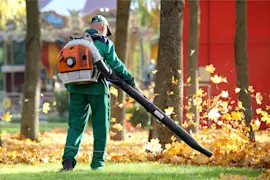
The “best” gas-powered leaf blower depends on how you’ll use it: backpack blowers deliver the most sustained power for large yards, while handheld blowers are lighter and easier for quick cleanup. For your Craftsman 358797130, the key is matching performance (MPH/CFM), weight, and noise to your workload; see the 358797130 owner's manual for the rated output and operating guidance.
How to choose the best blower for your needs
Use these factors to compare models fairly:
- Air volume (CFM): Higher CFM moves more leaves at once (great for piles and wet debris).
- Air speed (MPH): Higher MPH helps dislodge stuck debris (gravel edges, thatch, corners).
- Type: Backpack for long sessions; handheld for lighter, shorter jobs.
- Weight and balance: A lighter unit reduces fatigue more than a small power increase helps.
- Noise and neighborhood use: Run at the lowest throttle that gets the job done; many areas limit hours.
Where your Craftsman 358797130 fits
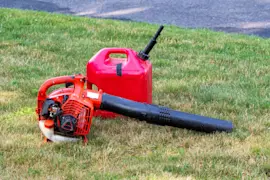
Your Craftsman 358797130 is a 25cc 2-cycle blower rated at 200 MPH / 400 CFM, which is a strong residential class for driveways, patios, and routine yard cleanup.
Quick comparison (typical use cases)
| Blower type | Best for | Typical tradeoff |
|---|---|---|
| Handheld gas | Small to medium yards, quick cleanup | More arm fatigue over long sessions |
| Backpack gas | Large yards, heavy leaf season, long run time | Higher cost, more storage space |
| Cordless (battery) | Quiet areas, light debris, convenience | Run time and peak power depend on battery |
Why it matters
Choosing the right blower prevents frustration and reduces fatigue. A blower that is “best” on paper can feel worse in real use if it is too heavy, too loud for your area, or oversized for your typical cleanup.
If you want your current blower to perform its best
Before replacing the unit, we recommend checking common performance items:
- Mix fresh fuel at the correct ratio (many 2-cycle models use 40:1).
- Replace cracked or soft fuel lines such as the poulan lawn & garden equipment fuel line, small 530069247.
- Replace a restricted in-tank filter such as the Craftsman lawn & garden equipment engine fuel filter 530095646.
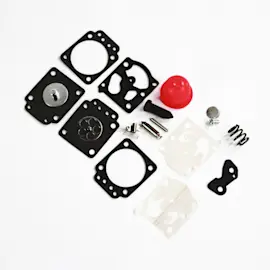
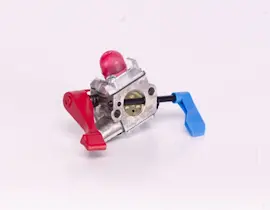
- If starting and running issues persist, a carburetor replacement like the carburetor 530071775 is a common fix.
Last updated: February 2026