Installation guide
 Owner’s manual


What is the average lifespan of a Kenmore washer?
A Kenmore washer like model 11029422801 typically lasts 10 to 15 years with normal household use. Consistent maintenance (proper loading, cleaning, and replacing wear items like hoses) is what most often determines whether it lands closer to 10 years or pushes beyond 15.
What affects lifespan the most
We see these factors make the biggest difference for Kenmore top-load washers like 11029422801:
- Load habits: frequent overloading strains the drive system, basket, and suspension
- Water quality: hard water can accelerate buildup and wear
- Drain performance: slow draining increases stress on the pump and can leave residue
- Leveling and vibration: an unlevel washer can wear suspension and drive components faster
- Preventive maintenance: cleaning and periodic inspections reduce surprise failures
For model-specific care and operating guidance, follow the maintenance and “Washer Care” sections in the 11029422801 washer user manual.
Maintenance that helps you reach the high end (15+ years)
These are the most practical steps to extend service life:
- Keep loads balanced and avoid packing items tightly
- Use the right amount of detergent to prevent excessive suds and residue
- Run periodic cleaning cycles (hot wash with appropriate cleaner) to reduce buildup
- Inspect for small leaks and address them early
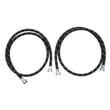
- Replace inlet hoses on schedule (the manual recommends replacement after 5 years)
If you need installation and leveling details that reduce vibration and “walking,” use the 11029422801 washer installation guide.
Common wear points over time (and why)
As washers age, these areas often need attention first:
| Area | What you may notice | Why it happens |
|---|---|---|
| Water inlet hoses | Bulges, cracking, leaks | Rubber ages and pressure cycles fatigue the hose |
| Drain system | Slow drain, standing water | Lint/debris wear the pump and restrict flow |
| Agitation/drive | Weak agitation, unusual noise | Normal wear on drive components over years |
Why it matters
Knowing the typical 10 to 15-year lifespan helps you plan: you can decide when routine repairs (like a pump or lid switch) make sense versus when multiple major issues suggest it is time to replace.
Last updated: January 2026
How can I tell what model washer I have?
For Kenmore washer model 11029422801, the model number is printed on the model and serial number label located under the washer lid. Lift the lid and look around the rim/underside area for a sticker or metal tag that lists both the model and serial numbers.
Where to look on this Kenmore washer
On model 11029422801, we expect the label to be under the lid, but it can be easy to miss if it is worn or covered by residue.
- Lift the lid and check the underside of the lid first
- Check the top rim of the cabinet opening (front and sides)
- Look for a label that says Model and Serial
- Wipe the area with a damp cloth if the print is dusty or faded
- Use a flashlight and view from an angle to read worn text
What the model number helps you do
Once you confirm the model number, you can match the correct diagrams, manuals, and parts for your exact washer.
| What you need | Where it’s used | Example for this washer |
|---|---|---|
| Model number | Identifies the correct washer version | 11029422801 |
| Serial number | Helps date/production tracking | Found on same label |
| Part number/ID | Ensures correct replacement part fit | Example: washer lid switch assembly WP8318084 |
Why it matters
Kenmore model numbers can look similar, and even small differences can change which parts fit (like a lid switch, drain pump, or timer). Confirming 11029422801 first helps avoid ordering the wrong replacement part.
Helpful tip from the documentation
The product record section in the 11029422801 owner’s manual explains that you can find the model and serial number label under the washer lid and suggests recording the numbers for future service.
Last updated: January 2026
Does my Kenmore top load washer have a filter?
Yes, your Kenmore top-load washer model 11029422801 has places where debris can be trapped, but it typically does not have a simple, user-cleanable “lint filter” like a dryer. Most filtering happens through the drain pump and internal screens; routine cleaning focuses on the tub and dispensers (see the 11029422801 washer user manual).
Where “filtering” happens on this model
On model 11029422801, the most common debris-collection points are:
- Drain pump area (coins, hair pins, small socks can cause drain issues)
- Water inlet valve screens (sediment can restrict fill)
- Agitator and tub ring area (lint and residue can collect over time)
- Fabric softener/bleach dispenser parts (can clog and slow dispensing)
If you are troubleshooting a drain problem, the drain pump is the component we check most often.
What to check and clean (safe DIY steps)
Before any inspection, unplug the washer and shut off water.
- Run a hot cycle periodically to reduce residue buildup
- Clean the fabric softener dispenser (if equipped) and rinse it with warm water
- If filling is slow, remove inlet hoses and gently clean the inlet valve screens
- If the washer will not drain, check the drain hose for kinks or clogs
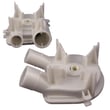
- If you suspect an internal clog, inspect the washer drain pump WP3363394
Quick comparison: “filter” vs. common service points
| Item people call a “filter” | What it really is on 11029422801 | Typical symptom when clogged |
|---|---|---|
| Lint filter | No dedicated lint trap | Lint on clothes, odor |
| Pump filter | Drain pump inlet area | Won’t drain, humming |
| Inlet filter | Inlet valve screens | Slow fill, no fill |
Why it matters
A clogged drain path or inlet screen can look like a major failure, but it is often a simple blockage. Checking these areas first can save time and help you avoid replacing parts unnecessarily.
Last updated: January 2026