Owner’s manual
 View engine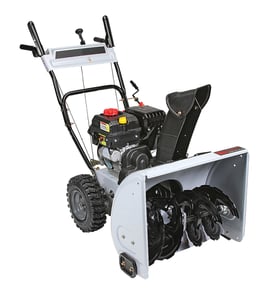



How do I tell what year my snowblower is?
To tell what year your Craftsman snow thrower model 536886121 was made, we use the engine’s manufacture date code (stamped on the engine). That code includes the year and often the exact build date, which is the most reliable way to date the machine.
Most gas snowblowers like the Craftsman 536886121 are dated by the engine code, not the snowblower model number.
- Look on the engine shroud, valve cover, or blower housing for a stamped or printed code
- Check near the spark plug area and recoil starter housing
- Clean off snow, oil, and grime so the digits are readable
- Write the full code down exactly as shown
- Use the decoding instructions in the 536886121 owner's manual
Many small-engine date codes start with the year.
- The first 2 digits commonly indicate the year (example: 99xxxxxx means 1999)
- The next 2 digits often indicate the month
- The next 2 digits often indicate the day
- Remaining digits may identify the plant or production line
| Example code | What it usually means |
|---|---|
| 99011556 | Built in 1999, on January 15 (remaining digits are production info) |
Knowing the build year helps us match the correct parts and service procedures for your Craftsman snowblower, especially for wear items like belts, friction drive components, and ignition parts.
If you are also troubleshooting drive issues while you are identifying the unit, the snowblower drive belt 1733324SM is a common replacement part on this model family.
Last updated: January 2026
Is it cheaper to repair or replace a snowblower?
For a Craftsman snow thrower model 536886121, it’s usually cheaper to repair when the problem is a normal wear item (belts, spark plug, adjustments). Replacement makes more sense when the engine or drive system needs major work and the total repair cost approaches about half the price of a comparable new snowblower.
- Repair if it needs routine maintenance (oil change, spark plug, lubrication) and otherwise runs well.
- Repair if it’s a common wear part like a belt or friction drive component.
- Replace if the engine has severe issues (low compression, heavy smoking, hard starting even after tune-up).
- Replace if the drive system has repeated failures and multiple parts are worn at once.
- Replace if the frame, auger housing, or key assemblies are heavily rusted or damaged.
- Compare total repair estimate (parts + labor) to the cost of a new unit with similar clearing width and features.
Many repairs on the 536886121 are straightforward and cost-effective because they involve service adjustments and wear parts called out in the manual.
- If it won’t move: inspect the friction wheel and related drive components; the manual covers friction wheel replacement steps.
- If it won’t throw snow: inspect the auger drive belt and belt guides; the manual outlines belt replacement.
- If performance is inconsistent: do seasonal maintenance (spark plug, fuel, lubrication, cable adjustments).
| Symptom | Likely area | Example part for this model |
|---|---|---|
| Won’t drive forward | Ground drive belt or friction drive | Snowblower drive belt 1733324SM |
| Auger won’t engage or throws poorly | Auger belt | Auger belt 37X120MA |
Repairing wear items on time protects expensive assemblies (auger, impeller, friction drive) and helps the snowblower stay reliable during storms. Regular seasonal checks and lubrication also reduce repeat breakdowns.
Use the 536886121 owner’s manual for the model-specific steps on belt replacement, friction wheel service, lubrication points, and seasonal adjustments.
Last updated: January 2026
How many years should a snowblower last?
A Craftsman gas snow thrower like model 536886121 typically lasts 10 to 20 years with regular maintenance and proper off-season storage. The biggest life-extenders are clean fuel practices, routine oil changes, and keeping wear items like belts and spark plugs in good shape.
Most snowblowers fall into these real-world ranges:
- Gas snowblowers: 10 to 20 years
- Well-maintained gas units (light to moderate use): 15 to 25 years
- Electric snowblowers: 5 to 10 years
- Heavy-use or poorly maintained units: 3 to 8 years
Your 536886121 owner documentation calls out maintenance and storage as key responsibilities, including regular lubrication and tune-ups. Use the maintenance schedule and storage steps in the 536886121 owner's manual to keep performance strong year after year.
- Running old fuel or storing with untreated gasoline
- Skipping oil changes (especially after the first hours of use)
- Letting rust build up on the auger housing, impeller, or fasteners
- Ignoring belt wear until slipping starts
- Storing indoors with fuel in the tank in a poorly ventilated area (follow the manual’s storage guidance)
| Item | Good interval | Why it matters |
|---|---|---|
| Engine oil | After first 2 hours, then every 25 hours or yearly | Prevents accelerated engine wear |
| Spark plug | Inspect and re-gap periodically | Helps reliable starting and smooth running |
| Belts | Inspect each season | Prevents loss of drive or auger power |
| Lubrication points | Each season and during storage prep | Reduces friction and corrosion |
If you’re seeing drive slipping or weak auger engagement, the most common wear parts are the snowblower drive belt 1733324SM and the auger belt 37X120MA.
A snowblower’s engine and gearbox can last a long time; most “end of life” failures start as preventable maintenance issues (fuel varnish, low oil, rust, or worn belts). Keeping up with seasonal service is the difference between 8 years and 18 years.
Last updated: January 2026
What is the most common problem with snow blowers?
The most common problem we see on gas snowblowers like the Craftsman 536886121 is hard starting or stalling, usually tied to fuel issues (old gas, water in fuel) or ignition maintenance (spark plug). Next most common are drive and auger problems caused by loose or worn belts.
- Difficult starting: check fresh fuel, fuel line flow, and spark plug condition.
- Engine runs erratically or stalls: make sure it is not left running on choke; check for water or dirt in the fuel system.
- Excessive vibration: stop immediately and inspect for loose parts or a damaged impeller.
- Unit will not propel: ground drive belt loose/damaged, traction cable out of adjustment, or worn friction wheel.
- Unit will not discharge snow: auger belt loose/damaged, shear bolt broken, chute clogged, or a foreign object lodged.
| Symptom | Most likely cause | Typical fix |
|---|---|---|
| Won’t start or starts then dies | Bad spark plug; water/dirt in fuel | Replace plug; drain/refresh fuel |
| Won’t move forward | Drive belt loose/damaged | Inspect and replace belt if worn |
| Auger won’t turn | Auger belt loose/damaged; shear bolt broken | Adjust/replace belt; replace shear bolt |
| Throws poorly or clogs | Discharge chute clogged; wet/heavy snow | Clear chute safely; slow ground speed |
If the engine runs but the machine will not move or will not throw snow, belt wear is a top suspect.
- Snowblower drive belt 1733324SM (propel/traction issues)
- Auger belt 37X120MA (auger not turning or weak throwing)
Starting and drive issues are usually simple maintenance problems, but vibration or a jam can quickly damage the auger/impeller system. The operator steps in the 536886121 owner’s manual also emphasize stopping the engine and disconnecting the spark plug wire before clearing clogs or inspecting moving parts.
Last updated: January 2026