Owner’s manual
 Error Codes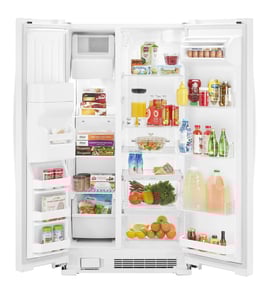


How many cubic feet is the Kenmore 10659124800 refrigerator?
The exact cubic-foot capacity for the Kenmore 10659124800 is listed on the model’s rating label and in the specifications section of the 10659124800 owner's manual. Most Kenmore side-by-side refrigerators in this design range are roughly 22 to 26 cu. ft., but the manual is the best place to confirm your exact number.
How to find the exact capacity (fast)
- Check the specifications pages in the 10659124800 owner's manual.
- Look for the model and serial tag inside the fresh food compartment (commonly on a side wall or ceiling area).
- If the tag lists total volume (or separate refrigerator and freezer volumes), add them for total cu. ft.
- If you see multiple numbers, use the one labeled total or total volume.
Typical capacity ranges (what to expect)
| Refrigerator type | Typical total capacity |
|---|---|
| Side-by-side (standard width) | 22 to 26 cu. ft. |
| Large side-by-side | 26 to 30 cu. ft. |
| French door (large capacity) | 25 to 30+ cu. ft. |
Why it matters
Capacity affects how much food you can store, but it also impacts shelf and bin fit, water filter access, and how you plan airflow around items. Using the correct spec for model 10659124800 helps you compare like-for-like and choose the right storage accessories.
Last updated: February 2026
What is the average lifespan of a Kenmore refrigerator?
Most Kenmore refrigerators last 12 to 15 years with normal household use. For your Kenmore 10659124800 side-by-side refrigerator, regular maintenance (cleaning condenser coils, keeping door seals tight, and maintaining airflow) is what most directly determines whether it reaches the high end of that range.
Typical lifespan and what to expect
- Average: 12 to 15 years
- Often achievable with good care: 15 years
- Shortened lifespan drivers: dirty condenser coils, poor door sealing, frequent overloading, and chronic temperature swings
| Condition | What you’ll notice over time | What it can lead to |
|---|---|---|
| Coils kept clean | Steadier temps, quieter running | Longer compressor life |
| Door gaskets sealing well | Less frost, less run time | Lower wear on fans and sealed system |
| Good airflow (not overpacked) | Faster recovery after door openings | Fewer cooling complaints |
| Water system maintained | Better ice and water performance | Fewer dispenser and ice maker issues |
Maintenance that most extends refrigerator life
We recommend these practical habits for a Kenmore side-by-side like model 10659124800:
- Vacuum and brush condenser coils regularly (more often with pets).
- Keep door gaskets clean and check for gaps that let warm air in.
- Leave space for airflow inside the compartments; avoid blocking vents.
- Replace the water filter on schedule; for this model, the base grille filter is commonly used (see owner's manual).
- Level the refrigerator so doors close fully and consistently.
Why it matters
A refrigerator that runs longer and steadier (because coils are clean and doors seal) puts less stress on high-wear components like the evaporator fan, defrost system, and compressor. That is the difference between a unit that struggles at 10 to 12 years and one that reaches 15 years.
Last updated: February 2026
How do I know what model Kenmore refrigerator I have?
To know which Kenmore refrigerator you have, match the model number printed on the appliance’s ID tag to your paperwork. For Kenmore model 10659124800, the model tag is typically inside the fresh food compartment (often on a side wall or near the crisper area); you can also confirm it in the owner's manual.
Where to find the model number on a Kenmore refrigerator
Check these common locations first:
- Inside the refrigerator (fresh food) section on a side wall
- On the ceiling of the fresh food compartment
- Behind or beside the crisper drawers
- On the cabinet frame near the door hinge area
- On the lower front area near the base grille (varies by design)
What the model number tells you (and why it matters)
Kenmore model numbers identify the exact design and parts list for your refrigerator. That matters because parts like a water filter, ice maker, or water inlet valve can look similar but fit differently across revisions.
Quick example for Kenmore “106” models
Many Kenmore refrigerators with a 106 prefix are built to Whirlpool-style designs, so parts and troubleshooting steps often follow that platform.
How to confirm you wrote the model number correctly
Use this checklist before ordering parts:
- Copy the full number exactly as shown (all digits, no spaces)
- Take a photo of the tag for reference
- Record the serial number too (helps with production variations)
- Compare the number to your paperwork or the owner's manual
Common parts that depend on the exact model
Once you have the model number, you can match parts precisely. For model 10659124800, examples of model-specific parts include:
| System | Example part on this model | What it affects |
|---|---|---|
| Water filtration | Genuine Kenmore refrigerator water filter EDR3RXD1 | Water taste, flow, ice quality |
| Ice making | Refrigerator ice maker WPW10190965 | Ice production |
| Water supply | Refrigerator water inlet valve W10408179 | Water dispenser and ice maker fill |
If the model tag is missing or unreadable
We use the model number to ensure fit. If the tag is damaged, check the owner's manual and any purchase or service paperwork; then compare visible features (dispenser style, shelf layout, filter location) to narrow the match.
Last updated: February 2026
Why is there water leaking from the bottom in my Kenmore refrigerator?
Water leaking from the bottom of your Kenmore 10659124800 side-by-side refrigerator is usually caused by a defrost drain problem (meltwater cannot reach the drain pan), a water supply leak to the dispenser or ice maker, or a spill that keeps reappearing. Use the checks below to pinpoint the source; see the owner's manual for model-specific access and cleaning details.
Quick checks to find the leak source
- Look for ice or water under the freezer floor: this points to a clogged or frozen defrost drain.
- Check the dispenser area: the manual notes the dispenser tray has no drain and must be emptied; overflow can run down the door and pool below.
- Inspect the water filter seating: a recently changed filter can introduce air and cause spurting; flushing the system helps.
- Check the water line behind the refrigerator: look for kinks, loose fittings, or a slow drip.
- Watch for “one or two drops” after dispensing: that is normal; steady dripping is not.
Most common causes and what to do
| What you see | Most likely cause | What we do first |
|---|---|---|
| Puddle after defrost, water under freezer bin | Defrost drain clogged/frozen | Clear the drain path; melt ice with warm water and remove debris |
| Water only near front, after using dispenser | Dispenser drip or spill tray overflow | Hold the glass 2 to 3 seconds after dispensing; empty/clean tray |
| Leak starts after filter change | Filter not fully seated or air in lines | Reinstall filter; flush water system for several minutes |
| Ice maker slow, dispenser weak, occasional leaks | Water pressure or inlet valve issue | Verify supply pressure and line condition; test valve operation |
Parts that commonly fix bottom leaks on this model
If troubleshooting points to the water supply system, these parts are commonly involved:
- Refrigerator water inlet valve W10408179 (controls water flow to the ice maker and dispenser)
- Genuine Kenmore refrigerator water filter EDR3RXD1 (replace if clogged or installed incorrectly)
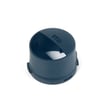
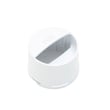
- Refrigerator water filter cap (black) WP2260518B (helps the filter seat and seal correctly)
Why it matters
A recurring leak can lead to ice buildup in the freezer, poor cooling airflow, and floor damage. Fixing the root cause also helps prevent dispenser and ice maker performance problems.
Last updated: February 2026
What are the most common problems with Kenmore refrigerators?
The most common problems we see on Kenmore refrigerators like model 10659124800 are temperature too warm or not cooling, ice maker and dispenser issues, water leaks, excess frost or moisture, and unusual noises. Our owner's manual includes a troubleshooting section with the fastest checks.
Common problems and first checks
- Not cooling or temperature too warm: reduce door openings, confirm vents are not blocked, adjust controls colder and recheck after 24 hours
- Ice maker not making ice: confirm shutoff valve is fully open, straighten any kinked water line, make sure the ice maker is ON; allow 24 hours to start and up to 72 hours for full output
- Water leaks or puddles: check for a loose water line connection, a clogged defrost drain, or an overfilled drip pan
- Moisture buildup or frost: doors left open, humid room air, or a door seal not sealing
- Noises: buzzing during ice fill and gurgling during defrost are often normal; persistent grinding points to a fan issue
Problem-to-fix guide (at a glance)
| Symptom | Most likely cause | What we do first |
|---|---|---|
| Too warm | Doors opened often, controls set warm | Close doors fully; set colder; recheck in 24 hours |
| No ice | Water supply issue | Open shutoff; unkink line; confirm ice maker ON |
| Weak water flow | Filter restriction | Replace filter; flush several gallons |
| Loud fan noise | Fan blade hitting ice | Defrost and clear ice; inspect fan |
Parts that often solve the issue
- Water flow or no ice: refrigerator water inlet valve W10408179
- Ice production problems: refrigerator ice maker WPW10190965
- Low flow or bad taste: genuine Kenmore refrigerator water filter EDR3RXD1
Why it matters
Fixing airflow, door sealing, and water supply problems early prevents food spoilage, repeat ice maker clogs, and unnecessary part replacement.
Last updated: February 2026