Installation guide
 Owner’s manual
 Error Codes


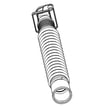
Does my Kenmore top load washer have a filter?
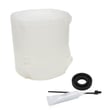
Yes. Your Kenmore top-load washer model 11022532512 uses small inlet valve screens (filters) where the hot and cold water hoses connect; it does not use a typical, user-cleanable lint filter like many older washers. For exact care steps, follow the 11022532512 owner's manual.
Where the “filter” is on this washer
On model 11022532512, the filter you can service is usually the inlet valve screen at the water inlet connections. When those screens clog, you can see fill problems and temperature issues.
Common signs the inlet screens need cleaning:
- Washer fills slowly or stops filling
- Hot or cold water seems weak or missing
- Rinse performance drops because water flow is restricted
- You get inconsistent wash or rinse temperatures
- You notice debris after plumbing work or a water shutoff
How to check and clean the inlet valve screens
- Unplug the washer.
- Turn off both water faucets.
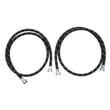
- Remove the hot and cold inlet hoses from the washer.
- Inspect the small screens inside the inlet valve ports; rinse debris away with running water.
- Reconnect hoses, turn water back on, and check for leaks.
Quick do and don’t list
- Do verify both faucets are fully open.
- Do straighten any kinked inlet hoses.
- Do clean screens if water flow is weak.
- Don’t run the washer with hoses reversed (hot to cold).
- Don’t overtighten hose fittings; snug plus a small turn is enough.
If you suspect a valve problem instead of a clogged screen
If screens are clean and water flow is still poor, the inlet valve can be failing. For this model, the replacement is the water inlet valve assembly W11210459.
| Symptom | Most likely cause | Best next step |
|---|---|---|
| Slow fill on both hot and cold | Clogged inlet screens | Clean screens, confirm faucet flow |
| Slow fill on one temperature only | Debris in one screen or hose | Clean that side, check hose |
| No fill but faucets are on | Failed inlet valve or control issue | Inspect valve, consider replacement |
Why it matters
Restricted water flow can cause poor rinsing, wrong temperatures, and longer cycle times. Keeping the inlet screens clear helps the washer clean better and reduces odor-causing residue buildup over time.
Last updated: February 2026
How to do a hard reset on a Kenmore washer?
For Kenmore washer model 11022532512, the most reliable “hard reset” is a power reset: unplug the washer (or switch off the breaker) for 1 minute, restore power, then press START/PAUSE/UNLOCK LID to restart or cancel a stuck cycle. For model-specific button behavior, use the 11022532512 owner's manual.
Hard reset steps (power reset)
- Press START/PAUSE/UNLOCK LID once to pause the cycle.
- If the lid is locked, wait until movement stops; unlocking can take several minutes after a high-speed spin.
- Press and hold START/PAUSE/UNLOCK LID for 3 seconds to cancel the cycle.
- Unplug the washer (or turn off the circuit breaker) for 1 minute.
- Restore power, close the lid, then press START/PAUSE/UNLOCK LID to run a cycle.
If the washer still will not start
These checks fix most “won’t run” situations on this style of Kenmore top-load washer:
- Confirm the cord is in a grounded 3-prong outlet (no extension cord).
- Reset a tripped breaker or replace a blown fuse.
- Make sure the lid is fully closed; the washer will not run with the lid open.
- Avoid tightly packing; redistribute the load and press START/PAUSE/UNLOCK LID.
- If the lid will not lock or unlock normally, inspect the washer lid lock W11307244.
What “hard reset” does (and does not) do
A power reset clears a temporary control glitch and stops a stuck cycle. It does not fix a mechanical failure (drain pump jam, belt slip, actuator issue) that will cause the problem to return.
| Symptom after reset | Most common area to check | Example part for this model |
|---|---|---|
| Won’t start, lid won’t lock | Lid lock/strike alignment | Washer lid lock W11307244 |
| Won’t drain or stops mid-cycle | Drain path/pump | Washer drain pump W10919003 |
| Won’t spin or weak spin | Drive system | Washer drive belt WPW10006384 |
Why it matters
Resetting the washer the right way prevents repeated lid-lock cycling and helps you confirm whether the issue is a one-time control hiccup or a repeatable problem that points to a specific part.
Last updated: February 2026
How to identify a Kenmore washer model?
You can identify your Kenmore washer model by finding the model/serial tag on the washer cabinet. On Kenmore model 11022532512, the tag is typically on the back of the control panel, on the side of the main cabinet near the bottom, or (on some designs) behind the lid or in the lid opening. Use the exact model number to match the correct parts and instructions in the 11022532512 use and care guide.
Where to look for the model/serial tag
Check these common locations first:
- Back of the control panel (often easiest to see)
- Left or right cabinet side near the bottom edge
- Under the lid, around the lid opening (top-load designs)
- Rear panel area (sometimes near the power cord entry)
- Inside the cabinet opening where the lid closes (near the rim)
How to read the tag correctly
Once you find the label, copy the information exactly.
- Model number: use all digits (example: 11022532512)
- Serial number: helps confirm production run and correct revisions
- Brand: Kenmore (useful when searching manuals and diagrams)
- Type: top-loading high efficiency washer (HE)
Quick checklist
| What you need | Why you need it |
|---|---|
| Model number | Ensures parts fit and diagrams match |
| Serial number | Helps confirm version changes within the same model |
| Product type (washer) | Filters to the right troubleshooting and repair info |
Why it matters
Kenmore model numbers can look similar, but small differences can change the correct lid lock, actuator, or water inlet valve. Using the exact model number helps us match you to the right diagrams, installation steps, and replacement parts the first time.
Last updated: February 2026
Is it worth repairing a Kenmore washing machine?
Yes, it’s usually worth repairing a Kenmore washer, especially a Kenmore 11022532512, when the fix is a common wear part and the total repair cost is well below the price of a comparable new washer. Most repairs on belts, lid locks, valves, and drive parts restore full performance.
How we decide if repair makes sense
We use a simple cost and condition check:
- If the washer is otherwise in good shape (no major leaks, no severe rust, no repeated failures), repair is the better value.
- If the problem is a wear item (belt, actuator, lid lock, inlet valve), repair is typically straightforward.
- If the repair involves the drive system or gearcase, compare parts plus labor to replacement cost.
- If the washer is still within the warranty window, repair is the clear first step.
- If you are unsure of the failure, use the troubleshooting section in the 11022532512 owner’s manual to narrow it down.
Common repairs on model 11022532512 (and what they usually mean)
These are frequent, practical fixes for this top-loading high efficiency washer:
| Symptom | Likely area | Example part for this model |
|---|---|---|
| Won’t spin or weak spin | Drive belt or drive pulley | Washer drive belt WPW10006384 or whirlpool washer drive pulley W10721967 |
| Lid won’t lock, won’t start | Lid lock system | Washer lid lock (model-specific part varies) |
| Won’t fill or fills slowly | Water inlet valve or screens | Water inlet valve assembly |
| Drains poorly or stops mid-cycle | Drain pump or drain hose | Washer drain pump or drain hose |
Quick checks before you spend money on parts
- Confirm you are using High Efficiency (HE) detergent; this model is designed for HE detergent.
- Make sure the lid is closing properly; leaving the lid open too long can interrupt a cycle.
- Check for a kinked drain hose and proper standpipe height.
- Listen for motor sound during spin; a slipping belt often sounds like the motor runs but the basket does not.
- Look under the washer for belt dust or a loose pulley shield.
Why it matters
A targeted repair keeps a solid Kenmore washer running for years, avoids the learning curve of a new machine, and often fixes the exact root cause (like a worn belt or failing lid lock) instead of replacing the whole appliance.
Last updated: February 2026
What is the average lifespan of a Kenmore washer?
Most Kenmore washers last 10 to 15 years with normal household use and basic maintenance. For your Kenmore top-load high efficiency washer model 11022532512, consistent care (proper loading, HE detergent, and routine cleaning) is what most often determines whether you reach the high end of that range; see the 11022532512 owner's manual for the maintenance schedule and operating tips.
Typical lifespan and what changes it
A washer’s service life is mainly driven by load size, cycle frequency, water quality, and how well the machine is kept level.
- 10 to 15 years is the typical expectation for a modern residential washer
- Heavy use (large families, daily loads) shortens lifespan
- Overloading and chronic out-of-balance spinning accelerates wear on suspension and drive parts
- Hard water and detergent buildup increase odor, residue, and component stress
- Using HE detergent only helps prevent oversudsing and performance issues
Parts that commonly wear first (and why)
When a washer starts acting up after years of use, these are frequent wear items on top-load designs like model 11022532512:
- Drive system wear (belt, pulley, gearcase) from high-torque starts and heavy loads
- Drain issues from debris or pump wear
- Lid lock problems that prevent starting or spinning
- Suspension wear that causes banging or walking
Quick examples from this model’s parts list
| Symptom | Commonly involved part | What it affects |
|---|---|---|
| Won’t spin or weak spin | Washer actuator W10913953 | Shifting between agitate and spin |
| Loud thumping, off-balance | Damper assembly W10780045 | Tub stability during spin |
| Won’t drain or drains slowly | Washer drain pump W10919003 | Pumping water out |
| Lid won’t lock, won’t start/spin | Washer lid lock W11307244 | Safety interlock for cycles |
Why it matters
Knowing the typical 10 to 15 year lifespan helps you decide whether to maintain, repair, or replace. If your washer is under 10 years old, a targeted repair (like a lid lock or actuator) often restores reliable operation; beyond 10 to 15 years, multiple worn components can stack up.
Last updated: February 2026
What is the capacity of Kenmore model 11022532512?
Kenmore washer model 11022532512 is a top-loading high efficiency washer; its exact tub capacity (in cubic feet) is listed in the product specifications section of the 11022532512 owner's manual. If you are planning load sizes, most Kenmore top-load HE washers in this style are typically in the 3.0 to 4.0 cu. ft. range.
Where to find the exact capacity
Check the specifications section in the 11022532512 owner's manual. We recommend using the manual instead of estimating because capacity can vary even within the Kenmore 110 series.
What to look for:
- “Capacity” or “Washer capacity” (cu. ft.)
- “Basket volume” or “tub volume”
- Model list showing 110.22532512 (sometimes grouped with close variants)
Practical load guidance (works even if you do not know cu. ft.)
Capacity matters most when you are trying to prevent poor cleaning, out-of-balance spinning, or long cycle times.
- Load clothes loosely; do not pack them down
- Keep items below the top rim of the wash basket
- Mix large and small items to balance the load
- Use only HE detergent (this model is designed for HE detergent)
- For bulky items, use the Bulky/Sheets type cycle if your control panel offers it
Quick reference: “typical” capacity ranges by washer type
| Washer type | Typical capacity range | Best for |
|---|---|---|
| Compact top-load | 1.5 to 2.5 cu. ft. | Small loads, tight spaces |
| Standard top-load HE | 3.0 to 4.0 cu. ft. | Medium to large loads |
| Large top-load HE | 4.5 to 6.0+ cu. ft. | Comforters, big family loads |
Why it matters
Using the correct load size helps your 11022532512 washer agitate and spin properly, reduces wear on drive components (like the belt and pulley), and improves rinse performance in high efficiency cycles.
Last updated: February 2026