Error Codes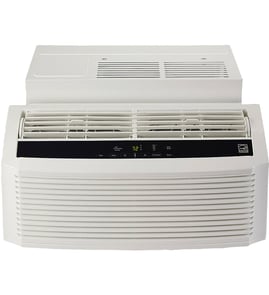




How many sq ft will a 10,000 BTU AC cool?
A 10,000 BTU room air conditioner like the GE AHC10LYQ1 typically cools about 350 to 550 sq ft, with around 400 to 450 sq ft being a solid target in average conditions (8 ft ceilings, decent insulation, moderate sun).
Quick sizing guide (10,000 BTU)
- Best fit (typical room): 400 to 450 sq ft
- Possible range: 350 to 550 sq ft
- If the room is very sunny or poorly insulated: size toward the low end
- If ceilings are over 8 ft: treat the room as “larger” than its floor area
- If it is a kitchen or has lots of people/equipment heat: size toward the high BTU side
What changes the square footage the most
These factors can swing performance more than the BTU number alone:
- Ceiling height (volume matters)
- Direct afternoon sun and large windows
- Insulation quality and air leaks
- Open floor plans and connected hallways
- Heat sources (cooking, computers, TVs)
- Dirty filter restricting airflow (common on window units)
Rule-of-thumb adjustments
| Room condition | What to do | Practical result |
|---|---|---|
| Shaded, well insulated | Stay near the top of the range | Closer to 500 to 550 sq ft |
| Average conditions | Use the “best fit” target | Around 400 to 450 sq ft |
| Hot/sunny, leaky, or high ceilings | Increase capacity or reduce coverage | Closer to 350 to 400 sq ft |
Why it matters
Right-sizing helps the GE AHC10LYQ1 cool evenly and control humidity. Too small runs constantly and struggles; too large can short-cycle, leaving the room clammy.
Keep cooling performance consistent
If your unit is running but not keeping up, start with airflow and basic maintenance:
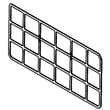
- Clean or replace the room air conditioner air filter WJ85X24905
- Make sure the front grille and return air path are not blocked
- Confirm the unit is level and sealed at the window
- Use a reasonable set temperature (for example, 72 to 76°F)
- Follow our room air conditioner installation and operation tips
Last updated: February 2026
How many years should a home AC unit last?
Most home central AC systems last 15 to 20 years. A GE AHC10LYQ1 room air conditioner typically has a shorter service life than central air, and regular maintenance (especially keeping airflow clean) is what most often determines whether it reaches the high end of its range.
Typical lifespan by AC type
| AC type | Typical lifespan | What usually ends it |
|---|---|---|
| Central air conditioner | 15 to 20 years | Compressor wear, refrigerant leaks, coil corrosion |
| Room (window) air conditioner like GE AHC10LYQ1 | 8 to 12 years | Fan motor wear, control issues, corrosion, poor airflow |
What to do to help your AC last longer
- Clean or replace the air filter regularly; restricted airflow is a top cause of icing and poor cooling.
- Keep the front grille and filter area seated correctly so air does not bypass the filter.
- Keep the outdoor side clear of leaves and lint; gently clean coils and straighten bent fins.
- Use a stable power source; avoid undersized extension cords and frequent power cycling.
- If the unit has error codes or won’t respond to controls, use GE error codes to narrow the failure.
Parts that commonly affect performance on this model
If your AHC10LYQ1 is running longer, icing up, or not cooling well, these model-matched parts are worth checking first:
- Room air conditioner air filter WJ85X24905 (dirty or damaged filter)
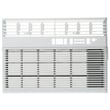
- Room air conditioner front panel assembly WJ71X24904 (air leaks, broken louvers, poor airflow path)
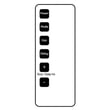
- Room air conditioner remote control WJ26X23777 (settings not changing, intermittent operation)
Why it matters
A “worn out” AC is often an airflow or control problem first. Fixing a clogged filter, improving coil airflow, or correcting control issues can restore cooling and reduce compressor run time, which is the biggest driver of long-term wear.
Last updated: February 2026
What is the 3 minute rule for AC?
The 3-minute rule means waiting at least 3 minutes after you turn off your GE AHC10LYQ1 room air conditioner before turning it back on. That pause lets refrigerant pressures equalize so the compressor does not restart under heavy load, which helps prevent overheating and premature compressor failure.
Why the 3-minute rule matters
Short-cycling (rapid off-on-off operation) is hard on an air conditioner’s compressor and electrical components. Following the rule helps:
- Reduce compressor strain at startup
- Prevent nuisance tripping or dimming lights from high inrush current
- Improve long-term reliability of the sealed system
- Avoid intermittent “won’t start” symptoms after a quick restart
- Keep cooling performance more consistent
When you should apply it
Use the 3-minute rule any time power is interrupted or you change modes quickly.
- After turning the unit off and deciding to turn it back on
- After a brief power outage or breaker trip
- After unplugging and plugging the unit back in
- After switching from Cool to Fan and back to Cool
- After changing the temperature setting and the unit stops, then you immediately want it running again
What you may notice on modern GE window units
Many room air conditioners include an anti-short-cycle delay. If yours has it, the unit may appear “unresponsive” for a few minutes after you press ON, then it starts normally.
| Situation | What to do | What’s normal |
|---|---|---|
| Turned off, then back on quickly | Wait 3 minutes | Compressor starts after delay |
| Power flickers/off-on | Leave controls set to Cool | Unit restarts after delay |
| Unit hums briefly then stops | Wait, then retry after 3 minutes | Humming should not persist |
Quick checks if it still will not restart
If waiting 3 minutes does not help, focus on airflow and controls first.
- Clean or replace the room air conditioner air filter WJ85X24905 if it is dirty
- Make sure the front panel is seated correctly (a loose panel can affect airflow); inspect the room air conditioner front panel assembly WJ71X24904
- Verify the outlet has power and the plug is fully seated
- Try the remote again if buttons are unresponsive; check the room air conditioner remote control WJ26X23777
- If an error code appears, use GE error codes to identify the next step
Why it matters
A compressor that repeatedly tries to start against high pressure runs hotter and draws more current; the 3-minute rule prevents that high-stress restart and helps extend the life of your room air conditioner.
Last updated: February 2026
Which AC is best for a 10 by 10 room?
For a 10 by 10 room (about 100 sq. ft.), we recommend a window (room) air conditioner in the 5,000 to 6,000 BTU range; that size cools efficiently without short-cycling. If you already own a GE room air conditioner like model AHC10LYQ1, keeping the air filter clean is one of the biggest factors in how well it cools.
Quick sizing guide (what to buy)
- Target capacity: 5,000 to 6,000 BTU for ~100 sq. ft.
- If the room gets strong sun: move up about 1,000 BTU
- If it is a kitchen or has heat sources: move up about 1,000 to 2,000 BTU
- If ceilings are over 8 ft: increase capacity modestly
- If the unit is oversized: it can cool fast but remove less humidity (comfort drops)
What “best” means for comfort and cost
| What you care about | What to choose | Why it helps |
|---|---|---|
| Lowest upfront cost | Standard window AC | Simple, effective cooling |
| Lowest electric use | Inverter or high-efficiency model | Runs steadier, fewer on/off cycles |
| Better sleep | Quieter model with “sleep” mode | Lower noise and steadier temps |
| Better humidity control | Right-sized (not oversized) unit | Longer run time removes more moisture |
If your current AC is not cooling well
Before replacing the unit, we recommend these checks because they fix many “not cold enough” complaints:
- Clean or replace the air filter (restricted airflow reduces cooling)
- Make sure the front grille and return air path are not blocked by curtains or furniture
- Set the mode to Cool and fan to High for testing
- Confirm the window is sealed and the side panels are tight
- Check for ice on the indoor coil; if iced, turn to Fan Only until it melts
If you need a replacement filter for GE model AHC10LYQ1, use the room air conditioner air filter WJ85X24905. For deeper diagnosis steps, use our window air conditioner running but not cooling guide.
Why it matters
A properly sized room air conditioner cools a 10 by 10 room faster, controls humidity better, and avoids wasted energy from short cycling. Maintenance items like the air filter often make the difference between “okay” cooling and “great” cooling.
Last updated: February 2026