Owner’s manual
 Error Codes



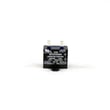
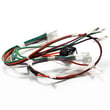
What are signs of a failing refrigerator?
Common signs your Amana refrigerator model ABB1924BRW00 is failing include warm temperatures, frequent running, unusual noises, water leaks, and heavy frost or condensation. These symptoms usually point to airflow, defrost, sealed-system, or control problems that need prompt troubleshooting.
Quick signs to watch for
- Food spoils faster than normal in the fresh food section
- Freezer temperature rises or ice cream feels soft
- Compressor runs almost constantly or cycles very rapidly
- New buzzing, clicking, grinding, or rattling sounds
- Water pooling under the unit or inside the refrigerator
- Excess frost on the freezer back wall or blocked vents
What the symptom usually means
| Symptom | Most common cause | What to check first |
|---|---|---|
| Warm fridge, freezer OK | Airflow issue | Vents blocked by food; evaporator fan running |
| Warm freezer and fridge | Cooling system issue | Condenser coils dirty; compressor/start device |
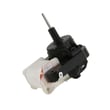
| Loud fan noise | Fan blade or motor | Inspect refrigerator evaporator fan motor WPW10128551 and refrigerator evaporator fan blade WP2169142 |
| Frost buildup on freezer wall | Defrost problem | Door seal, door left ajar, defrost components |
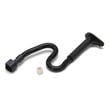
| Water leak/puddles | Drain issue | Clear drain; consider extension-dr W10619951 if drain tube is damaged |
| Temps swing up and down | Sensor/control issue | Thermistor and control board |
DIY checks we recommend first
- Confirm temperatures: Set refrigerator to about 37°F and freezer to 0°F; verify with a thermometer after 24 hours.
- Listen for the evaporator fan: When the freezer door switch is held closed, you should typically hear the fan running.
- Check door sealing: Look for gaps, torn gasket areas, or moisture around the door perimeter.
- Inspect for frost patterns: A solid frost sheet on the freezer back panel often signals a defrost or airflow restriction.
- Look for leaks: Trace water to the drain area, drip pan, or water line connections.
Why it matters
Catching these signs early helps prevent food loss and can keep a smaller issue (like a failing fan motor, thermistor, or door gasket) from turning into a bigger cooling failure.
For model-specific operating details and care steps, use the ABB1924BRW00 owner's manual.
Last updated: February 2026
What is the average lifespan of an Amana refrigerator?
Most Amana refrigerators, including the Amana ABB1924BRW00 bottom-mount style, typically last 10 to 15 years with normal household use. Consistent cleaning, correct temperature settings, and quick fixes for airflow or sealing issues help you reach the high end of that range.
Typical lifespan and what affects it
A refrigerator’s life depends more on operating conditions than brand alone.
- Heat and ventilation: Dirty condenser coils and tight clearances make the compressor run longer.
- Door seal condition: Leaky gaskets cause temperature swings and excess run time.
- Fan airflow: A weak evaporator fan can lead to warm sections and longer cooling cycles.
- Defrost and drainage: Ice buildup or drain clogs can stress the cooling system.
- Power quality: Frequent outages or surges can shorten control and compressor life.
Quick maintenance that extends life
We recommend these habits for ABB1924BRW00 and most bottom-mount refrigerators:
- Set temps to 37°F for fresh food and 0°F for freezer.
- Clean condenser coils and the toe-kick area every 6 to 12 months.
- Keep vents inside the cabinet unblocked (avoid packing items against air returns).
- Check door closing and gasket contact; correct gaps before frost or sweating starts.
- Address unusual noises early (often a fan blade, fan motor, or ice contact issue).
Common “wear” parts vs. major repairs
| Repair type | What it usually involves | What it means for lifespan |
|---|---|---|
| Routine wear item | Gasket, switch, fan blade | Often worth doing to keep cooling efficient |
| Mid-level repair | Fan motor, thermistor, control board | Can restore normal operation and extend life |
| Major sealed-system | Compressor or refrigerant work | Higher cost; compare to age and condition |
If you’re troubleshooting airflow or noise, the refrigerator evaporator fan motor WPW10128551 and refrigerator evaporator fan blade WP2169142 are common components in the cooling air path.
Why it matters
A refrigerator that runs longer to hold temperature uses more energy and wears out key components faster. Simple upkeep and early part replacement often prevent compressor strain and food temperature problems.
For model-specific care and cleaning steps, follow the ABB1924BRW00 owner's manual.
Last updated: February 2026
Which fridge is better, frost or no frost?
For most kitchens, a no-frost (frost-free/automatic defrost) refrigerator is the better choice because it prevents heavy ice buildup and keeps airflow and temperatures more consistent with less maintenance. Amana model ABB1924BRW00 is designed for automatic defrost convenience; use it as the no-frost baseline when comparing other models.
Quick comparison: frost vs no frost
| Feature | Frost (manual defrost) | No frost (automatic defrost) |
|---|---|---|
| Defrosting | You defrost by hand | Defrost system manages it |
| Temperature stability | Drops as frost builds | More consistent overall |
| Usable freezer space | Shrinks with frost | Stays usable longer |
| Food moisture | Less air movement | More air movement can dry uncovered food |
| Upkeep | Higher | Lower |
How to decide (what matters most)
- Choose no frost for everyday use, steady cooling, and minimal maintenance.
- Choose manual defrost if you prefer a simpler design and you are fine scheduling defrosting.
- If you open the freezer often, no frost helps keep vents and drawers from icing over.
- If you store uncovered foods, plan to use containers; no frost airflow can dry items faster.
- For model-specific care and operating details, follow the ABB1924BRW00 owner's manual.
Why it matters
Frost buildup acts like insulation on the evaporator and can block airflow; that forces longer run times and can lead to warm spots. No-frost designs reduce those problems by controlling frost automatically.
Last updated: February 2026