 Installation guide
 Owner’s manual
 Error Codes


How do I tell what model my Kenmore dryer is?
Your Kenmore dryer’s model number is printed on the model and serial number label; on model 11072202101, it’s located at the top inside the dryer door well. Use that full model number to match the correct parts, cycles, and installation requirements in the 11072202101 owner's manual.
Check these common Kenmore dryer label locations (start with the door opening):
- Top inside the dryer door well (most common for Kenmore 110-series dryers)
- Inside the door opening on the cabinet frame
- Rear panel of the dryer cabinet
- Near the lint screen housing (varies by design)
Kenmore model numbers often start with a prefix such as 110 or 796. The full number (for example, 11072202101) is what we use to ensure the right fit for parts like a drum belt, door switch, or gas ignition components.
| What you see | What it tells us | What to do next |
|---|---|---|
| Full model number (example: 11072202101) | Exact dryer configuration | Use it to select parts and diagrams |
| Serial number | Production identifier | Keep it for service records |
| Only “110” or “796” | Model family prefix, not enough for parts | Find the complete model number |
- Write the model number exactly as shown on the label (include all digits)
- Take a clear photo of the label before shopping
- Match the part description to your symptom (no heat, won’t start, squealing, etc.)
- Use the manual to confirm features and cycle controls for your exact unit
Kenmore dryers can look similar across series, but internal components (like the drive system, thermostats, and gas burner parts) vary by model. Using the exact model number keeps your repair accurate and prevents returns.
Last updated: February 2026
How to replace a Kenmore dryer thermistor?
On Kenmore gas dryer model 11072202101, the part most people call a “thermistor” is the temperature-sensing device used to control heat. On this model, the temperature sensor you’ll commonly replace is the radiant sensor mounted on the burner assembly; follow the access and safety steps in the 11072202101 owner’s manual.
For 11072202101, the temperature sensor part in our parts list is:
- Dryer radiant sensor WP338906 (flame/heat sensing device on the gas burner)
If your symptom is “no heat” or “heat stops after a few minutes,” also check the thermostats used for temperature control and safety.
- Unplug the dryer and shut off the gas supply valve.
- Let the dryer cool completely.
- Remove the lower front access panel (or front panel, depending on cabinet style).
- Locate the burner assembly; the radiant sensor is a small sensor mounted near the burner flame path.
- Disconnect the wire connector from the sensor.
- Remove the mounting screw(s), swap in the new sensor, and reinstall the screw(s).
- Reconnect wiring, reinstall panels, turn gas back on, plug in, then run a timed heat cycle to confirm ignition and steady heat.
- Airflow restriction: clean lint screen and confirm the vent is not crushed or kinked (setup checks are covered in the 11072202101 installation guide).
- Weak ignition components: inspect igniter and gas valve coils.
- Temperature control parts:
| Part | Role in heating | Common failure symptom |
|---|---|---|
| Radiant sensor | Confirms burner flame/heat so gas valve operation stays correct | Ignites then shuts off, or no sustained heat |
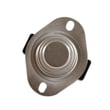
| Operating thermostat | Regulates drum temperature during cycling | Overheats or underheats, long dry times |
| High-limit thermostat | Safety cutoff for overheating | Heat stops, repeated overheating shutdowns |
Using the correct temperature-sensing part for 11072202101 prevents misdiagnosis and repeat repairs. A failed sensor or thermostat can cause no heat, short-cycling heat, overheating, and longer dry times.
Last updated: February 2026
What is the average lifespan of 11072202101?
The average lifespan of the Kenmore 11072202101 gas dryer is 13 years. Keeping airflow unrestricted (clean lint screen, clear venting) and replacing wear items like the drum belt and rollers when they start to slip or squeal helps the dryer reach that typical service life.
A dryer usually fails early because of heat and airflow problems or normal wear in moving parts. Focus on these items:
- Clean the lint screen before every load (a clogged screen traps heat)
- Keep the exhaust vent short, straight, and unkinked; long vent runs shorten dryer life
- Avoid crushing the vent when pushing the dryer back
- Do not overload; heavy loads strain the motor, belt, and drum support
- Fix new noises early (thumping, squealing, scraping) to prevent secondary damage
These parts commonly wear out on gas dryers and are often replaced during the dryer’s life:
| Symptom | Likely wear area | Example part for this model |
|---|---|---|
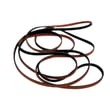
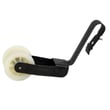
| Drum not turning, burning rubber smell | Belt or idler system | Dryer drum belt 341241 |
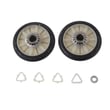
| Squealing, thumping, rumbling | Drum support rollers and shafts | Dryer repair kit 4392065 |
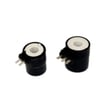
| Runs but no heat or heat cuts out | Ignition or temperature control | Dryer gas valve coil kit 279834 or dryer operating thermostat WP3387134 |
A gas dryer that runs hot because of restricted venting dries slower, uses more energy, and puts extra stress on thermostats, the burner system, and the motor. The installation instructions for 11072202101 explain that vent systems longer than specified shorten dryer life and reduce performance; use the vent length chart in the installation guide.
- Every load: clean lint screen
- Monthly: inspect vent behind dryer for kinks or crushing
- Every 6 to 12 months: clean the full vent run to the outside hood
- As needed: address noise, poor drying, or no-heat symptoms promptly
Last updated: March 2026








