 Installation guide
 Owner’s manual





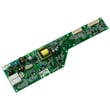
Is GE profile considered high end?
Yes. GE Profile is GE’s higher-end line, positioned above standard GE models and typically offering more premium design, quieter operation, and advanced features. Your GE dishwasher model PDT855SSJ2SS falls within the GE Profile family covered in the PDT855SSJ2SS owner's manual.
GE Profile models are commonly considered high end because they tend to include upgrades in these areas:
- Quieter wash systems and better sound insulation
- More wash options and sensor-based cycle adjustments
- Enhanced drying features and venting designs
- More flexible rack layouts and premium rack hardware
- More advanced controls and status indicators
The fastest way to verify which premium features your specific dishwasher has is to match the feature list and control panel functions to the documentation.
- Check the feature and cycle descriptions in the PDT855SSJ2SS owner's manual
- Use the model and serial label on the tub wall just inside the door to confirm you are referencing the correct unit
- Compare your control panel layout to the manual’s “getting started” and cycle selection sections
- If you are troubleshooting a feature, use the GE electronic dishwasher error codes reference to interpret displayed codes
| Line | Typical positioning | What you usually get |
|---|---|---|
| GE | Core line | Essential cycles and features |
| GE Profile | High end | More features, quieter operation, upgraded design |
Knowing that PDT855SSJ2SS is a GE Profile dishwasher helps when choosing parts and troubleshooting steps because higher-end models often use different controls, venting components, and rack hardware than entry-level units.
Last updated: January 2026
What is the average lifespan of a GE dishwasher?
A GE dishwasher like model PDT855SSJ2SS typically lasts 10 to 12 years. With consistent care and normal household use, many dishwashers reach the low-to-mid teens; heavy daily use and poor maintenance usually shorten service life.
- Cleaning and maintenance: keeping the filter area and spray paths clear
- Water quality: hard water scale can stress the heater, pump, and valves
- Loading habits: overloading can reduce cleaning and strain racks and rollers
- Detergent and rinse aid use: correct amounts reduce residue and wear
- Leak prevention: catching small drips early protects the base and wiring
Use the care steps in the PDT855SSJ2SS owner's manual as your baseline, then add these habits:
- Rinse heavy food scraps off dishes (no need to pre-wash clean plates)
- Run a monthly cleaning cycle with a dishwasher cleaner or descaling product if you have hard water
- Inspect the door seal area for debris and wipe it clean
- Make sure spray arms spin freely and holes are not clogged
- Keep the drain path clear so the unit does not run with standing water
| What you notice | What it usually means | What to do next |
|---|---|---|
| Cleaning is weak but cycles finish | Spray blockage, loading issue, or circulation restriction | Clean spray paths; review loading tips in the manual |
| Water remains in the bottom | Drain restriction or drain pump issue | Check drain hose routing and clogs |
| Won’t start or stops mid-cycle | Door latch, control, or error condition | Check the latch and look up the displayed code |
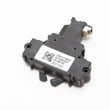
If the door will not latch consistently, the door latch system is a common wear point; for this model, the GE dishwasher door latch lock WD21X10490 is one of the key components.
Knowing the typical 10 to 12 year lifespan helps you decide whether to invest in repairs (like a latch, drain hose, or pump) versus planning a replacement, especially if multiple symptoms show up close together.
Last updated: January 2026
What is PDT855SSJ2SS?
PDT855SSJ2SS is a GE dishwasher model number (PDT 825-855 series). We use it to match the correct replacement parts, diagrams, and care instructions for your specific dishwasher, including loading guidance, detergent and rinse aid recommendations, and troubleshooting steps in the PDT855SSJ2SS owner's manual.
- It identifies the exact GE dishwasher configuration so parts fit correctly.
- It ties to the PDT 825-855 series coverage in the manual.
- It helps confirm rack layout and place-setting guidance for PDT855 models.
- It helps narrow down electrical and control components when diagnosing issues.
You can find the model and serial number on a label on the tub wall just inside the door.
- Open the dishwasher door fully
- Look on the tub wall just inside the door opening
- Write down both the model and serial number
- Use the full model number when ordering parts
If your dishwasher will not start, will not latch, or shows door-related symptoms, these are common checks:
| Symptom | Likely area to inspect | Example part for PDT855SSJ2SS |
|---|---|---|
| Door will not latch or unit will not run | Door latch and strike alignment | GE dishwasher door latch lock WD21X10490 |
| Door closes but pops back open | Strike, latch engagement | Dishwasher door latch strike WD13X10071 |
| Door feels too heavy or drops | Door spring/tension | Dishwasher door spring WD03X20445 |
Using the correct model number prevents ordering the wrong GE dishwasher parts (like a control panel, drain hose, or circulation pump) and helps you follow the right operating and loading instructions for wash performance.
Last updated: January 2026
What is the most common problem with GE dishwashers?
On the GE PDT855SSJ2SS dishwasher, the most common issues we see are the dishwasher not starting, not draining well, or not cleaning well. These problems usually trace back to a door that is not fully latched, a clogged filter or drain path, or a control setting such as a locked control panel.
- Won’t start or won’t run: confirm the door is firmly closed and the Start sequence is followed.
- No power symptoms: check the breaker or fuse; some installs use a wall switch near the disposer.
- Not draining: check the drain hose routing and for clogs at the sink/disposal connection.
- Poor cleaning or detergent left in cup: make sure large items are not blocking wash jets or the detergent dispenser.
- Suds in the tub: use only automatic dishwasher detergent (hand dish soap causes sudsing).
For model-specific operating steps and loading guidance, use the PDT855SSJ2SS owner’s manual.
| Symptom | Most likely cause | First action |
|---|---|---|
| Dishwasher won’t run | Door not fully closed, control locked, breaker tripped | Close door firmly; unlock controls; reset breaker |
| Water remains in tub | Drain restriction | Inspect drain path; check for kinks/clogs |
| Detergent not dispensing | Dishes blocking dispenser or spray | Reload to clear dispenser area |
| Suds/foam | Wrong detergent | Switch to automatic dishwasher detergent |
If the door feels closed but the dishwasher still will not start, the latch system is a common place to inspect.
- Check the strike alignment and mounting screws
- Look for a cracked strike or a latch that does not “click” consistently
- Inspect wiring connections at the latch area (with power off)
If you find damage, the correct model-matched parts include the GE dishwasher door latch lock WD21X10490 and the dishwasher door latch strike WD13X10071.
Start and drain problems can look like a “bad control,” but many GE dishwasher issues are caused by simple conditions: a door that is not fully latched, a locked control panel, or a restricted drain. Fixing those first prevents unnecessary part replacement and repeat service.
For code-based diagnosis, use GE electronic dishwasher error codes.
Last updated: January 2026





