Owner’s manual
 Error Codes



What is the most common problem with whirlpool washers?
For the Whirlpool WTW6200VW0 washer, the most common customer-reported issues are no drain or no spin, excessive vibration or loud noise during spin, and water leaks. These symptoms are often tied to a drain restriction, an out-of-balance condition, or wear in key drive and suspension components.
Most common issues we see (and what to check first)
- Won’t drain or drains slowly: check the drain hose for kinks, clogs, or an improper standpipe/laundry tub setup (see WTW6200VW0 washer manual).
- Won’t spin or stops with an unbalanced load: redistribute the load, avoid washing single heavy items, and confirm the washer is level.
- Loud roaring/grinding in spin: commonly points to bearing/shaft wear.
- Banging or walking: often related to suspension wear or leveling.
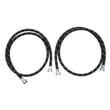
- Leaking: check fill hoses, hose washers/screens, and the inlet valve area.
Parts that commonly solve these symptoms on WTW6200VW0
If troubleshooting points to a failed component, these model-matched parts are common fixes:
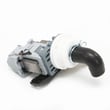
- Water pump W10536347 for drain/no-drain symptoms
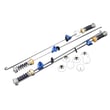
- Washer suspension W10820048 for excessive vibration or banging
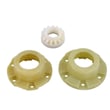
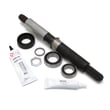
- Whirlpool washer tub bearing and drive shaft kit W10435302 for loud bearing noise in spin
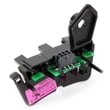
- Valve W10364988 for fill problems or leaking at the inlet valve
Quick symptom-to-part guide
| Symptom | Most likely area | Example model-matched part |
|---|---|---|
| Won’t drain / “Ld” drain time issue | Drain path or pump | Water pump |
| Loud roar/grind in spin | Tub bearing/drive shaft | Bearing and drive shaft kit |
| Banging, walking, off-balance | Suspension/leveling | Washer suspension |
| Slow fill / “LF” fill time issue | Inlet screens/valve/hoses | Water inlet valve |
Why it matters
On the WTW6200VW0, drain and spin problems can trigger longer cycle times, error codes, and repeat out-of-balance stops. Catching a worn pump, suspension, or bearing early can prevent secondary damage and reduce noise and vibration.
Last updated: January 2026
Are Whirlpool washer parts interchangeable?
Whirlpool washer parts are not reliably interchangeable across models; for your Whirlpool WTW6200VW0, we recommend using parts listed as compatible for this exact model to ensure proper fit, correct operation, and safe performance. Even similar-looking parts can differ by revision, wiring, or mounting.
What “interchangeable” really means for WTW6200VW0
Parts interchangeability depends on the exact model number and the manufacturer’s approved substitutions. A part that fits one Whirlpool Cabrio-style washer may not fit another due to changes in:
- Electrical connectors and harness routing
- Mounting points, hose sizes, and seals
- Control programming requirements
- Basket, hub, and drive system revisions
- Sensor calibration and error-code logic
For model-specific procedures and safety steps, use the WTW6200VW0 washer manual.
Examples of parts that must match the model
If you are troubleshooting a symptom (no drain, leaks, vibration, won’t start), these are common components where “close enough” often causes repeat failures:
- Drain system parts such as the water pump W10536347
- Fill system parts such as the valve W10364988
- Lid locking and safety interlock components
- Suspension and balance components
- Electronic control and sensor components
Quick compatibility checklist
Use this checklist before ordering or installing a replacement part:
- Confirm the washer model is WTW6200VW0 (not just “WTW6200”)
- Match the part ID/number exactly or use an approved substitute
- Compare photos, ports, and connector style (especially for pumps and valves)
- If replacing an electrical part, disconnect power first
- After installation, run a test cycle and check for leaks and abnormal noise
Common “looks the same” parts vs real fit
| Part type | Why it may not interchange | What to verify |
|---|---|---|
| Drain pump | Port angle, impeller design, wiring plug | Hose routing, connector match |
| Water inlet valve | Solenoid layout, flow rate, bracket | Mounting holes, inlet screens |
| Suspension | Rod length, spring rate | Model-specific kit match |
Why it matters
Using the correct WTW6200VW0-COMPATIBLE parts helps prevent leaks, error codes, poor cleaning, excessive vibration, and premature wear. It also reduces the chance of needing to redo the repair.
Last updated: January 2026
What is the capacity of the wtw6200vw0?
We can’t confirm an exact cubic-foot capacity for the Whirlpool WTW6200VW0 from the model-specific information available here. Whirlpool often uses similar model numbers across revisions, and capacity can vary by suffix; use the loading guidance in the WTW6200VW0 washer manual to avoid overloading and out-of-balance issues.
How to load the WTW6200VW0 correctly (works even if capacity varies)
- Load loosely; don’t pack items down.
- Keep the load below the top of the basket so items can move freely.
- Mix large and small items to help the basket balance.
- For bulky items, wash one or two at a time and add a few small towels to balance.
- If the washer goes out of balance, pause, redistribute, then restart spin.
Capacity vs. “usable load size” (what you’ll notice)
| What you measure | What it means | What to do |
|---|---|---|
| Basket looks overfilled | Poor turnover and rinsing | Reduce load size, load loosely |
| Frequent UL/uL (unbalanced) | Load distribution issue | Redistribute, check leveling |
| Long fill times or poor cleaning | Sensing and turnover affected | Don’t compress laundry, choose correct cycle |
Why it matters
Even with auto water level sensing, overloading a top-load washer can reduce cleaning, increase vibration, and trigger unbalanced spin behavior. Following the WTW6200VW0 loading guidance protects the drive system and improves wash results.
Parts that help when “capacity” feels smaller due to vibration or wobble
If normal-sized loads cause shaking or walking, these model-compatible parts are commonly involved:
- Washer suspension W10820048 (supports the tub and helps control movement)
- Foot leveling assembly W10739673 (stabilizes the cabinet on the floor)
For more on how sensing fills behave, see how auto-load sensing washers work (and when they don't).
Last updated: January 2026