Installation guide
 Owner’s manual
 Error Codes


How to get a Kenmore 66514812N612 dishwasher to drain?
To drain your Kenmore Elite dishwasher model 66514812N612, press and hold Cancel/Drain for about 3 to 5 seconds to start the drain pump. If it still will not drain, the fix is usually a drain-hose routing issue, a clog, or a drain pump problem.
- Press and hold Cancel/Drain for 3 to 5 seconds.
- Wait 60 to 90 seconds and listen for the drain pump running.
- If the controls are unresponsive, reset power at the breaker for 1 minute, then try Cancel/Drain again.
- Check the sink disposer inlet for a knockout plug (new disposer installs commonly leave it in place).
- Inspect the drain hose for kinks, crushing, or a low spot holding dirty water.
Your installation matters as much as the pump. For this model, the drain hose connection should be made above the drain trap and at least 20 inches above the floor. We also recommend looping the hose up and fastening it under the counter, or using an air gap when required.
- Drain hose connects to a waste tee or disposer inlet above the trap
- Connection point is 20 in. (50.8 cm) minimum above the floor
- Hose is looped high under the counter or routed through an air gap
- Disposer knockout plug is removed (if connected to a disposer)
- Hose is not longer than 12 ft (3.7 m) and is heat and detergent resistant
| Symptom | Most likely cause | What to check first |
|---|---|---|
| Hums but no draining | Clog or kink | Hose routing and disposer inlet |
| No pump sound | Control not in drain mode or pump issue | Cancel/Drain, then power reset |
| Drains slowly | Partial blockage | Hose, waste tee, air gap (if used) |
If the hose is split, soft, or clogged internally, replacement is often the fastest fix. For this model, the correct replacement is the dishwasher drain hose 8269144A.
A properly routed drain hose (high loop or air gap, correct height, and correct connection point) prevents backflow and standing water, which helps avoid odors, poor cleaning, and repeat drain errors.
For model-specific installation routing details, follow the installation guide.
Last updated: February 2026
How to do a hard reset on a Kenmore dishwasher?
For a Kenmore Elite dishwasher model 66514812N612, a “hard reset” is typically done by cutting power to the dishwasher for a few minutes, then restoring power and restarting a cycle. This clears many control glitches and gets the control panel responding again.
- Press Cancel/Drain (if the dishwasher is responsive) and let it stop.
- Turn OFF power at the breaker (or unplug if accessible).
- Wait 3 to 5 minutes.
- Restore power.
- Close the door fully and press Start/Resume; make sure the door is closed within 3 seconds so the Start/Resume light does not keep flashing.
Use these checks first because they fix the most common “needs a reset” symptoms:
- Confirm the door is closed tightly and latched.
- Check the home circuit breaker or fuse.
- Verify the cycle is selected correctly before pressing Start/Resume.
- Make sure the water supply is turned on.
- If Start/Resume flashes, press Start/Resume again and close the door within 3 seconds.
| Symptom | Reset helps most when | Next step if it returns |
|---|---|---|
| Control panel frozen | Temporary software glitch | Power reset again; then check for error codes |
| Start/Resume flashing | Door not closed fast enough | Close door within 3 seconds after pressing Start/Resume |
| Stops mid-cycle | Interruption or latch issue | Check latch, power, and error codes |
A power reset is the fastest way to clear a stuck electronic control state without replacing parts. If the issue repeats, checking stored fault codes and basic start conditions usually points to the real cause.
For model-specific operating steps and button functions, follow the owner's manual. For troubleshooting by fault code, use Kenmore 665 model dishwasher error codes.
Last updated: February 2026
What is the service code f4e1 on a Kenmore 66514812N612 dishwasher?
On Kenmore Elite dishwasher model 66514812N612, service code F4E1 points to a wash motor (circulation pump motor) problem, meaning the dishwasher is not moving water through the spray arms correctly. After correcting the cause (often a failed motor), clear the code so the control can run a new cycle normally (see the owner's manual).
- Turn off power at the breaker for 1 minute, then restore power and try a cycle.
- Confirm the door is fully closed and latched.
- Verify the water supply valve is turned on.
- Check that the tub is not overfilled with suds (use only dishwasher detergent).
- Inspect the spray arms for blockage and make sure they spin freely.
Many Kenmore 665-series dishwashers clear stored fault codes by pressing any 3 keys in this pattern:
- Press 1-2-3, then 1-2-3, then 1-2-3 (three sequences total)
- Press the keys within about 1 second of each other
If your console layout uses different labeled buttons, the pattern still works as long as you use three different keys consistently.
If F4E1 returns quickly after a reset, the most common causes are a failing wash motor, a wiring/connection problem, or a control not sensing proper motor operation.
| Symptom you notice | Most likely area to inspect | Example part that can be involved |
|---|---|---|
| Little or no spray action, poor cleaning | Wash motor / sump area | Dishwasher pump and motor assembly W10902589 |
| Stops mid-cycle, drains but does not wash | Motor circuit, control sensing | Electronic control W11341628 |
| Intermittent operation | Loose connection, damaged wiring | Wiring harness W10834766 |
A dishwasher can fill and drain normally but still leave dishes dirty if the wash motor is not circulating water. Addressing F4E1 early helps prevent repeated cycle failures and reduces strain on the control and motor circuit.
For model-specific diagnostics and the exact key sequence for your console, follow the troubleshooting steps in the owner's manual and compare the code behavior to the guidance in Kenmore 665 model dishwasher error codes.
Last updated: February 2026
Is it worth repairing a Kenmore dishwasher?
For a Kenmore Elite dishwasher model 66514812N612, repair is worth it when the problem is a single, fixable failure (leak, no-fill, poor draining, rack issues) and the unit is otherwise cleaning well. If you are facing repeated breakdowns or multiple major parts at once, replacement is the better long-term value.
Use this checklist before you spend money on parts or labor:
- The dishwasher completes cycles reliably (even if performance is poor).
- The tub is not damaged and the door closes and latches normally.
- The issue is isolated (one symptom, one likely part).
- You can confirm basics first: power, water supply, and a properly latched door.
- You are not seeing multiple unrelated symptoms (leaking plus not heating plus not draining).
A good first reference for model-specific operating and care guidance is the owner's manual.
These are typical, targeted fixes that often restore normal operation without replacing the dishwasher:
- Leaks at the door: replace the door gasket or lower door seal.
- Not filling or filling slowly: check the water supply and consider the inlet valve.
- Not draining: inspect the drain path and drain hose routing.
- Rack problems: worn rollers or adjusters can make racks fall off track or bind.
| Symptom | Likely area | Example part for 66514812N612 |
|---|---|---|
| Water at the front/edges | Door sealing | Dishwasher door seal W11177741 |
| Poor fill or no fill | Water inlet | Dishwasher water inlet valve WPW10327249 |
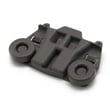
| Rack won’t roll smoothly | Rack hardware | Dishwasher dishrack roller assembly, lower WPW10195417 |
| Standing water after cycle | Drain path | Dishwasher drain hose 8269144A |
Replacement is the better choice when the dishwasher is costing you time and money repeatedly:
- Multiple major components are failing (control plus motor plus leaks).
- Cycles are consistently abnormal even after basic troubleshooting.
- You need several high-cost assemblies at the same time.
- Performance is poor across cleaning, draining, and drying.
A targeted repair can restore cleaning and drying while avoiding the disruption of uninstalling and reinstalling a built-in dishwasher. Also, newer energy-efficient dishwashers commonly run 2 to 3 hours per load, and some cycles can run longer with certain options, so “long cycles” alone are not a reason to replace. See the installation guide for operation checks and “does not operate” basics.
Last updated: February 2026
How many decibels is a Kenmore 66514812N612 dishwasher?
The exact decibel rating for the Kenmore Elite 66514812N612 is listed on the model’s product specifications and is not part of the installation measurements or parts information. Most Kenmore Elite built-in dishwashers of this style run in the quiet range (commonly about 40 to 50 dBA).
Use these reliable places first:
- Check the specifications section in the 66514812N612 owner's manual.
- Look for a rating label on the tub edge or door frame; it often lists electrical data and may include sound rating.
- If you have the original sales sheet, the noise rating is typically shown near “sound level” or “dBA”.
- Compare only to the same model number; similar Kenmore 665-series units can have different sound packages.
Dishwasher sound ratings are easiest to interpret as ranges:
| Noise rating (dBA) | What you typically notice | Best for |
|---|---|---|
| 38 to 44 | Very quiet; wash sounds are faint | Open kitchens, running at night |
| 45 to 50 | Quiet; clearly audible but not intrusive | Most homes |
| 51+ | Noticeable; can stand out in a quiet room | Utility areas, budget models |
These checks fix many “suddenly loud” complaints:
- Confirm the dishwasher is level and secured to the cabinet; follow the mounting and leveling steps in the installation guide.
- Make sure spray arms are not striking tall dishes.
- Remove debris that can rattle in the sump area.
- Check for vibration from a kinked or tapping drain hose.
- If you hear repeated clicking or grinding, inspect wash system components such as the dishwasher diverter motor W10537869.
A small change in dBA is noticeable during long cycles. If your dishwasher’s sound level increases, it usually points to vibration, an obstruction, or a worn wash system part.
Last updated: February 2026