Error Codes



How do I find the right GE part number?
To find the right GE part number for your GFE24JMKNFES bottom-mount refrigerator, match the part to your exact model number first, then confirm the part by name and location on the appliance. Ordering by model number prevents fit and compatibility problems.
Where to find your model number (GFE24JMKNFES)
Check for the model/serial tag in common refrigerator locations:
- Inside the fresh food compartment on a side wall
- On the ceiling of the fresh food compartment near the lights
- On the door frame when the doors are open
- Behind the lower toe grille (kickplate) area
- On the back of the refrigerator cabinet
How we recommend matching the correct part
Use this checklist to avoid ordering the wrong item:
- Start with the exact model number: GFE24JMKNFES (letters and numbers must match)
- Identify the symptom or broken item: cooling issue, water leak, dispenser problem, door not sealing, etc.
- Match the part name to the function: for example, a sensor vs. a control board
- Confirm the part location: freezer section, fresh food section, dispenser area, rear machine compartment
- Compare your original part: connector style, mounting points, and any markings on the old part
Common examples for this model
These are examples of parts you might select once you have the symptom narrowed down:
| If the problem is... | Part type to look for | Example part on this model page |
|---|---|---|
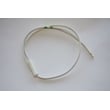
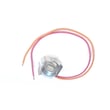
| Temperature seems inaccurate or fluctuates | Temperature sensor | GE profile refrigerator temperature sensor WR55X10025 |
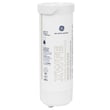
| Water tastes/looks off or filter light is on | Water filter | GE refrigerator water filter XWFE |
| Water dispenser is weak or not dispensing | Water inlet valve | Refrigerator water inlet valve WR57X26303 |
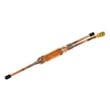
| Frost buildup or defrost problems | Defrost thermostat | Refrigerator defrost bi-metal thermostat WR50X10069 |
Why it matters
GE often uses similar-looking parts across multiple refrigerator platforms, but wiring, firmware, and mounting can differ by model. Using GFE24JMKNFES as the starting point helps ensure the part number you choose is the correct match for your refrigerator’s configuration.
Helpful next step if you are troubleshooting first
If you are trying to identify the right part based on a fault code or display message, use GE refrigerator error codes to narrow the failure to a specific system (cooling, defrost, fan, or water/ice).
Last updated: February 2026
How to order GE Appliance parts?
To order replacement parts for your GE GFE24JMKNFES bottom-mount refrigerator, we recommend using the parts list for this model so you get the correct fit. If you need help identifying the right part, match the symptom to the part category (water, cooling, doors, ice maker) before ordering.
Fast way to order the right part
- Confirm the full model number: GFE24JMKNFES
- Find the part by symptom (leak, warm temps, no ice, door not sealing)
- Compare the part ID to your existing part label when possible
- Order directly from the model’s parts list, then install after unplugging the refrigerator
- Keep your serial number handy in case you need order support
Common parts customers order for this model
| Symptom | Part to check | Example part on this model |
|---|---|---|
| Water tastes bad or flow is slow | Water filter | GE refrigerator water filter XWFE |
| No water dispensing or no ice | Water inlet valve | Refrigerator water inlet valve WR57X26303 |
| Frost buildup or warm freezer | Defrost thermostat | Refrigerator defrost bi-metal thermostat WR50X10069 |
| Temps fluctuate | Temperature sensor | GE profile refrigerator temperature sensor WR55X10025 |
If you are ordering because something is not working
Use a quick diagnosis step first so you do not buy the wrong part:
- Warm fresh food section: check airflow and the refrigerator air damper WR60X27396
- Door not closing or moisture around the door: inspect the refrigerator door gasket WR14X40082
- Ice maker or dispenser issues: start with filter and water supply checks
For step-by-step help on common GE refrigerator issues, use our DIY guide: how to replace the water filter in a GE refrigerator.
Why it matters
GE refrigerators often use multiple similar-looking parts across model families. Ordering by the exact model number (GFE24JMKNFES) and matching the part ID reduces returns and gets your refrigerator back to proper cooling, sealing, and water flow faster.
Last updated: February 2026
Is a top mount or bottom mount fridge better?
A bottom-mount refrigerator like the GE GFE24JMKNFES is usually better for everyday convenience because fresh food sits at eye level and the freezer is in a pull-out drawer. A top-mount is often the better pick if you want the simplest layout and typically lower purchase and repair costs.
Quick comparison
| Feature | Bottom-mount (like GFE24JMKNFES) | Top-mount |
|---|---|---|
| Fresh food access | Best (less bending) | Good |
| Freezer access | Drawer, easy to organize | Upper door, easy reach |
| Organization | Strong (bins, drawers) | Basic, fewer drawers |
| Energy use | Often slightly higher | Often slightly lower |
| Repair complexity | More features, more parts | Simpler design |
When a bottom-mount is the better choice
- You use the refrigerator section most and want it at eye level.
- You like better organization (crispers, deli drawers, adjustable shelving).
- You want a freezer drawer that keeps items from falling out when you open the door.
- You are OK with a little more complexity (more sensors, controls, and airflow parts).
If your bottom-mount is not holding steady temperatures, common culprits include airflow and sensing issues. On this model, parts like the GE profile refrigerator temperature sensor WR55X10025 and the refrigerator air damper WR60X27396 are often involved in temperature regulation.
When a top-mount is the better choice
- You want a straightforward, budget-friendly layout.
- You prefer fewer features and typically simpler repairs.
- You want a design that often uses slightly less energy in real-world use.
Why it matters
The “better” style is the one that matches how you cook and shop. Most households open the fresh-food doors far more than the freezer; bottom-mount designs reduce bending and make it easier to see and rotate perishables, which can help reduce food waste.
Related help for GE refrigerators
Last updated: February 2026
What is the most common problem with a GE refrigerator?
The most common GE refrigerator complaint is not cooling properly (fresh food warm, freezer warming, or temperatures swinging). On your GE GFE24JMKNFES bottom-mount refrigerator, the most frequent root causes are airflow problems, a failing evaporator fan, a bad temperature sensor, or a defrost issue.
Most common symptoms and what they usually point to
- Fresh food warm, freezer OK: air damper stuck, blocked vents, evaporator fan issue
- Both sections warm: condenser airflow problem, control issue, sealed system/compressor problem
- Frost buildup on back wall/freezer panel: defrost system problem
- Clicking, buzzing, or loud fan noise: fan blade rubbing, failing fan motor
- Water under crisper or on floor: defrost drain restriction or water supply/valve issue
Quick checks we recommend first (no tools)
- Confirm controls are set to typical targets: 37°F fresh food, 0°F freezer.
- Make sure vents are not blocked by food packages.
- Clean condenser area and verify the unit has a few inches of breathing room.
- Check door seals for gaps and make sure doors close fully.
- If the door alarm is sounding or won’t reset, follow how to reset the door alarm on a GE refrigerator.
Parts that commonly fix “not cooling” on GFE24JMKNFES
| Problem area | What fails | Example part for this model |
|---|---|---|
| Temperature sensing | Sensor reads wrong temp | GE profile refrigerator temperature sensor WR55X10025 |
| Airflow to fresh food | Damper sticks closed/open | Refrigerator air damper WR60X27396 |
| Defrost control | Frost blocks airflow | Refrigerator defrost bi-metal thermostat WR50X10069 |
Why it matters
When cooling is weak, food safety and ice production are affected quickly. Catching airflow, sensor, or defrost problems early also helps prevent longer run times and extra wear on the compressor and control boards.
Last updated: February 2026