Error Codes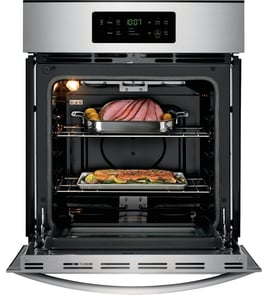



How long do Jenn-Air wall ovens last?
A Jenn-Air wall oven like model JJW9627CAB typically lasts 15 years with normal household use. Keeping the oven sealed properly, heating evenly, and addressing small issues early helps you reach that lifespan without repeated breakdowns.
Typical lifespan and what affects it
Most wall ovens fall into a predictable range depending on use and maintenance:
- Typical lifespan: 15 years
- Heavy use (daily high-heat cooking): closer to 12 to 15 years
- Light use and good care: 15 to 20 years
- Big lifespan killers: overheating, poor airflow around the cabinet, slamming the door, and running with a damaged door gasket
Signs your oven is nearing end-of-life (or needs a key repair)
If you see these symptoms, the oven may still be worth repairing, but it is time to inspect core heating and sealing parts:
- Preheats slowly or never reaches set temperature
- Uneven baking (hot spots, undercooked centers)
- Broil is weak or only partially heats
- Door does not close tightly, heat leaks, or you smell hot air escaping
- Control panel acts erratically (random beeps, resets, or unresponsive keys)
Common repairs that can extend life
Replacing a few high-wear parts often restores performance and prevents strain on the control system.
| Symptom | Common cause | Example part for JJW9627CAB |
|---|---|---|
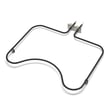
| Poor baking or no heat on bake | Failed lower heating element | Bake element 71001636 |
| Heat leaking, long preheat | Worn or torn gasket | Door seal WP71001970 |
| No broil or weak broil | Failed broil element | Broiler element WPW10310260 |
| Dead display or erratic operation | Electronic control issue | Wall oven control board WP71003401 |
Why it matters
A wall oven that seals well and heats evenly cooks faster, holds temperature more accurately, and reduces stress on components like the control board and wiring. Small fixes (like a door seal or heating element) often prevent bigger failures later.
Last updated: January 2026
How to reset Jenn-Air wall oven?
To reset a Jenn-Air wall oven model JJW9627CAB, we recommend doing a power reset at the breaker: turn the oven circuit breaker(s) OFF for 1 minute, then turn them back ON. After power is restored, start a Bake cycle and watch for 1 minute to confirm normal operation.
Quick reset steps (breaker reset)
- Turn OFF the wall oven circuit breaker(s) in your home electrical panel.
- Wait 1 full minute.
- Turn the breaker(s) ON.
- Set the oven to Bake and start the cycle.
- Monitor the display for 1 minute to make sure the error does not return.
If the display says “Press Cancel to reset”
Some control messages clear by canceling the current cycle.
- Press Cancel/Off once.
- Wait about 30 seconds.
- Start Bake again and confirm the oven heats.
What to check if the problem comes back
If the oven resets but the same error or symptom returns, the issue is usually heat-related, a connection issue, or a control problem.
- No heat or weak heat: inspect the bake circuit; a failed element is common.
- Burning smell or arcing: stop using the oven and check wiring connections at the element terminals.
- Intermittent operation or random beeping: control or keypad issues are possible.
- Error returns immediately after reset: document the exact code and when it appears.
| Symptom after reset | Most common area to inspect | Example part for JJW9627CAB |
|---|---|---|
| Oven will not bake | Bake heating circuit | Bake element 71001636 |
| Oven will not broil | Broil heating circuit | Broiler element WPW10310260 |
| Dead display or erratic control | Electronic control | Wall oven control board WP71003401 |
Why it matters
A breaker reset clears temporary control glitches and restores normal operation after a power interruption. If the same failure repeats, the reset helps confirm you are dealing with a component issue (like a heating element, receptacle, or control board) rather than a one-time software lockup.
Last updated: January 2026
How to calibrate a Jenn-Air wall oven?
To calibrate the oven temperature on a Jenn-Air JJW9627CAB wall oven, we adjust the control’s bake temperature offset so the displayed set temperature matches your real cooking results. The exact button sequence varies by control style, but the goal is always the same: change the bake offset a few degrees at a time.
Before you calibrate (quick accuracy check)
- Use an oven thermometer you trust; place it on the center rack.
- Preheat at least 20 minutes; ovens cycle, so don’t judge early.
- Check the average temperature over 15 to 20 minutes (not a single peak).
- Test at a common baking temp (350°F) and again at 425°F.
- If the oven is off by more than about 30°F, treat it as a repair issue, not a calibration issue.
Typical calibration steps (most Jenn-Air electronic controls)
- Start with the oven idle (not cooking).
- Enter the settings or calibration mode (often labeled “Temp Adjust”, “Oven Calibration”, or similar).
- Select Bake temperature offset.
- Adjust the offset up or down in small steps (commonly 5°F increments).
- Save/exit and retest with the thermometer.
Common offset guidance
| If your oven is… | Set the offset… | Example |
|---|---|---|
| 10°F low | +10°F | 350°F set cooks like 340°F |
| 15°F high | -15°F | 350°F set cooks like 365°F |
| Inconsistent by 40°F+ | Do not calibrate | Diagnose heating/control issue |
If calibration does not fix it
Calibration will not correct a weak heater, bad connection, or control problem. These are the most common causes we see:
- Bake element not heating evenly or not glowing at all (inspect and test)
- Burned or loose element connection at the receptacle
- Control not sending steady power to the element
- Door not sealing, causing heat loss and long preheat times
If you suspect a heating problem, check the bake element 71001636 and the receptacle WP74011278 for visible damage, overheating, or loose terminals.
Why it matters
A correct temperature offset helps prevent underbaked centers, overbrowned tops, and long cook times. It also reduces unnecessary part replacements by confirming whether the issue is calibration or a true heating failure.
Last updated: January 2026
Why is my Jenn-Air oven not working?
If your Jenn-Air wall oven model JJW9627CAB is completely dead or won’t heat, the most common causes are a tripped breaker, a loose/burned wire connection, or a failed electronic control. Start with a power reset and basic checks, then move to component testing and replacement.
Quick checks first (fastest fixes)
- Check the breaker: Wall ovens typically use a 240V double-pole breaker; reset it fully OFF, then ON.
- Confirm the display and lights: If the display is blank and the oven light is out, suspect a power supply issue.
- Power reset: Turn the breaker OFF for 5 minutes, then restore power.
- Look for error codes: If the display works but the oven will not start, an error code can point to the failed circuit.
- Inspect the door: A door not closing squarely can prevent some functions; check the hinge alignment.
What to check based on the symptom
| Symptom | Most likely causes | What we recommend next |
|---|---|---|
| No display, no heat | Breaker, terminal block wiring, failed control board | Verify power at junction box; inspect wiring; test control board |
| Display works, no bake | Failed bake element, burned receptacle, control issue | Inspect element; check for heat damage at connectors |
| Display works, no broil | Failed broil element, control issue | Inspect broil element for blisters or breaks |
| Intermittent operation | Loose connection, failing control board | Check harness plugs; look for overheated terminals |
Parts that commonly solve “not working” on this model
- If the oven won’t bake, inspect the bake element 71001636 for cracks, blisters, or a visible break.
- If wiring at the element looks overheated or loose, the receptacle WP74011278 is a common fix for burned element connections.
- If the oven is unresponsive or behaves erratically, a failing wall oven control board WP71003401 is a frequent cause.
Why it matters
An oven that is not working can be a simple power issue, but overheated terminals and failing controls can worsen quickly. Catching a burned connector or weak heating circuit early helps prevent repeat failures and inconsistent temperatures.
Last updated: January 2026