Owner’s manual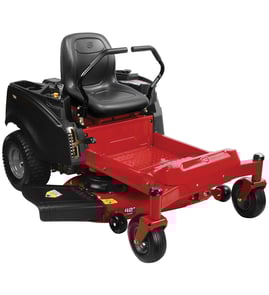



Where can I find my Husqvarna riding mower model number?
On a Husqvarna riding mower, the model number is printed on the product ID label, usually under the seat or on the chassis frame. For your Husqvarna model 289820, start by checking under the seat pan and along the frame rails near the engine area; then confirm the exact label location in the 289820 owner's manual.
Check these spots in order; they are the most common on rear-engine riders and similar chassis layouts:
- Under the seat: on the seat pan, seat bracket, or the top of the rear fender pan
- Chassis frame rail: left or right side rail, often near the rear wheels
- Near the engine: on the frame close to the engine mounting area (not on the muffler heat shield)
- Footrest area: inside the body panel near the operator platform
- Rear body panel: near the hitch plate or rear frame crossmember
For parts lookup and diagrams, we recommend recording these items exactly as shown:
- Model number (example: 289820)
- Product number (sometimes listed as “PNC” or “Product No.”)
- Serial number
- Manufacture date code (if shown)
| Label item | What it’s used for | Tip |
|---|---|---|
| Model number | Finds the correct parts diagrams | Match every digit exactly |
| Product number | Confirms the exact build/version | Helps avoid wrong-fit parts |
| Serial number | Identifies production run | Useful when parts changed mid-year |
Husqvarna riding mowers can have multiple versions that look similar but use different belts, blades, pulleys, switches, or wiring. Using the full model and product numbers helps us match the correct riding mower and tractor parts the first time.
After you locate the label, use the model number to pull the correct diagrams and part listings for your mower. If you are searching beyond the parts shown for this model, use Sears PartsDirect and enter 289820 exactly.
Last updated: February 2026
Is 500 hours a lot for a Husqvarna riding mower?
500 hours is a meaningful amount of use for a Husqvarna riding mower like model 289820, but it is not automatically “too much.” For residential riding mowers, 500 hours typically lands in the mid-life range; condition and maintenance history matter more than the number alone.
Most residential riding mowers run about 500 to 1,500 hours over their lifetime. At 500 hours, we treat the mower as “proven,” meaning wear items and maintenance-sensitive systems (deck drive, steering, fuel, and electrical) deserve a closer look.
- Cold start behavior: starts quickly without excessive cranking or smoke
- Engine sound: steady idle, no knocking, no surging under load
- Hydro/drive feel: smooth forward and reverse, no slipping or jerky engagement
- Mower deck cut quality: even cut, no heavy vibration, no belt squeal
- Steering and front end: minimal play, tracks straight
- Leaks: check under engine and transaxle area for oil or wet grime
At around 500 hours, these items often separate a “good 500-hour mower” from a “worn-out 500-hour mower”:
| Area | What to look for | Why it matters |
|---|---|---|
| Engine | Regular oil changes, clean air filter | Extends engine life and power |
| Fuel system | Clean fuel, stable idle | Prevents hard starting and stalling |
| Deck drive | Belt condition, pulley noise, spindle play | Affects cut quality and reliability |
| Electrical | Strong battery, clean terminals, solid charging | Prevents no-start issues |
Hour count is only one piece of the story. A 500-hour Husqvarna 289820 that was stored dry, serviced on schedule, and kept clean can outperform a lower-hour mower that ran with dirty oil, old fuel, or a neglected deck.
Use the diagrams and maintenance guidance in the 289820 owner's manual to match service intervals and confirm the correct replacement parts. If you need to search beyond the model parts list, we also offer model-based lookup on Sears PartsDirect.
Last updated: February 2026
What are the parts of a lawn mower engine?
A Husqvarna rear-engine riding mower like model 289820 uses a small gasoline engine made up of fuel, air, ignition, and mechanical drive components that work together to create power and spin the crankshaft. For model-specific layouts and service points, use the 289820 owner's manual.
- Fuel tank and fuel line: stores fuel and delivers it to the carburetor.
- Carburetor (or fuel injection on some engines): mixes fuel with air for combustion.
- Air filter and intake: keeps dirt out of the engine; a clogged filter causes hard starting and power loss.
- Spark plug and ignition coil: creates the spark that ignites the air-fuel mixture.
- Flywheel: helps smooth engine rotation; often contains magnets used by the ignition system.
- Starter system: recoil starter on some engines, electric starter motor and solenoid on many riding mowers.
- Crankshaft, piston, and connecting rod: converts combustion force into rotating motion.
- Crankcase and lubrication system: holds oil and lubricates internal parts.
These are not always inside the engine block, but they directly affect engine operation:
| System | Common components | What you notice when it fails |
|---|---|---|
| Cooling | cooling fins, blower housing | overheating, power drop, oil smell |
| Exhaust | muffler, exhaust gasket | loud running, fumes, popping |
| Safety interlocks | seat switch, brake switch, PTO switch | no crank or starts then dies |
| Charging | stator/alternator, regulator, battery | dead battery, dim lights |
Knowing which system you are dealing with helps you troubleshoot faster. For example, a no-start is usually fuel delivery, spark/ignition, or a safety switch issue, while low power is often air filter, carburetor, or compression related.
We recommend matching parts by the exact model number (289820) and the engine’s identification label (often on the blower housing or valve cover). If you need to search beyond the model parts list, use Sears PartsDirect.
Last updated: February 2026
What are the different YTH24V48 part numbers?
YTH24V48 is a Husqvarna tractor model designation, not a single part number; the “different part numbers” depend on the exact tractor’s full model number and the specific component you need (blade, belt, spindle, switch, etc.). For the most accurate match, use the parts diagrams and identification info in the 289820 manual and then search by your mower’s full model number on Sears PartsDirect.
- Find the full model number and product number from the mower’s ID tag (not just the series name).
- Choose the system you’re repairing: mower deck, drive, steering, electrical, or engine.
- Use the exploded-view diagram to match the callout number to the exact part shape and quantity.
- Confirm critical fit details before ordering: deck width, belt routing, pulley groove type, and mounting pattern.
- If a prior owner modified the mower (aftermarket blades, non-OEM pulleys), match by measurements and diagram position.
| Part category | What to confirm first | What goes wrong if it’s mismatched |
|---|---|---|
| Mower blades | Deck size and blade mount style | Won’t bolt on or cuts unevenly |
| Deck belt | Routing and belt profile (V vs. flat) | Slips, squeals, or jumps off |
| Spindle assembly | Shaft size and pulley type | Vibration, poor cut, fast wear |
| Idler pulley | Flat vs. V-groove, bore size | Belt tracking problems |
| Battery | Group size and terminal orientation | Won’t fit or cables won’t reach |
Husqvarna mowers that look similar often use different belts, blades, and pulleys across production runs. Matching the exact full model number to the correct diagram callout prevents repeat repairs and premature belt or spindle wear.
Last updated: February 2026