Installation guide
 Owner’s manual
 Error Codes


Where can I find my Frigidaire dryer model number?
For your Frigidaire FASE7074LW0 electric dryer, the model number is printed on the dryer serial plate located along the top of the door opening. Open the dryer door and look around the upper edge of the opening for the label.
- Open the dryer door fully.
- Look along the top lip of the door opening (inside the opening, not on the door itself).
- Find the serial plate label; it lists both the model number and serial number.
- Write the numbers down exactly as shown (letters and numbers).
- Use that model number when ordering parts like a drum belt, heating element, or control board.
| Item on label | What it’s used for |
|---|---|
| Model number | Matching parts and diagrams to your exact dryer |
| Serial number | Identifying production details for service and support |
| Electrical info | Confirming power requirements during troubleshooting |
Using the exact model number prevents ordering the wrong Frigidaire dryer parts. Even small model variations can change the correct fit for items like the white-westinghouse dryer drum belt 134719300 or the dryer heating circuit components.
The location of the model and serial plate is shown in the FASE7074LW0 owner's manual.
Last updated: February 2026
How much does it cost to replace a heating element in a Frigidaire dryer?
For a Frigidaire electric dryer like model FASE7074LW0, the total cost to replace the heating element is usually $200 to $400 (part plus labor). If you do it yourself, you typically pay $100 to $200 for the heating element, plus any related safety parts.
Replacement cost depends on whether you replace only the heater or also the common “no-heat” safety parts.
- Heating element price: commonly $100 to $200 for many Frigidaire-style electric dryers
- Labor (service call + install): commonly $100 to $250
- Optional related parts (often replaced together): thermal limiter, high-limit thermostat, thermistor
- Vent cleaning (if airflow is restricted): may add cost but prevents repeat failures
If the dryer overheated, a safety device can open and stop heat. The owner’s guide notes that a thermal limiter switch can shut the motor off in an overheated situation and must be replaced after the underlying fault is corrected.
| Symptom | Common related part | Example part for this model |
|---|---|---|
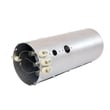
| Runs but won’t heat | Heating element | Frigidaire dryer heating element 134792700 |
| Overheats or shuts down | Inlet thermal limiter | Dryer inlet thermal limiter 137032600 |
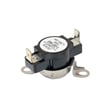
| Overheats, cycles heat oddly | High-limit thermostat | Kelvinator dryer high-limit thermostat 3204267 |
| Poor temperature control | Thermistor | Dryer thermistor 134587700 |
These checks are especially important on electric models.
- Confirm the dryer has full 240V power; if one house fuse is blown, the drum can run but the heater will not.
- Clean the lint screen and verify strong airflow at the outside vent.
- Check for a crushed, kinked, or excessively long vent run.
- Review the troubleshooting section in the FASE7074LW0 owner’s manual.
Restricted airflow and partial power are two of the most common reasons an electric dryer “won’t heat.” Fixing those first helps prevent a new heating element from failing early and keeps drying times normal.
Last updated: February 2026
What does code e64 mean on a Frigidaire dryer?
On the Frigidaire FASE7074LW0 electric dryer, error code E64 points to a heating circuit problem, most commonly the heating element not heating correctly (open, shorted, or not being powered as expected). Start by checking airflow and then test the heater circuit components.
- Reset power: unplug the dryer (or switch off the breaker) for 2 minutes, then restore power.
- Confirm the cycle: use a heated cycle (not Air Fluff or No Heat).
- Clean the lint screen before every load.
- Check the exhaust: crushed vent hose, blocked hood flap, or heavy lint buildup can cause overheating and heater faults.
- Verify proper supply voltage: electric dryers need full 240V supply; a partial power loss can cause heat problems.
E64 is usually tied to the heater circuit. On this model, common suspects include:
- Heating element: broken coil or grounded element (most common)
- High-limit thermostat: opens if the heater area overheats
- Thermal limiter: opens permanently if temperatures get unsafe
- Thermistor: bad temperature sensing can cause abnormal heating behavior
If you’re replacing parts for a confirmed no-heat or E64 condition, these model-matched parts are commonly used:
| Symptom with E64 | Most likely check | Model-matched part example |
|---|---|---|
| No heat at all | Heating element continuity | Frigidaire dryer heating element 134792700 |
| Heats briefly, then stops | Overheat protection opening | Kelvinator dryer high-limit thermostat 3204267 or dryer inlet thermal limiter 137032600 |
| Heat seems erratic | Temperature sensing issue | Dryer thermistor 134587700 |
When servicing heater wiring or controls, we label wires before disconnecting and verify operation after servicing to prevent wiring errors. For step-by-step access and disassembly guidance, use the FASE7074LW0 owner’s manual and the FASE7074LW0 installation guide.
A true E64 condition can mean the dryer is not heating safely or efficiently. Fixing airflow restrictions and restoring correct heater operation helps prevent long dry times, overheating smells, and repeat shutdowns.
Last updated: February 2026
Why is my Frigidaire dryer not drying properly?
Your Frigidaire FASE7074LW0 electric dryer usually won’t dry properly because airflow is restricted (lint screen, vent duct, or outside hood), the load is overloaded, or the dryer is heating weakly due to a failed heat component. Start with venting and loading checks, then move to heat tests.
- Clean the lint filter before every load and make sure it’s seated correctly (see FASE7074LW0 owner’s manual).
- Confirm the exhaust duct is 4-inch rigid or semi-rigid metal, not plastic or foil.
- Check the vent hose behind the dryer for kinks, crushing, or long runs.
- Inspect the outside vent hood; the damper must swing open while the dryer runs.
- Avoid overloading; most wet loads should fill the drum about 1/3 to 1/2 full.
The installation guidance for this model calls for a 4-inch metal duct and an approved vent hood with a swing-out damper. Too many bends, a crushed duct, or a clogged hood causes long dry times and overheating.
| Item | Recommended | What causes slow drying |
|---|---|---|
| Duct type | Rigid or semi-rigid metal | Plastic or foil duct, crushed flex |
| Duct size | 4-inch (102 mm) | Smaller duct or heavy lint buildup |
| Elbows | Keep to 2 or fewer 90° bends | Multiple bends and long runs |
| Outside hood | Damper opens freely | Stuck damper, lint screen at hood |
On electric dryers, the drum can run even when heat is missing. Check your home’s two fuses/breakers for the dryer circuit; if one trips, you can lose heat.
If power is correct and airflow is good, common heat-side suspects include:
- Dryer heating element 134792700
- Dryer inlet thermal limiter 137032600
- Kelvinator dryer high-limit thermostat 3204267
- Dryer thermistor (temperature sensing)
Restricted airflow and overheating conditions increase drying time, waste energy, and can trip safety limiters. Fixing venting and load size first prevents repeat failures of thermostats and thermal limiters.
Last updated: February 2026