Owner’s manual


What company makes Craftsman air compressors?
For the Craftsman air compressor model 919168700, the brand is Craftsman, but the specific manufacturing company can vary by production run and is not identified by the model number alone. We recommend confirming the maker by checking the data plate on your unit and comparing it with the information in the 919168700 owner’s manual.
Look for a manufacturer name or code on the unit’s identification label (often on the tank, frame, or under a shroud). Common places to check:
- The data plate on the air tank (near the warning labels)
- Under the rear shroud or motor cover area
- Near the pressure switch housing
- On the motor label (motor supplier info is often listed)
- Inside the manual’s parts and service sections
Craftsman is a brand name used on tools and equipment; different suppliers have produced Craftsman-branded air compressors over time. For model 919168700, the manual references Sears, Roebuck and Co. as the warranty/servicing entity, but that does not, by itself, confirm the factory that built every unit.
| What to write down | Why it helps |
|---|---|
| Full model number: 919168700 | Confirms the exact compressor family |
| Serial number | Ties the unit to a production run |
| Motor supplier name | Helps narrow down component sourcing |
| Any manufacturer code | Often the most direct maker identifier |
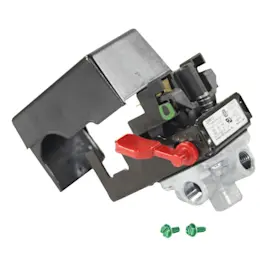
Knowing the actual maker (and key component suppliers like the motor) helps us match the right replacement parts and service procedures, especially for items like the pressure switch, regulator, check valve, and capacitor kits.
Last updated: January 2026
What is the average lifespan of an air compressor?
A typical portable air compressor like the Craftsman 919168700 lasts 10 to 15 years with normal DIY use and consistent maintenance. Heavy daily use, poor ventilation, and skipped tank draining can shorten life significantly; good upkeep can extend it.
- Duty cycle and run time: running continuously or near-continuously wears the pump and motor faster.
- Moisture in the tank: not draining condensation accelerates internal rust.
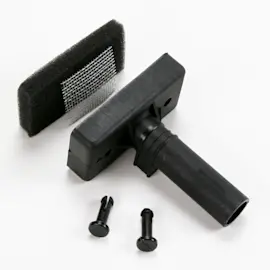
- Air intake filtration: a dirty air filter reduces airflow and increases heat.
- Operating environment: dusty, humid, or hot locations increase wear.
- Electrical supply: low voltage and long extension cords can overheat the motor.
For model-specific maintenance intervals and safety steps, follow the 919168700 owner’s manual.
- Drain the tank daily or after each use.
- Check the safety valve operation before use.
- Keep the air filter clean; replace it if it will not clean up.
- Maintain good airflow around the unit (do not block shrouds or vents).
- Avoid extension cords when possible; use a longer air hose instead.
| Symptom | Most common wear area | Typical next step |
|---|---|---|
| Won’t build to cut-out pressure | Pump valves, check valve, leaks | Diagnose leaks, then service pump/check valve |
| Hard starting or trips breaker | Capacitor, motor, pressure switch | Electrical diagnosis and component replacement |
| Tank won’t hold air | Tank corrosion or weld leak | Replace tank or replace compressor |
Air compressors store high-pressure air; maintenance is not just about performance, it helps prevent corrosion-related tank problems and reduces overheating that can shorten motor and pump life.
Last updated: January 2026
Are air compressor parts interchangeable?
Air compressor parts are not automatically interchangeable, even within the same brand. For the Craftsman 919168700, you should match parts by the exact part number listed for this model in the 919168700 owner's manual; similar-looking regulators, pressure switches, and check valves can differ by pressure range, port size, or calibration.
Even when a part “fits,” it still has to match how the compressor is designed to operate.
- Model-specific part number match (best indicator of compatibility)
- Pressure ratings (cut-in/cut-out settings, safety valve pop-off range)
- Thread type and port size (NPT size, tube OD, fitting style)
- Electrical specs (voltage, amperage, terminal style for switches and motors)
- Mounting and orientation (brackets, shrouds, tube routing)
These components are frequently swapped incorrectly because they look similar across portable compressors.
| Part type | Why interchange can fail | What to verify first |
|---|---|---|
| Pressure switch | Wrong cut-in/cut-out or unloader style | Factory settings and port layout |
| Regulator | Different flow direction or gauge ports | Arrow direction, port sizes |
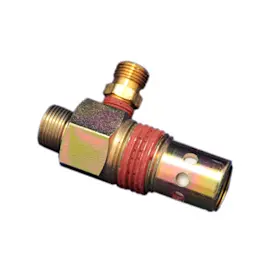
| Check valve | Different tube sizes or sealing style | Tube OD, thread size, orientation |
| Safety valve | Wrong pressure rating | Valve pressure rating for the tank/system |
Use this checklist before ordering or installing any replacement part.
- Identify the exact model number: 919168700
- Use the repair parts list in the manual to get the correct part number
- Compare threads and tube sizes (do not force fittings)
- Confirm pressure and electrical ratings match the original component
- After installation, check for air leaks with soapy water and verify normal cycling
Using a non-matching part can cause poor performance (won’t build pressure, leaks, short-cycling) or unsafe operation (incorrect pressure control). Staying model-matched helps your Craftsman 919168700 run correctly and protects key components like the tank, pump, and controls.
Last updated: January 2026
What is the common problem with an air compressor?
The most common problem we see on the Craftsman 919168700 air compressor is an air leak that prevents the tank from building pressure or causes frequent cycling. Leaks often come from fittings, the check valve, the pressure switch release valve, the regulator, or the drain valve (and sometimes the tank itself).
- Compressor runs a long time or never reaches cut-out pressure
- Tank pressure drops quickly when the unit is off
- Hissing at fittings, the pressure switch area, or near the tank
- Safety valve pops open (overpressure protection)
- Weak air tool performance (pressure drops under load)
Based on the troubleshooting guidance for this specific model, these are the usual culprits:
- Loose tube fittings (air leaks at fittings)
- Check valve not sealing (leak at or inside the check valve)
- Pressure switch release valve leaking after shutoff
- Regulator leaking or not controlling outlet pressure
- Dirty or restricted air intake filter (reduced output)
- Drain valve not fully closed or leaking
Turn the unit off, unplug it, and bleed pressure before touching components.
- Listen for where the hissing is loudest (fittings, regulator, pressure switch area)
- Use a soapy water solution on fittings to spot bubbles (leak location)
- Confirm the drain valve is fully closed after draining
- Check the air filter; clean or replace if dirty
- If air leaks continuously from the pressure switch release valve after shutdown, suspect the check valve
| Symptom | Most likely issue | Typical next step |
|---|---|---|
| Won’t build tank pressure | Air leak, restricted intake, valve issue | Leak test; check filter |
| Hiss at pressure switch after shutdown | Check valve not sealing | Inspect/clean/replace check valve |
| Can’t adjust outlet pressure | Regulator problem | Inspect/replace regulator |
| Safety valve pops | Pressure switch control issue | Stop using; service pressure switch |
Air leaks and restricted airflow make the compressor run hotter and longer, which shortens motor and pump life and can lead to nuisance trips on the overload protector. Catching leaks early also helps you maintain stable PSI for air tools.
For model-specific operating, maintenance, and troubleshooting steps, we recommend using the Craftsman 919168700 owner’s manual.
Last updated: January 2026