Owner’s manual
 Error Codes


What is the average lifespan of a Samsung washing machine?
Most Samsung washing machines, including the Samsung WA50M7450AP top-load washer, typically last 10 to 14 years with normal household use. Regular cleaning, correct loading, and fixing small issues early (like draining or filling problems) helps you reach the high end of that range; see the WA50M7450AP user manual.
Typical lifespan and what affects it
A washer’s service life depends more on use and care than the brand name alone.
- Load size and frequency: frequent heavy loads shorten life
- Overloading: strains the drive system, suspension, and tub
- Water quality: hard water increases residue and component wear
- Maintenance habits: cleaning and proper detergent use reduce buildup
- Early repairs: replacing a failing pump or valve prevents secondary damage
Common wear items as the washer ages
On a top-load Samsung like WA50M7450AP, these issues show up most often in the 8 to 14 year window:
- Slow or no draining (pump, hose, or blockage)
- Fill problems or long fill times (inlet valve screens, valve)
- Out-of-balance shaking (leveling, suspension, sensor)
- Lid not locking or cycle not starting (lid lock)
- Intermittent operation (control board or wiring)
If you’re troubleshooting a drain-related code or symptom, our Samsung top load washer error codes resource helps narrow it down.
Quick “repair vs replace” guide
Use this as a practical rule of thumb for WA50M7450AP.
| Washer age | Condition | Best next step |
|---|---|---|
| 0 to 5 years | Minor issue | Repair and maintain |
| 6 to 10 years | One major repair | Repair if overall condition is good |
| 11 to 14 years | Multiple issues | Compare repair cost vs replacement |
| 15+ years | Frequent breakdowns | Replace |
Why it matters
Knowing the typical lifespan helps you plan: if your WA50M7450AP is near the 10 to 14 year mark, investing in maintenance and addressing symptoms early can prevent a sudden no-drain or no-spin failure that stops laundry day.
Last updated: February 2026
What is the most common problem with Samsung washing machines?
Excessive shaking and vibration during the spin cycle is the most common issue we see on Samsung washers like model WA50M7450AP; it is usually caused by an unbalanced load or an out-of-level washer. Drain and spin problems are also common, often tied to a restriction in the drain path.
What to check first (fast, no-parts steps)
- Redistribute the load; wash bulky items with a few smaller items to balance the basket.
- Confirm the washer sits solidly on the floor; adjust legs until it does not rock.
- Run the model’s Calibration Mode after leveling (this improves load weight detection); follow the steps in the WA50M7450AP owner's manual.
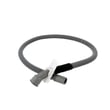
- Verify the drain hose is not kinked or pushed too far down the standpipe.
- If you see oversudsing, reduce detergent and use HE detergent only.
Common symptoms and the most likely causes
| Symptom | Most likely cause | What usually fixes it |
|---|---|---|
| Shakes or “walks” in spin | Unbalanced load, leveling issue | Rebalance load, level legs, run calibration |
| Won’t drain or leaves clothes wet | Drain restriction, pump issue | Check hose for kinks, clear restrictions, inspect pump |
| Stops with an error code | Unbalance, sensor, clutch, control issue | Use Smart Care or look up the code, then test the related circuit |
| Lid won’t lock or unlock | Lid lock problem | Inspect lid strike and lock assembly |
When a part is commonly involved
If basic checks do not help, these parts are frequently involved in vibration, draining, and spin complaints on top-load washers:
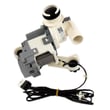
- Drain pump problems: consider the washer drain pump assembly dc97-19289f.
- Fill problems (slow fill, no fill): the inlet valve can be a factor.
- Lock-related no-spin conditions: lid lock assembly issues can stop spinning.
- Persistent out-of-balance behavior: suspension and sensor-related issues are common contributors.
Error codes and why they matter
Samsung’s built-in diagnostics can point you in the right direction. The manual lists codes such as 8C (MEMS sensor problem) and PC (clutch problem), which can directly relate to vibration or spin performance. For a broader list and plain-language steps, use Samsung top load washer error codes.
Why it matters: Fixing leveling, calibration, and drain restrictions early prevents repeat out-of-balance events, reduces wear on the drive system, and helps the washer drain properly during the spin cycle.
Last updated: February 2026
What is the capacity of the Samsung WA50M7450AP?
The Samsung WA50M7450AP is a 5.0 cu. ft. top-load washer. That capacity is designed for larger loads like towels, bedding, and mixed laundry, while still relying on proper loading and cycle selection for best cleaning and spin performance (see the WA50M7450AP owner's manual).
How to use that 5.0 cu. ft. capacity effectively
We recommend loading loosely and evenly around the washplate so water and detergent can circulate.
- Load items in a balanced ring; do not pack clothes down.
- Mix large and small items to reduce out-of-balance spinning.
- For bulky or water-resistant items, use the Bedding/Waterproof cycle when available.
- Use the right detergent amount; too much can cause oversudsing and poor rinsing.
- If the washer struggles to spin out, reduce the load size and try again.
Quick guide: what typically fits in a 5.0 cu. ft. top-load washer
Actual results vary by fabric type and how absorbent the load is.
| Load type | Typical examples | Practical tip |
|---|---|---|
| Everyday mixed load | Shirts, jeans, underwear, socks | Keep the load below the top row of holes in the basket |
| Towels | Bath towels and hand towels | Add a few smaller items to help balance |
| Bulky items | Comforter, blanket, bedding | Wash 1 bulky item at a time if it becomes unbalanced |
Why it matters
Capacity affects cleaning, rinsing, and spin. Overloading a high-capacity Samsung top-load washer can lead to poor soil removal, detergent residue, vibration, and longer cycle times. Loading correctly helps protect key components like the suspension and drive system.
Last updated: February 2026
Does a Samsung washer have a filter that needs to be cleaned?
Yes. On the Samsung WA50M7450AP top-load washer, the main filter you routinely clean is the water inlet mesh filter inside the inlet valve where the fill hoses connect; keeping it clear helps prevent fill problems and information codes such as 4E. See the WA50M7450AP owner's manual for the exact steps.
What filters this washer uses
For WA50M7450AP, the manual specifically calls out cleaning the mesh filter in the water supply connection.
- Water inlet mesh filter (routine maintenance): catches sediment from the home water supply
- Drain system (not a “clean-out filter” on most top-loaders): coins, lint, and debris can still collect in hoses or the pump
- Dispenser areas: detergent and softener residue can build up and should be cleaned periodically
How to clean the water inlet mesh filter (WA50M7450AP)
Before you start, unplug the washer and shut off the water supply.
- Turn the washer off, then unplug it.
- Close the water faucet(s).
- Disconnect the fill hose(s) from the back of the washer (use a towel for any water).
- Pull the mesh filter out of the inlet valve (pliers help).
- Rinse or soak the mesh filter in water, then let it dry fully.
- Reinstall the mesh filter, reconnect the hose(s), and turn the water back on.
Quick troubleshooting: when a “filter” is the likely issue
If you see slow filling, no fill, or a fill-related code, start with the inlet mesh filter and water supply.
| Symptom | Most common cause | What to check first |
|---|---|---|
| Slow fill | Sediment in inlet mesh filter | Clean inlet mesh filter, confirm faucet fully open |
| 4E code | Restricted water supply | Mesh filter, kinked hose, low water pressure |
| Poor rinse | Low incoming flow | Mesh filter and hose screens |
When to look at drain parts instead
If the washer fills normally but will not drain or leaves water behind, debris may be in the drain path or pump. For repair situations, the drain pump is a common service part on this model family.
- Check for a kinked or clogged drain hose
- Listen for the pump running during drain
- Inspect for small items that may have migrated into the drain path
- Consider the washer drain pump assembly dc97-19289f if the pump is noisy, seized, or not pumping
Why it matters
A clean inlet mesh filter protects the water inlet valve, improves cycle performance, and prevents nuisance fill errors. It is one of the simplest maintenance steps that can prevent a no-fill call.
Last updated: February 2026
Is the Samsung WA50M7450AP a good washer?
Yes. The Samsung WA50M7450AP is a solid top-load washer when it’s installed correctly, calibrated, and loaded evenly; it’s designed to sense load weight, offers cycles like Deep Wash and Quick Wash, and includes maintenance reminders such as Self Clean. For best results, follow the WA50M7450AP owner's manual.
What “good” looks like on this model
A “good” experience with the WA50M7450AP usually means it:
- Starts and locks the lid normally (you may hear clicking as it checks the lid lock and does a quick drain)
- Washes without frequent out-of-balance events
- Finishes cycles with accurate time adjustments (cycle time can fluctuate)
- Cleans well because clothes are loaded dry and evenly around the tub
- Stays fresher when Self Clean is run when the indicator appears
Setup steps that make the biggest difference
Samsung recommends running Calibration Mode after installation so the washer detects weight more accurately.
- Empty the washer
- Press Temp. and Delay End together, then press Power
- Press Start/Pause to run Calibration Mode (about 1 minute)
- Wait for the display to show End, then the washer turns off
| Item | What to do | Why it helps |
|---|---|---|
| Calibration Mode | Run once after install or after major service | Improves load sensing and balance |
| Loading | Pile dry, unfolded items evenly | Reduces wear, wrinkling, and vibration |
| Cycle choice | Use Deep Wash when you need more water | Improves rinsing and wash action |
| Self Clean | Run when the indicator appears (about monthly) | Helps control odor and residue |
Common “not so good” complaints and what to check first
Many performance complaints come from loading, cycle selection, or drain and fill conditions.
- Unbalanced loads: redistribute items evenly; avoid washing one heavy item by itself
- Long cycles: normal for high-efficiency washers; time display can change as the washer senses conditions
- Not enough water: use Deep Wash when appropriate; load evenly so the washer can sense correctly
- Won’t start: confirm lid is closed, water faucets are open, and press Start/Pause
Why it matters
This washer relies on sensing (weight, balance, and conditions) to control water use and cycle time. When calibration and loading are right, you get better cleaning, fewer interruptions, and less vibration.
Last updated: February 2026
What does 4 e mean on a Samsung washer?
On the Samsung WA50M7450AP washer, the 4E (sometimes shown as 4C) information code means the washer is not filling with water correctly. The fix is usually restoring proper water supply, cleaning the inlet mesh filters, or correcting a drain hose setup that is causing siphoning (false fill error). See the WA50M7450AP user manual for the exact checks and setup limits.
Quick fixes we recommend first
- Confirm both hot and cold water faucets are fully open.
- Straighten any kinks in the fill hoses; replace swollen or collapsed hoses.
- Turn off the water, remove the hoses at the washer, and clean the inlet mesh filters.
- Verify household water pressure is strong at the faucets.
- Check drain hose height and routing; an incorrect height can trigger 4E.
- Power reset: unplug the washer (or switch off the breaker) for 1 minute, then retry.
Drain hose height matters (common 4E cause)
If the drain hose is installed too low, the washer can siphon water out during fill and then report 4E.
| Drain hose setup | What can happen | What to do |
|---|---|---|
| Below about 39 in (99 cm) | Siphoning; washer may show 4E | Raise and secure the hose |
| Up to 96 in (245 cm) max | Reduced drain capability | Keep within the limit |
Cleaning the inlet mesh filters (what the manual points to)
A clogged inlet mesh filter at the water inlet valve can cause 4E.
- Shut off water supply valves.
- Remove the fill hoses from the washer.
- Pull out the small mesh filters in the inlet ports (use pliers carefully).
- Rinse and soak the filters, then dry and reinstall.
- Reconnect hoses and turn water back on.
If you still get 4E after cleaning and correcting hose height, the water inlet valve can be the failed part. For this model, the matching replacement is the Samsung washer water inlet valve DC97-15459G.
Why it matters
A fill error can leave loads unwashed, cause long cycle times, and lead to repeated stopping mid-cycle. Fixing water supply, inlet filter clogs, and drain hose siphoning restores normal fill and prevents repeat codes.
Last updated: February 2026