Owner’s manual


Does a Samsung washer have a filter that needs to be cleaned?
Yes. Your Samsung WA400PJHDWR top-load washer uses inlet hose screen filters and (on many top-load designs) a lint filtering system; keeping these clean helps prevent slow filling, poor rinsing, odors, and drain issues. For model-specific cleaning locations and steps, follow the WA400PJHDWR owner's manual.
What filters you may need to clean
Most Samsung washers like the WA400PJHDWR have one or more of these:
- Water inlet screen filters: Small mesh screens inside the hot and cold water inlet ports; they trap sand and sediment.
- Lint filtering system: Some top-load models use a lint filter or self-cleaning lint system depending on the design and cycle.
- Drain path debris: Coins, hair pins, and lint can still collect in the drain hose or pump area even if there is no front access filter door.
Quick cleaning checklist (safe, practical steps)
- Unplug the washer and turn off both water supply valves.
- Relieve pressure by briefly starting a fill, then canceling.
- Remove the fill hoses from the back of the washer.
- Clean the inlet screens gently with a soft brush; rinse debris away.
- Reinstall hoses and check for leaks during the next fill.
If you have slow draining, inspect the drain path and consider replacing a worn or noisy pump such as the washer drain pump assembly dc97-19289f.
How often should filters be cleaned?
Use this as a practical schedule for a top-load washer:
| Item to clean | Typical frequency | Common symptom when clogged |
|---|---|---|
| Inlet hose screen filters | Every 6 to 12 months | Slow fill, NF-type fill errors, weak water flow |
| Lint filter (if equipped) | Monthly or as needed | Lint on clothes, musty odor |
| Drain path (hose, pump area) | As needed | Won’t drain, standing water, ND-type drain errors |
Why it matters
Restricted water flow can cause long fill times and poor wash performance, and restricted draining can leave water and detergent residue behind. Keeping filters and the drain path clear helps your WA400PJHDWR wash more efficiently and reduces strain on parts like the drain pump and inlet valve.
Last updated: February 2026
What is the life expectancy of a Samsung washing machine?
Most Samsung washing machines typically last 10 to 14 years with normal household use and basic maintenance. For the Samsung WA400PJHDWR top-load washer, good care (correct loading, proper detergent, and keeping the tub clean) is what most directly determines whether you land closer to 10 years or closer to 14.
Typical lifespan and what affects it
A washer’s life is driven more by usage and maintenance than by brand alone.
- Loads per week: more cycles equals more wear on the drive system and suspension
- Overloading: increases strain on the spin basket, clutch, and suspension rods
- Water quality: hard water can contribute to valve and hose issues over time
- Drain care: coins, lint, and small items can stress the drain pump
- Leveling: an unlevel washer vibrates more and wears parts faster
What “end of life” usually looks like
These are the most common signs a washer is nearing replacement time.
| Symptom | Common cause | What to check first |
|---|---|---|
| Won’t drain or drains slowly | Pump or drain restriction | Drain hose routing, then pump operation |
| Loud banging in spin | Suspension wear or unbalanced loads | Leveling legs, load size, suspension |
| Won’t fill or fills slowly | Water supply or inlet valve issue | Supply valves, screens, then valve |
| Intermittent operation | Control or wiring issue | Power reset, then control diagnostics |
If you’re seeing drain problems, the washer drain pump assembly dc97-19289f is one of the common repair parts for this model family.
Why it matters
Knowing the typical 10 to 14 year lifespan helps you decide whether a repair (like a drain pump, inlet valve, or suspension rod) is a smart investment, or whether you’re better off planning for replacement based on age and symptoms.
Maintenance that helps you reach the high end of the range
- Keep loads balanced and avoid packing the tub tightly
- Use HE detergent and avoid overdosing
- Run periodic tub-clean cycles (or a hot cycle as recommended)
- Check pockets to reduce debris reaching the drain system
- Keep the washer level using the leveling legs
For model-specific operating and care guidance, follow the maintenance and usage recommendations in the owner's manual.
Last updated: February 2026
What is the most common problem with the Samsung washing machine?
For the Samsung WA400PJHDWR washer, the most common problems are draining failures, out-of-balance spinning (banging or walking), and slow or no fill. These usually come from load and leveling issues, a restricted drain path, or a water supply or inlet valve problem; use the WA400PJHDWR owner's manual for Smart Care and operating checks.
Most common symptoms and what they usually mean
- Won’t drain or stops with water in the tub: restricted drain hose, clogged drain path, or a failing drain pump
- Bangs, shakes, or won’t spin out: unbalanced load, washer not level, or worn suspension
- Won’t fill or fills slowly: closed supply valves, kinked hoses, clogged inlet screens, or a bad inlet valve
- Pauses mid-cycle: load sensing, lid opened, or a detected fault that triggers an error code
- Noisy operation: off-balance load, leveling legs out of adjustment, or drivetrain wear
Quick checks we recommend first (fast, no parts)
- Redistribute the load; wash bulky items with similar items.
- Level the washer; adjust the feet so all corners sit firmly on the floor.
- Check the drain hose for kinks or crushing; confirm it is not shoved too far down the standpipe.
- Confirm both hot and cold water valves are fully open.
- Run Smart Care and note any error code steps in the WA400PJHDWR owner's manual.
Parts that commonly solve these problems
If your checks point to a hardware failure, these parts are common fixes for this model:
| Symptom | Common part to inspect/replace | What it affects |
|---|---|---|
| Not draining, humming, or intermittent drain | Washer drain pump assembly DC97-17366A | Pumps water out during drain and spin |
| Drain motor runs poorly or won’t move water | Washer drain pump motor and impeller DC31-00178A | Drives the pump impeller to move water |
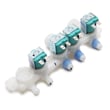
| Slow/no fill or fill-related errors | Samsung washer water inlet valve DC97-15459H | Controls water entering the tub |
| Excessive vibration or out-of-balance spinning | Samsung washer suspension rod DC97-05280W | Supports the tub and stabilizes spin |
Why it matters
Drain, fill, and balance problems keep the washer from reaching high-speed spin, leaving clothes wet and increasing vibration and wear on the tub support and motor system.
Last updated: February 2026