Error Codes


What is the average lifespan of a Kenmore washer?
A Kenmore washer typically lasts 10 to 15 years with normal household use and basic maintenance. For Kenmore model 11092281800, lifespan depends most on load size, leveling, water quality, and how quickly you address wear items such as the drive system and drain components.
Typical lifespan ranges (what we see most often)
- Top-load washers: about 12 to 15 years
- Front-load washers: about 10 to 12 years
- Heavy use (large family, daily loads): often 8 to 12 years
- Light use (few loads per week): often 12 to 15 years
| Washer type | Typical lifespan | Common wear areas |
|---|---|---|
| Top-load | 12 to 15 years | Agitation/drive, clutch, pump |
| Front-load | 10 to 12 years | Bearings, door seal, drain pump |
What shortens washer life fastest
- Overloading the basket (strain on motor, clutch, and drive components)
- Running unbalanced loads (extra wear on suspension and drive)
- Letting small drain issues continue (pump damage, odors)
- Hard water buildup (valves and internal passages)
- Ignoring early symptoms (new noises, slow drain, weak agitation)
Parts that commonly affect longevity on this style of Kenmore washer
If performance changes, these are common “keep it running” parts to check first:
- Water pump WP3363394 (slow drain, grinding, leaks)
- Coupling 285753A (won’t agitate or spin, motor runs but tub does not)
- Clutch 285785 (weak spin, burning smell, slow ramp-up)
- Agitator dog 80040 (agitator slips or only moves one direction)
Why it matters
Knowing the typical lifespan helps you decide whether to repair or replace. If your Kenmore washer is already near the 10 to 15 year range, fixing a simple wear part (pump, coupling, clutch) often restores reliable washing without the cost of a new machine.
Last updated: January 2026
How to unclog drain hose on Kenmore washer?
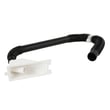
For Kenmore washer model 11092281800, we unclog the drain hose by safely draining any standing water, checking the hose and pump inlet for lint or small items, then flushing the hose with hot water until it runs clear. If draining is still slow, the drain pump is the next likely restriction.
Safety first
- Unplug the washer from the outlet.
- Turn off both water supply valves.
- Keep towels and a shallow pan nearby (water will spill).
- If the washer is full of water, bail out what you can before moving it.
Step-by-step: clear the drain hose
- Pull the washer forward so you can reach the back.
- Inspect the hose routing: straighten kinks, remove crushed sections, and confirm the hose is not shoved too far down the standpipe.
- Remove the drain hose from the standpipe or laundry tub and try a quick drain into a bucket to see if flow improves.
- Check for a clog at the hose ends: look for socks, lint mats, coins, or sludge at the washer outlet and at the standpipe end.
- Flush the hose: run hot water through it (a garden hose works well). If needed, gently work a plastic zip tie or flexible brush through the hose (avoid sharp coat hangers that can puncture it).
- Reinstall and test: secure clamps, restore power, then run a short rinse and spin.
If it still will not drain
A clog often sits at the pump inlet, not deep in the hose. On this model, a common fix is replacing the drain pump: water pump WP3363394.
Quick symptom guide
| Symptom | Most likely cause | What to check next |
|---|---|---|
| Hums but no drain | Pump jam or blockage | Pump inlet, impeller area |
| Drains slowly | Partial hose clog or kink | Hose routing, standpipe restriction |
| Leaks during drain | Loose clamp or split hose | Hose ends, pump connections |
Why it matters
A restricted drain hose can cause long cycle times, poor spin performance, and water left in the tub. Clearing the restriction quickly helps protect the drive system and prevents repeat clogs.
Last updated: January 2026
What is the capacity of Kenmore model 11092281800?
Kenmore washer model 11092281800 is a traditional top-load, agitator-style washer; this style typically falls in the about 2.9 to 3.5 cu. ft. range. For the exact capacity for your specific configuration, match your washer’s tub and basket style to the listed components such as the basket W10389328.
Typical capacity for this Kenmore washer style
Most Kenmore top-load washers with a full-size tub and center agitator use a standard-capacity basket.
- Standard agitator top-loaders: about 2.9 to 3.5 cu. ft.
- Typical everyday load: 8 to 12 lb of dry laundry
- Bulky items take space fast; wash 1 large item at a time when needed
- Best wash action happens when items can circulate freely
How to load it for best results
Capacity is the tub volume, but cleaning depends on turnover around the agitator.
- Load loosely; do not pack clothes down
- Fill to roughly 3/4 full for mixed loads
- Keep heavy items balanced (towels, jeans) to reduce out-of-balance spinning
- If the washer leaves dry spots or does not circulate well, reduce the load size
If you are asking because the washer feels “too small”
A performance issue can mimic a capacity issue.
| Symptom | Common cause | Part to check for this model |
|---|---|---|
| Upper agitator slips or ratchets | Worn agitator dogs | Agitator dog 80040 |
| Weak agitation or no agitation | Agitator or drive components worn | Washer agitator WP389386 |
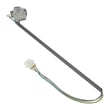
| Underfilling (low water level) | Water-level pressure switch issue | Washer water-level switch WP3356465 |
Why it matters
Loading within the typical range improves wash turnover and rinse performance and reduces strain on the drive system (motor coupling, clutch, and drive block).
Last updated: January 2026
How to hard reset kenmore washer?
For Kenmore washer model 11092281800, the most reliable hard reset is a full power reset: turn the washer off, unplug it (or switch off the breaker) for 2 minutes, then restore power and start a cycle. This clears many temporary control glitches.
Hard reset steps (safe and effective)
- Turn the washer OFF.
- Unplug the power cord (or turn OFF the circuit breaker).
- Wait 2 minutes.
- Restore power.
- Select Normal (or Rinse/Spin) and press Start.
- If the washer has a lid, close it fully before starting.
If the symptom comes back right away
A reset clears the control state, but it does not correct a drain, fill, or drive problem. Use these quick checks to decide what to troubleshoot next:
- Will not drain: listen for the pump during drain; check the drain hose for kinks.
- Fills but will not agitate or spin: the drive system may be slipping.
- Stops mid-cycle: check for an unbalanced load and redistribute items.
- No water or slow fill: verify both supply valves are fully open.
Parts that commonly relate to “won’t spin” or “won’t drain”
If the reset does not help, these model-compatible parts are often involved in the underlying issue:
- Coupling 285753A (connects the drive motor to the drivetrain)
- Clutch 285785 (helps the basket reach and maintain spin speed)
- Water pump WP3363394 (moves water out during drain)
| Symptom after reset | Most common direction |
|---|---|
| Hums but does not drain | Drain pump or blockage |
| Motor runs, basket does not spin | Coupling or clutch |
| Drains but leaves clothes wet | Spin system or load balance |
Why it matters
A hard reset is the fastest way to clear a temporary electronic glitch. If the same failure repeats, the washer is usually responding to a real condition (drain restriction, worn drive parts, or load balance).
Last updated: January 2026