Installation guide
 Owner’s manual

What is the life expectancy of a Kenmore washer?
A Kenmore washer typically lasts 10 to 12 years with normal household use and basic maintenance. For your Kenmore model 11020022013, that same 10 to 12 year expectation applies; actual lifespan depends most on load size, installation, and how quickly small issues are repaired.
- Overloading (extra strain on the drive system, basket, and motor)
- Unlevel installation (increases vibration and wear)
- Hard water and detergent buildup (can cause odors and component wear)
- Drain problems (standing water stresses the pump and hoses)
- Delayed repairs (a small leak or noise can turn into a major failure)
For installation basics that help reduce vibration and “washer walk,” follow the leveling and hookup steps in the 11020022013 installation guide.
- Keep loads balanced; wash bulky items in smaller batches.
- Use the correct detergent amount; too much can cause residue.
- Check hoses periodically for bulges, cracks, or leaks.
- If the washer starts draining slowly, inspect the drain path and pump area.
- Address unusual noises early (grinding, squealing, or banging).
| Item or issue | What you may notice | Typical timing |
|---|---|---|
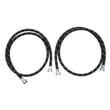
| Fill hoses | Leaks at the faucet or rear connections | Every 5 years (recommended) |
| Drain pump or drain restriction | Won’t drain, slow drain, water left in tub | Mid to late life |
| Drive belt wear | Slipping, weak spin, burning rubber smell | Mid life |
If you’re troubleshooting a drain issue on this model, the compatible replacement is the washer drain pump assembly WPW10276397.
Knowing the typical 10 to 12 year lifespan helps you decide whether to invest in a repair (like a drain pump, belt, or lid lock) or plan for replacement, especially if multiple symptoms show up at once.
Last updated: January 2026
Does my Kenmore top load washer have a filter?
Yes. Your Kenmore top-load washer model 11020022013 can use a drain-pump clean-out style filter that catches lint and small items before they reach the drain pump. This “filter” is typically checked when you have slow-drain or won’t-drain symptoms; see the 11020022013 installation guide.
On many Kenmore top-load washers like 11020022013, there isn’t a removable lint screen in the wash basket. Instead, the filtering happens in the drain path near the pump.
Common places to check:
- Drain pump clean-out area (if your pump design uses a clean-out filter)
- Tub-to-pump hose (coins, socks, debris can lodge here)
- Pump inlet (may require removing the pump for inspection)
If you need the model-matched replacement component, use: washer drain pump clean-out filter WPW10215093.
- Unplug the washer.
- Turn off both water supplies.
- Place towels and a shallow pan under the pump area.
- Open the clean-out slowly to control water flow.
- Remove debris, rinse, and reinstall the filter/cap snugly.
- Washer won’t drain or drains very slowly
- Standing water left in the basket
- Grinding or rattling during drain
- Intermittent drain issues after washing small items
| Item | Typical on top-load washers like 11020022013 | What it does |
|---|---|---|
| Tub lint screen | Usually not used | Catches lint during wash |
| Drain pump clean-out filter | Sometimes used | Traps coins, hairpins, lint before pump |
Keeping the drain path clear helps prevent drain pump damage, reduces drain time, and lowers the chance of clogs that can lead to leaks.
Last updated: January 2026
How do I reset a Kenmore front loader?
Kenmore model 11020022013 is a top-load washer, so front-load reset sequences do not apply. For this model, the safest “reset” is a power reset: stop the cycle, remove power briefly, then restart and confirm the lid is latching and the washer can drain.
- Press Power/Cancel to stop the cycle.
- Unplug the washer (or switch off the breaker) for 1 minute.
- Restore power.
- Lift and close the lid once.
- Select a cycle and press Start.
For installation-related checks that can affect operation (power, drain setup, leveling), use the 11020022013 installation guide.
A “reset” only clears a temporary control glitch. If the washer still will not run, these are common causes on this Kenmore top-load platform:
- Lid not closing or latching fully
- Washer not draining, so it will not advance
- Power supply issue (outlet, breaker)
- Water supply issue (valves off, kinked hoses)
- Control not responding to button presses
If your checks point to a lid-latch or drain problem, these model-compatible parts are commonly involved:
- Verify the outlet has power (test with a lamp).
- Make sure nothing is caught under the lid and the lid closes firmly.
- If there is standing water, try a Drain/Spin cycle.
- Confirm both water faucets are fully open.
| What you see | What it usually points to | What to do next |
|---|---|---|
| No lights or response | Power supply or control issue | Power reset; check outlet/breaker |
| Fills but will not spin | Lid lock or drain issue | Check lid latch; check drain path |
| Hums but will not drain | Pump or blockage | Inspect drain hose; check pump/filter |
Using front-load reset steps on Kenmore 11020022013 can waste time and miss the real cause. A power reset is safe, but repeat failures usually trace back to lid-lock engagement, draining restrictions, or power and water supply.
Last updated: January 2026