Owner’s manual


Where is the model number on Kenmore 11087701700 dryer?
On the Kenmore Elite dryer model 11087701700, the model number is on the model and serial number label attached to the dryer cabinet. You will typically find it inside the door opening on the cabinet frame; open the door and check the door jamb area for the sticker.
- Open the dryer door and inspect the cabinet frame around the opening
- Check the left and right door jamb areas for a sticker or metal plate
- Look along the top edge of the door opening (front panel lip)
- If you do not see it immediately, use a flashlight and look for a label with both model and serial fields
The label usually includes the information you would record for service and parts lookup.
| Label field | What it’s used for | Example you’ll see |
|---|---|---|
| Model number | Matching the correct parts list | 11087701700 |
| Serial number | Identifying production run details | Letters and numbers |
| Purchase date (you fill in) | Warranty and records | Your date |
Using the exact model number from the label prevents ordering the wrong Kenmore dryer parts, especially for common repairs like a no-heat issue (often tied to the heating circuit) or a noisy drum (often tied to drum support components).
If you’re confirming the model number so you can troubleshoot or order parts, the diagrams and identification details in the owner's manual make it easier to match your dryer configuration.
Last updated: February 2026
How do I know if my Kenmore dryer thermal fuse is blown?
If your Kenmore Elite dryer model 11087701700 won’t start at all, or the drum turns but you get no heat, a blown thermal fuse (or a tripped house fuse/breaker) is a top suspect. The sure way to know is a continuity test with a multimeter after unplugging the dryer.
Common symptoms on electric dryers like the 11087701700 include:
- Dryer will not run (no motor operation)
- Dryer runs but produces no heat (clothes stay damp)
- Cycle seems normal but drying times suddenly get much longer (often from restricted venting that overheats the dryer)
- You may also see heat-related diagnostic behavior if airflow is restricted (the manual notes vent problems can trigger an AF code)
- Unplug the dryer or disconnect power at the breaker.
- Access the thermal fuse (location varies by design; it’s commonly on the blower housing or exhaust duct).
- Remove at least one wire from the fuse terminal.
- Set a multimeter to continuity (or lowest ohms).
- Test across the fuse terminals.
- Good fuse: meter beeps or reads near 0 ohms
- Blown fuse: no beep or infinite/open reading
For model-specific access and panel removal steps, use the owner's manual.
A thermal fuse usually opens because the dryer overheated. Before replacing parts, we address airflow:
- Clean the lint screen and confirm it is not damaged (see screen W10120998 if yours is torn or warped)
- Check the vent hose for crushing, kinks, or excessive length
- Clear lint buildup in the exhaust duct and outside vent hood
- Make sure the dryer has proper clearance for airflow
- If the dryer shows an AF code, treat it as a strong sign of a blocked or crushed vent
| What we check | What “good” looks like | What it means if it’s not good |
|---|---|---|
| Lint screen | Clean, water passes through mesh | Screen restriction can cause overheating |
| Vent hose | Short, smooth, not kinked | Poor airflow, overheating risk |
| Outside vent hood | Strong airflow flap opens | Blockage or crushed duct likely |
The thermal fuse is a safety device; when it opens, it prevents unsafe overheating. Replacing the fuse without correcting venting or lint restrictions often leads to repeat failures and longer dry times.
Last updated: February 2026
What is the life expectancy of a Kenmore dryer?
A Kenmore dryer typically lasts 10 to 13 years. With consistent care on your Kenmore Elite 11087701700 (especially lint control and vent cleaning), it’s common to reach the high end of that range and avoid early failures tied to overheating and restricted airflow.
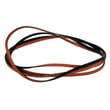
Most dryer lifespan differences come down to heat stress, airflow, and mechanical wear (belt, rollers, idler pulley, motor).
- Usage volume: daily loads wear moving parts faster than light weekly use
- Vent restriction: long runs, crushed ducts, or lint buildup raise operating temperature
- Maintenance habits: cleaning the lint screen every load extends component life
- Load size: chronic overloading strains the drive system and drum supports
- Moisture and storage: damp locations can accelerate corrosion and electrical issues
Your owner's manual calls out periodic lint removal beyond the lint screen; following a schedule like this helps the dryer run cooler and reduces breakdowns.
| Task | How often | Why it helps |
|---|---|---|
| Clean lint screen | Every load | Maintains airflow and drying performance |
| Clean exhaust vent ducting | About every 2 years (more with heavy use) | Reduces overheating and long dry times |
| Remove lint inside dryer cabinet | About every 2 years (qualified service) | Prevents heat buildup around components |
| Inspect inlet hoses (steam models) | Periodically; replace at 5 years | Reduces leak risk if your unit uses water |
If the dryer is otherwise in good shape, these wear items often restore performance and extend service life:
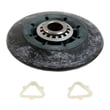
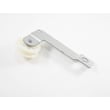
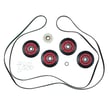
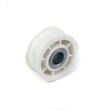
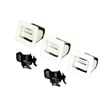
- Thumping or squealing: drum rollers like support WPW10314173 or the idler system such as dryer idler pulley 279640
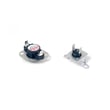
- No heat or overheating symptoms: heating and safety controls such as dryer heating element WP8544771, dryer thermistor WP8577274, or dryer thermal cut-off fuse kit 279973
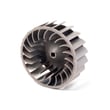
- Weak airflow or rumbling: dryer blower wheel WP697772
A dryer that runs hot or with poor airflow dries slower, stresses the heating circuit and thermostats, and shortens the life of the motor and drum support system. Preventive lint and vent cleaning is the single most effective way to protect the 10 to 13 year lifespan.
Last updated: February 2026
Is Kenmore 11087701700 high end?
Yes. Kenmore Elite model 11087701700 is part of Kenmore’s premium dryer lineup; it’s designed for higher feature sets and performance than standard Kenmore dryers, including an electric dryer platform with SteamCare features called out in the 11087701700 owner's manual.
Kenmore Elite typically indicates a step up in features and build compared to base models. For the 11087701700, that usually shows up as better cycle options, more advanced controls, and a feature set aimed at improved fabric care.
Common “premium” indicators you’ll see on Elite dryers:
- More cycle and temperature selections (including specialty cycles)
- Sensor-based drying to reduce overdrying
- Steam-related options (SteamCare on this model family)
- Higher-capacity drum designs and upgraded interior components
- More robust airflow and temperature management
A “high-end” dryer still uses wear parts. The difference is often in the feature set and control sophistication, not that it never needs maintenance.
Parts that commonly affect performance over time:
- Drum support and rolling components (noise, thumping): support WPW10314173
- Belt tension system (squeal, no tumble): dryer idler pulley 279640
- Heating and safety temperature control (no heat, overheating): dryer heating element WP8544771, dryer thermal cut-off fuse kit 279973
- Temperature sensing (poor drying, temp swings): dryer thermistor WP8577274
| Feature area | Kenmore Elite (typical) | Standard dryer (typical) |
|---|---|---|
| Drying control | More sensor-driven options | More timer-driven cycles |
| Cycle variety | More specialty cycles | Fewer cycle choices |
| Fabric care | More options to reduce overdrying | Basic heat and time control |
| Repair profile | More electronics plus standard wear parts | Mostly standard wear parts |
If you’re deciding whether it’s “high end,” the practical takeaway is this: the 11087701700 is built to deliver more fabric-care features and cycle control. Keeping the venting and airflow in good shape (lint screen, ducting, blower path) protects drying performance and helps prevent heat-related shutdowns.
Last updated: February 2026