 Error Codes


How to tell cubic feet of Kenmore refrigerator by model number?
For Kenmore model 36358062891, the model number alone usually does not directly state the exact cubic-foot capacity. The reliable way is to look up the model’s published specs, or calculate capacity from the interior compartment measurements (refrigerator plus freezer) and convert cubic inches to cubic feet.
- Look up the model specs using the full model number 36358062891 (this is the quickest and most accurate method).
- Measure the interior of the fresh-food section and freezer, then calculate total volume.
- Use the rating plate info (inside the cabinet) to confirm you are using the exact model number and not a similar one.
- If you are already ordering repair parts, match the model number on the appliance to the parts list to avoid mix-ups.
- Measure the usable interior dimensions in inches for each compartment:
- Fresh-food section: height x width x depth
- Freezer section: height x width x depth
- Compute cubic inches for each section and add them.
- Convert to cubic feet using this formula:
| What you have | What to do | Result |
|---|---|---|
| Cubic inches | Divide by 1,728 | Cubic feet |
| Two compartments | Add both cubic-inch totals first | Total capacity |
Tip: Measure to the inside walls and shelves; do not include door bins if you want a “usable space” estimate.
Kenmore model numbers often identify the series and manufacturer source, but they do not consistently encode capacity (for example, you might see numbers that look like “20.4” on some brands, but that is not dependable across Kenmore models).
Knowing cubic feet helps you compare replacement refrigerators, choose the right storage layout, and set expectations for airflow and loading. Overpacking reduces cooling performance and can contribute to temperature swings.
If you are troubleshooting cooling or dispenser issues while you are checking specs, our DIY guides can help, such as how to disassemble a Kenmore refrigerator dispenser.
Last updated: February 2026
Where is the model number on a Kenmore side by side refrigerator?
On a Kenmore side-by-side refrigerator like model 36358062891, the model number is printed on the appliance identification label, most often inside the fresh food compartment on a side wall near the top, or around the door opening. The same label typically also lists the serial number.
Look for a white or silver sticker or plate in these spots:
- Inside the refrigerator section on the left or right interior wall
- On the ceiling of the fresh food compartment (near the light)
- Along the door jamb (the frame area the door seals against)
- Behind the crisper drawers (on the back wall)
- On the back exterior panel near the power cord
The ID label usually includes several fields. We recommend copying them exactly:
- Model number (for example: 36358062891)
- Serial number (often a longer mix of letters and numbers)
- Electrical ratings (volts/amps) and sometimes a manufacturing date
| Item | What it’s used for | Example format |
|---|---|---|
| Model number | Matching parts to your exact refrigerator | 36358062891 |
| Serial number | Production run details | Letters + numbers |
Kenmore side-by-side refrigerators can use different door switches, light sockets, hinges, and dispenser parts depending on the exact model. Using the correct model number helps ensure you get the right replacement part the first time, such as a refrigerator light switch WR23X427 or refrigerator hinge WR13X10020.
If the sticker is worn or smeared:
- Take a close-up photo with your phone and zoom in
- Wipe gently with a damp cloth (do not scrub)
- Check the door frame area carefully; labels are often missed there
Last updated: February 2026
What is the code Sy Ef on a Kenmore refrigerator?
On a Kenmore refrigerator, the SY EF (sometimes shown as SY-EF) code points to a problem with the evaporator fan circuit. On model 36358062891, this typically means the control is not sensing normal evaporator fan operation, so cooling airflow through the freezer and fresh food sections can be reduced.
- Freezer temperature starts rising or swings up and down
- Fresh food section gets warm even if the freezer seems “kind of” cold
- Little to no airflow from the vents
- Fan noise changes (louder, intermittent, or silent)
- Frost buildup on the freezer back panel (in some cases)
- Power reset: Unplug the refrigerator for 5 minutes, then restore power.
- Door switch test: Press and hold the door switch; the evaporator fan should run when the switch is closed.
- Airflow and ice blockage: Check vents for packages or ice blocking airflow.
- Listen for the fan: A grinding or squealing sound often indicates a failing fan motor or an obstruction.
- Inspect for heavy frost: Heavy frost can indicate a defrost problem that eventually stops the fan from moving air.
If the fan is not running normally, these model-compatible parts are often involved:
- Refrigerator evaporator fan motor grommet WR02X10098 (helps isolate vibration and support the fan motor)
- Refrigerator defrost thermostat WR50X122 (helps control defrost cycling; frost issues can affect airflow)
- Refrigerator defrost control WR9X489 (controls defrost timing on many designs)
| What’s happening | Most likely direction | Related part on this model |
|---|---|---|
| Fan is noisy but runs | Mechanical wear or vibration | WR02X10098 |
| Fan won’t run and frost is heavy | Defrost system issue | WR50X122, WR9X489 |
| Fan won’t run and no frost issue | Fan circuit or fan motor issue | (check fan wiring and motor) |
The evaporator fan is what moves cold air from the evaporator through the refrigerator. When airflow drops, temperatures rise, food spoils faster, and the compressor can run longer than normal.
Last updated: February 2026
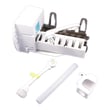
How to replace an ice maker in a side by side refrigerator?
To replace the ice maker in your Kenmore 36358062891 side-by-side refrigerator, we unplug the refrigerator, remove the ice bin and mounting screws, disconnect the wiring harness, then install the new ice maker and restore power and water so it can cycle and refill.
- Unplug the refrigerator (or switch off the breaker).
- Turn off the household water supply to the refrigerator.
- Empty the ice bin and remove it; this gives you working room.
- Protect the floor with a towel; a few drops of water are common.
- Use a nut driver or screwdriver that fits the mounting screws.
- Remove the ice container/bucket from the freezer door or shelf area.
- Take off the ice maker cover (if equipped) to access the mounting screws.
- Remove the mounting screws and lift the ice maker off the mounting tabs.
- Disconnect the wiring harness plug.
- Transfer any reusable parts from the old assembly if your replacement does not include them (for example, a fill cup or wire shutoff arm, if used).
- Connect the wiring harness to the new ice maker.
- Hang the new ice maker on the mounting tabs, reinstall and tighten the screws.
- Reinstall the ice bin, turn water back on, then restore power.
- First batch timing: most ice makers need several hours to start producing ice.
- Water fill: listen for a brief fill after the first harvest cycle.
- Leaks: check the fill tube area and the back of the refrigerator for drips.
- Ice quality: discard the first full bin if the unit has been off or unused.
| Symptom | Most common cause | What we do next |
|---|---|---|
| No ice production | Ice maker not getting power or water | Confirm harness connection and water supply is on |
| Small or hollow cubes | Low water flow | Check for a restricted filter or supply line |
| Ice dispenses poorly | Ice clumping or dispenser issue | Inspect the bucket and dispenser mechanism |
A correctly installed ice maker prevents leaks, improves cube size, and reduces strain on the dispenser system. If you are also seeing dispenser issues, our guide on how to disassemble a Kenmore refrigerator dispenser helps you access and inspect common wear points.
Last updated: February 2026
What are the most common problems with Kenmore refrigerators?
The most common issues we see on Kenmore refrigerators like model 36358062891 are cooling problems, ice maker and dispenser failures, water leaks, frost buildup, and unusual noises. Many of these trace back to airflow restrictions, dirty condenser coils, door seal gaps, or a failing defrost system.
- Not cooling or warm temperatures: dirty condenser coils, condenser fan issue, compressor/start device problem
- Freezer cold but fresh food warm: evaporator fan or airflow blockage (frosted evaporator)
- Water leaking or puddles: clogged defrost drain, loose water line, dispenser/ice maker supply issues
- Heavy frost on back wall: defrost heater/thermostat/control problem
- Noisy operation: fan motor wear, ice buildup hitting the fan, loose panels
- Dispenser not working right: lever, solenoid, or door switch issues
- Set temps to typical targets: 0°F freezer and 37°F fresh food.
- Clean condenser coils and confirm the condenser fan runs when the compressor runs.
- Make sure vents inside both compartments are not blocked by food packages.
- Check door closing and gasket sealing (paper-strip test around the perimeter).
- Look for frost buildup on the freezer rear panel (a strong defrost clue).
| Problem area | Common fix | Example part on this model page |
|---|---|---|
| Frost buildup, warm temps | Restore defrost operation | Refrigerator defrost thermostat WR50X122 |
| Frost buildup, intermittent defrost | Replace defrost control | Refrigerator defrost control WR9X489 |
| Dispenser won’t dispense ice | Repair dispenser solenoid linkage | Refrigerator ice dispenser solenoid collar WR62X23154 |
| Lights or dispenser act “door-open” | Replace door/light switch | Refrigerator light switch WR23X427 |
Catching the symptom early prevents food spoilage and helps avoid secondary damage, such as a compressor running nonstop because airflow is restricted or the defrost system is failing.
For dispenser-related problems (ice not dispensing, stuck lever, trim removal), follow our step-by-step tips in how to disassemble a Kenmore refrigerator dispenser.
Last updated: February 2026





