Owner’s manual



How do I reset my LG dryer?
To reset your LG DLEY1201V dryer, we recommend a simple power reset: turn the dryer off, unplug it (or switch the breaker off) for 1 minute, then restore power and try a cycle again. This clears many control glitches without disassembly; see the DLEY1201V manual for model-specific control and cycle details.
Quick reset steps (safe, no tools)
- Press Power to turn the dryer off.
- Unplug the power cord (or turn the dryer breaker off).
- Wait 60 seconds.
- Plug back in (or turn breaker on).
- Press Power, then start a timed dry cycle to test.
If the dryer still will not start after a reset
A reset will not bypass a safety circuit. On the LG DLEY1201V, common “no start” causes include a door switch issue, a broken belt switch, or a power supply problem.
- Confirm the door closes firmly; listen for a click.
- Check the house power: the dryer needs full supply (a partial power loss can light the console but prevent heating or starting).
- If the door does not register closed, inspect the dryer door switch EBF61496102.
- If the motor hums but the drum will not turn, inspect the belt and belt switch.
If the issue is “runs but no heat”
A reset alone usually will not fix a true heating failure. Most no-heat complaints are airflow-related (restricted venting) or a failed heating component.
- Clean the lint screen and confirm strong airflow at the outside vent hood
- Check for crushed or excessively long venting
- If airflow is good, testing the heater circuit may be needed
Common heat-related parts to check (when symptoms match)
| Symptom | What it often points to | Example compatible part |
|---|---|---|
| Runs, no heat (electric heat circuit issue) | Open heater | LG dryer heating element 5301EL1001H |
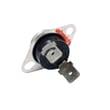
| Overheats, shuts down, or cycles heat oddly | Thermostat issue | Dryer high-limit thermostat (model-specific options vary) |
Why it matters
Resetting is a fast way to clear a temporary electronic lockup, but repeated overheating or no-heat symptoms often trace back to restricted venting or a failing safety/control component. Fixing the root cause helps prevent repeat shutdowns and protects the dryer’s heater and controls.
Last updated: January 2026
Where is the flow sensor on a LG dryer?
On the LG DLEY1201V dual-fuel dryer, what many people call a “flow sensor” is typically the moisture-sensing bars; they sit at the front of the drum area, right by the lint screen housing. For model-specific access and panel removal steps, use the DLEY1201V dryer manual.
What you will see and where to look
On this LG dryer design, the sensor area is easiest to spot from the door opening:
- Open the dryer door and look toward the front bulkhead (the front frame around the drum opening).
- Check near the lint screen opening and lint screen grille area.
- The moisture sensor uses metal bars/contacts that the clothes brush against during Sensor Dry cycles.
- Wiring for the sensor typically routes from the front bulkhead area into the cabinet.
If you are inspecting or replacing the moisture sensor components for this model, the compatible parts include the dryer moisture sensor 6500el1001a and the dryer moisture sensor wire harness 6631EL3003B.
Quick identification guide
| What you are looking for | Typical location on DLEY1201V | What it does |
|---|---|---|
| Moisture sensor bars (often mistaken for “flow sensor”) | Front of drum area near lint screen housing | Detects moisture level to end Sensor Dry cycles |
| Airflow restriction symptoms (not a sensor) | Vent ducting and blower path | Causes long dry times, overheating, poor drying |
Why it matters
If the moisture sensor area is dirty (fabric softener residue) or the harness is loose, Sensor Dry cycles can end too soon or run too long. If the issue is actually airflow, cleaning the lint path and checking the exhaust ducting is usually the fix, not replacing a sensor.
Safety and service notes
- Disconnect power before removing any panels.
- Shut off gas supply if you need to access internal components on a dual-fuel dryer.
- Avoid running the dryer with panels removed.
Last updated: January 2026
What's the average price of an LG dryer?
LG dryer pricing is not determined by the LG DLEY1201V model itself; it varies by capacity, fuel type (electric, gas, dual-fuel), features (steam, sensor dry), and retailer. In general, new LG dryers commonly sell in the $600 to $2,000 range.
What affects the price most
- Fuel type: gas and dual-fuel models often cost more than basic electric models
- Capacity: larger drum capacity typically increases price
- Feature set: steam cycles, advanced sensors, and smart connectivity can raise cost
- Finish and design: matching sets and premium finishes can add cost
- Installation needs: venting changes, gas hookup, or electrical upgrades can add to total spend
Typical price bands (quick guide)
| Dryer type | Common price band | Notes |
|---|---|---|
| Entry-level LG dryer | $600 to $900 | Basic timed and sensor cycles |
| Mid-range LG dryer | $900 to $1,400 | More cycles, better controls, often steam options |
| Premium LG dryer | $1,400 to $2,000 | Largest capacity, most features, premium styling |
How we recommend shopping for the right LG dryer
- Confirm your exact model and fuel setup (your DLEY1201V is a dual-fuel dryer).
- Compare must-have features (steam, sanitize, sensor dry, reversible door).
- Budget for accessories and setup if needed (vent kit, hoses, stacking kit).
If you are repairing instead of replacing, a worn support system can make a dryer noisy or rough; checking parts like the dryer drum support roller 4581EL2002L can help extend the life of an LG dryer.
Why it matters
Knowing the typical price range helps you decide whether to repair or replace. For LG DLEY1201V owners, the owner documentation can also help you confirm features and operating requirements before you shop; see the DLEY1201V manual.
Last updated: January 2026
What is the most common problem with LG dryers?
For the LG DLEY1201V dual-fuel dryer, the most common customer-reported issues are poor drying or no heat (usually airflow restriction or a heating control failure) and noisy operation (often wear in drum support components). Our first checks are always lint, venting, and basic heat and drum support parts listed in the DLEY1201V dryer manual.
Most common symptoms and what they usually point to
- Clothes take too long to dry: restricted exhaust venting, lint buildup, or weak airflow.
- No heat or low heat: heating circuit problem (heater, thermostats, sensor inputs).
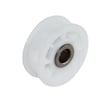
- Thumping, rumbling, or squealing: worn drum support roller(s) or idler pulley.
- Stops mid-cycle or overheats: airflow restriction or a thermostat opening.
- Auto cycles end too soon: moisture sensing issue or sensor contamination.
Model-relevant parts we often inspect on DLEY1201V
If troubleshooting leads to a specific component, these are common wear or heat-related parts for this model:
- Dryer drum support roller 4581EL2002L (noise, rumble, thump)
- LG dryer heating element 5301EL1001H (no heat, weak heat)
- Dryer high-limit thermostat 6931EL3003D (overheating, heat cuts out)
- Dryer thermistor AGM30045804 (temperature sensing issues)
- Dryer drum belt 4400EL2001F (drum not turning, squeal if damaged)
Quick triage: symptom-to-likely-cause
| Symptom | Most likely cause | First action |
|---|---|---|
| Long dry times | Vent restriction | Clean lint screen and verify strong airflow at outside hood |
| No heat | Heater or heat control | Check heat settings; then test heater/thermostats |
| Loud rumble/thump | Roller wear | Inspect drum support rollers for flat spots |
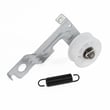
| Squeal | Idler pulley/belt path | Inspect idler and belt tracking |
Why it matters
Poor drying is often an airflow problem; fixing venting first can prevent overheating, nuisance shutdowns, and premature failure of heating components. Noises usually get worse over time and can lead to belt damage or additional wear.
Last updated: January 2026