Owner’s manual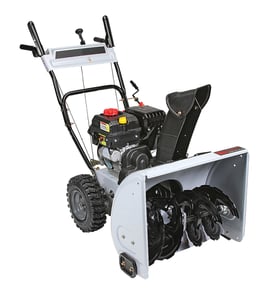



What is the most common problem with snow blowers?
The most common problem we see on the Craftsman 247886400 gas snow thrower is a clogged discharge chute or auger housing that stops snow from throwing properly. Close behind are shear pins that break after an ice jam or hidden object, which makes the auger stop turning.
- Shut the engine off and wait for all moving parts to stop before checking anything.
- Clear the discharge chute using a clean-out tool (never your hand).
- Inspect the auger area for a lodged object (ice chunk, rock, newspaper).
- Check whether the auger is turning; if not, inspect shear pins and clips.
- Confirm the auger control cable is engaging and adjusted correctly.
- If the auger belt is loose or damaged, plan on replacing it.
| Symptom | Most likely cause | What to do first |
|---|---|---|
| Engine runs but no snow discharges | Chute assembly clogged | Shut off engine; clear chute with a tool |
| One auger turns, the other does not | Shear pin sheared on one side | Replace the sheared pin and clip |
| Auger does not turn and belt squeals | Auger belt loose/damaged | Inspect belt and tension; replace if worn |
| Chute will not rotate smoothly | Chute assembled incorrectly | Recheck chute control assembly steps |
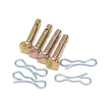
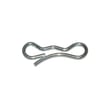
If an auger blade hits a foreign object or an ice jam, the shear pin is designed to break to protect the gearbox. For this model, use the correct OEM shear pin type listed in the 247886400 owner’s manual. If you need the common replacement shear pin used on many 2-stage setups, we stock shear pin 738-04124A.
A clog or a sheared pin can look like a major failure, but it is usually a fast, low-cost fix. Clearing the chute safely and using the correct shear pins helps prevent damage to the auger gearbox, belts, and drive system.
Last updated: January 2026
How do I tell what year my snowblower is?
For a Craftsman gas snow thrower model 247886400, the most reliable way to tell the year is to use the engine manufacture date code (on the engine shroud, valve cover, or blower housing) and decode it to a calendar date; that date tells you when the engine was built and closely tracks the snowblower’s build timeframe. For model-specific label locations and identification details, use the 247886400 owner’s manual.
Check these common spots on a gas snow thrower:
- Engine ID label on the engine shroud or recoil starter housing
- Stamped code on the valve cover or blower housing
- Snowblower product tag on the frame (often near the axle area or rear housing)
- Control panel area near the handle support
Many small engines use a numeric date code where the first two digits are the year.
Example: 99011556
99= year (1999)01= month (January)15= day of month (15th)- Remaining digits often identify the production line or sequence
| Code segment | Meaning | Example value |
|---|---|---|
| First 2 digits | Year | 99 = 1999 |
| Next 2 digits | Month | 01 = January |
| Next 2 digits | Day | 15 = 15th |
Use these practical options to narrow it down:
- Compare your unit’s controls and features to the diagrams and descriptions in the 247886400 owner’s manual
- Match key wear parts (like shear pins and cables) to confirm you are working from the correct parts list
- If your auger engagement feels off, verify cable slack and stopping behavior (the manual describes checking that the auger fully stops when you release the control)
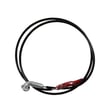
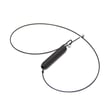
Knowing the build year helps you order the correct Craftsman and MTD-style replacement parts (shear pins, drive cable, auger clutch cable) and prevents mismatches when a manual covers multiple similar models.
Last updated: January 2026
Should I spray my snowblower with WD-40?
Yes; on a Craftsman 247886400 gas snow thrower, a light spray on snow-contact metal surfaces can help reduce snow sticking and chute clogging, but keep spray off drive components and any area the manual calls out for grease or oil. For storage, a light film of oil on rust-prone areas works well.
Use a light, even coat on clean, dry metal surfaces that touch snow.
- Inside the discharge chute (to help snow slide)
- Auger housing interior surfaces (to reduce buildup)
- Auger shaft area after shear pins are removed (seasonal lubrication step)
- Exterior metal spots prone to surface rust (storage protection)
- Avoid belts, friction wheel, and drive plate areas (spray can cause slipping)
Our guidance follows the lubrication and storage steps in the 247886400 owner’s manual.
| Task | What to use | How often |
|---|---|---|
| Hex (gear) shaft lubrication | Light coating of anti-seize | At least once a season or every 25 hours |
| Axles | Multipurpose automotive grease | At least once a season |
| Chute directional control bushing/spiral | 3-in-1 oil | Once a season |
| Rust prevention for storage | Light oil or silicone coating | Before storage |
The manual specifically warns to keep oil off the aluminum drive plate and rubber friction wheel because it can hinder the drive system. If you accidentally overspray, wipe the area clean immediately and let it dry before operating.
A slick chute and properly lubricated shafts help prevent clogs and reduce wear, while keeping lubricants off traction and drive surfaces helps your snowblower maintain consistent forward and reverse drive.
Last updated: January 2026
What is the life expectancy of a snowblower?
For the Craftsman gas snow thrower model 247886400, the operator guidance defines an “average useful life” of 7 years or 60 hours of operation; after that point, the machine should be inspected annually to confirm mechanical and safety systems are working properly. See the 247886400 owner's manual.
The 7-year or 60-hour figure is a service-life guideline tied to inspection and safety, not a guaranteed end-of-life date.
- Track operating hours if your unit has an hour meter; otherwise, estimate by storm time.
- Schedule an annual inspection once you reach 7 years or about 60 hours.
- Replace worn wear-items early to prevent breakdowns mid-storm.
- Follow off-season storage steps to reduce fuel-system and carburetor problems.
- Check fuel lines, tank, cap, and fittings for cracks or leaks.
Many snowblowers run longer than the “average useful life” with routine maintenance, but the inspection milestone is what keeps operation safe and reliable.
| Measure | What it represents | What we recommend |
|---|---|---|
| 7 years | Age-based wear guideline | Annual inspection after year 7 |
| 60 hours | Use-based wear guideline | Inspect sooner if you reach 60 hours quickly |
| 10 to 15 years | Common real-world lifespan with good care | Expect periodic part replacement and tune-ups |
Wear parts usually make a snowblower feel “worn out” before the engine is truly done.
- Shear pins after impacts or jams (example: snowblower shear pin 738-04124A)
- Drive system wear (friction wheel, linkage adjustments)
- Control cables that stretch, fray, or freeze (example: snowblower drive cable 946-05067)
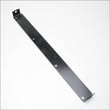
- Scraper/shave plate wear from pavement contact
Using the 7-year or 60-hour inspection guideline helps prevent sudden failures and keeps key safety controls (auger/impeller disengagement, drive control, fuel system integrity) operating as designed.
Last updated: January 2026