Installation guide
 Owner’s manual



How to reset whirlpool WDT910SAYM3 dishwasher?
To reset your Whirlpool WDT910SAYM3 dishwasher, cancel the current cycle and restart the control so it returns to standby. Use the exact button sequence shown in your owner's manual; the control panel lights will change as the reset begins.
Quick reset steps (most common)
- Make sure no cycle is actively running.
- Press the Heated Dry and Normal buttons in sequence.
- Repeat that same two-button sequence a second time.
- Watch for the console lights to illuminate or cycle, indicating the reset routine started.
- Close the door and press START/RESUME to begin a new cycle.
If the dishwasher still will not run after the reset
- Confirm the door is fully closed and latched.
- Press START/RESUME after closing the door (some models require this to resume).
- Run hot water at the nearest sink until it is hot, then start the cycle (best results at about 120°F incoming water).
- If the unit drains but will not wash, check for a wash system issue such as a blocked spray arm.
- If it will not drain, the drain path or pump may be restricted.
Common symptoms and what they usually point to
| What you see | What it often means | What to check next |
|---|---|---|
| Lights stuck or cycle won’t start | Control needs reset or door not latched | Door latch, then reset sequence |
| Water left in tub | Drain restriction or drain pump issue | Filter area, drain hose routing, pump |
| Poor cleaning | Low water temp, loading issue, spray blockage | Water temp, loading, spray arm |
Why it matters
A proper reset clears a stalled cycle and restores normal control operation, which helps you avoid false “no start” symptoms and gets the dishwasher back to washing and draining correctly.
Last updated: February 2026
What is the average lifespan of a whirlpool dishwasher?
A Whirlpool dishwasher typically lasts 9 to 12 years. For your Whirlpool WDT910SAYM3, regular maintenance (cleaning, correct detergent, and using rinse aid) and fixing small issues early can help you reach the high end of that range; see the owner's manual for model-specific care guidance.
Typical lifespan and what affects it
Most Whirlpool dishwashers land in the 9 to 12 year range, and these factors make the biggest difference:
- How often you run it (daily use wears pumps, seals, and racks faster)
- Water quality (hard water increases mineral buildup and drying issues)
- Detergent and rinse aid use (rinse aid improves drying and helps control deposits)
- Loading habits (overloading can block spray arms and reduce cleaning)
- Small leaks or drainage problems (catching them early prevents bigger damage)
Maintenance habits that extend life
These steps help protect key components like the drain pump, heater, and door seal:
- Clean the filter area and remove debris from the sump regularly
- Keep spray arm holes clear; remove and rinse the arm if jets clog
- Use rinse aid consistently for better drying and less spotting
- Run hot water at the sink before starting a cycle for better wash performance
- Inspect the door perimeter for gaps, tears, or flattening
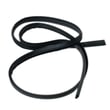
If you’re seeing leaking at the door, replacing the dishwasher door seal W11177741 is a common fix on many Whirlpool designs.
Quick “repair vs. replace” guide
| What you’re seeing | Common cause | Usually worth fixing? |
|---|---|---|
| Not draining | Clog, drain hose issue, or drain pump | Yes |
| Poor drying | Rinse aid, heater issue, or cycle selection | Yes |
| Door leaking | Worn door seal or alignment issue | Yes |
| Repeated stopping/no run | Latch, power supply, or control issue | Depends |
Why it matters
A dishwasher near the end of its lifespan often shows up as longer cycles, weaker cleaning, and more frequent part failures. Your WDT910SAYM3 is designed for longer, energy-saving cycles (often 2 to 3 hours, and sometimes longer with options), so consistent performance and no leaks are better “health” indicators than cycle length alone.
Last updated: February 2026
What are common problems with the WDT910SAYM3?
Common problems with the Whirlpool WDT910SAYM3 dishwasher include leaking, not draining, not filling, poor cleaning, poor drying, and door issues (won’t latch or won’t close). Many of these trace back to water flow, drainage, heating, or door sealing and alignment; our owner's manual troubleshooting section helps narrow it down fast.
Most common symptoms and what usually causes them
- Leaking: door seal wear, door not closing squarely, over-sudsing, loose hose connections
- Won’t fill with water: water supply shutoff closed, inlet valve issue, float/overfill condition
- Not draining: drain hose kink/high loop problem, drain pump issue, blockage in sump/filter area
- Not cleaning well: spray arm clogs, loading issues, low water temperature, filtration buildup
- Not drying: heater or drying option use, rinse aid level, plastic items holding water
- Door won’t close/latch: rack interference, hinge/balance problems, misaligned inner door
- Will not start: control lock/paused cycle, door not fully latched, power interruption
Quick checks we recommend first (no parts needed)
- Confirm the door closes firmly and the cycle actually starts (a weak latch can stop everything).
- Run hot water at the sink until it’s hot, then start the dishwasher (improves cleaning and drying).
- Check the bottom area for debris and clean the filtration area per the care instructions.
- Inspect the drain hose routing for kinks and make sure it has a proper high loop.
- Use the correct detergent amount; too much can cause suds and leaks.
Parts that commonly fix these problems on WDT910SAYM3
If the quick checks point to a failed component, these model-matched parts are common solutions:
| Symptom | Common fix | Model-matched part |
|---|---|---|
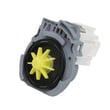
| Not draining / standing water | Drain pump not pumping out | Dishwasher drain pump WPW10348269 |
| Leaking at the door | Worn or deformed door seal | Dishwasher door seal W11177741 |
| Not drying / water not heating | Heater not heating water | Heater W10703867 |
| Poor cleaning / weak spray | Spray arm clogged or damaged | Dishwasher spray arm WPW10491331 |
| Won’t fill / fills slowly | Inlet valve not opening properly | Dishwasher water inlet valve WPW10327249 |
Why it matters
Dishwashers depend on the right fill level, strong spray, proper heating, and reliable draining. A small issue like a kinked drain hose or a worn door seal can look like a major failure, so checking the basics first saves time and prevents repeat problems.
For model-specific cycle behavior, options, and troubleshooting steps, follow the guidance in the WDT910SAYM3 installation guide and the user troubleshooting section.
Last updated: February 2026