Installation guide
 Owner’s manual
 Error Codes

How to tell if a Kenmore refrigerator compressor is bad?
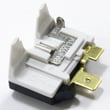
On Kenmore Elite model 79575196400, a bad compressor shows up as warm fridge and freezer temperatures even though the unit has power, often with repeated clicking at the compressor area or a compressor that runs extremely hot. Use the checks in the 79575196400 owner's manual to rule out common look-alikes first.
- Fridge and freezer stay warm after 24 hours of operation
- Repeated click, hum, then stop from the compressor area
- Compressor runs almost constantly but cooling stays weak
- Compressor is very hot after trying to start (use caution)
- No steady running sound, only start attempts
These issues can mimic a failed compressor and are quicker to fix:
- Power and controls: confirm the outlet has power and controls are not set to OFF
- Condenser coils: clean dust from coils to restore heat removal
- Door sealing: inspect the freezer door gasket for gaps; replace if torn (see refrigerator gasket assembly MDS64172918)
- Airflow: make sure vents are not blocked; listen for fans running
- Room and usage: hot kitchens and frequent door openings increase run time
A compressor diagnosis is based on electrical and sealed-system checks:
- Measure start and run amperage draw
- Check winding resistance and continuity, including to ground
- Verify the start device and wiring connections
- Check for sealed-system restrictions; a restricted filter dryer can contribute (see refrigerator drier assembly ADH73150208)
| What you notice | Often normal | More likely a problem |
|---|---|---|
| Long run times | Warm room, heavy use | Constant running with poor cooling |
| Clicking | Control cycling | Repeating click every few minutes with no cooling |
| Gurgling/sizzling | Refrigerant flow, defrost | Clicking plus overheating and warm temps |
Compressor and sealed-system repairs are major. Ruling out airflow, dirty coils, and door-seal leaks first prevents unnecessary parts replacement and gets cooling restored faster.
Last updated: February 2026
What are the common problems with Kenmore Elite refrigerators?
Common problems on the Kenmore Elite 79575196400 bottom-mount refrigerator include warm temperatures from restricted airflow or dirty condenser coils, frost buildup from defrost system issues, water leaks from drain or water-line problems, and door sealing issues that cause moisture and temperature swings. Use the owner's manual troubleshooting and care sections to pinpoint the symptom.
- Not cooling or weak cooling: blocked air vents, dirty condenser coils, evaporator fan or compressor system issues
- Frost buildup or ice on the back wall: defrost sensor/heater or airflow problems
- Loud humming, buzzing, or rattling: condenser fan area, evaporator fan area, or compressor mounting vibration
- Water under the refrigerator or in the crisper: clogged defrost drain, loose water tubing, inlet valve seepage
- Doors hard to open or won’t seal: dirty or warped gaskets, door alignment, vacuum effect after closing
- Confirm settings: start at 37°F (3°C) fresh food and 0°F (-18°C) freezer, then wait 24 hours for stabilization.
- Make sure food packages are not blocking interior air vents.
- Clean condenser coils (dust buildup is a top cause of poor cooling).
- Inspect and clean door gaskets; sticky gaskets can also make doors feel hard to open.
- If ice maker is slow, allow 24 hours after water hookup and verify the door is closing fully.
| Symptom | Common suspect part | Example from this model’s parts |
|---|---|---|
| Frost buildup, warm fridge | Defrost sensing/control issue | Refrigerator defrost sensor assembly 6615JB2005H |
| Water dispenser/ice maker issues | Water supply control problem | Refrigerator water inlet valve 5221JB2006K |
| Light won’t turn off, door alarm behavior | Door switch not closing | Refrigerator door push-button switch 6600JB1010A |
| Leaks at fittings or lines | Cracked/loose tubing | Refrigerator water tubing (match by location and length) |
These symptoms often overlap. For example, a door gasket leak can cause frost buildup, which blocks airflow and leads to warm temperatures. Starting with airflow, settings, and cleaning prevents unnecessary part replacement and helps you target the real failure.
Last updated: February 2026
What does DH mean on Kenmore Elite refrigerator?
On Kenmore Elite refrigerator model 79575196400, dH (often shown as Er dH) indicates a defrost heater or defrost cycle problem. The refrigerator may stop responding to some buttons while it protects the cooling system, and you can also see warming temperatures or frost buildup.
- Frost or ice building up on the freezer back wall
- Refrigerator section getting warm because airflow is restricted
- Fan noise changes (airflow sounds weaker) after the door closes
- Water dripping or refreezing in the freezer after a partial defrost
- The display shows dH or Er dH again after you reset power
- Power reset: Unplug the refrigerator (or switch off the breaker) for 5 minutes, then restore power.
- Check airflow: Make sure packages are not blocking the vents; this model relies on steady circulation between freezer and fresh food sections.
- Look for heavy frost: If the freezer back panel is packed with frost, the defrost system is not clearing ice.
- Door seal check: Inspect the gaskets for gaps or tears; warm air leaks can overload the defrost system.
In this model family, the most common causes are in the defrost circuit (sensor, heater, wiring, or control). A frequent service part is the defrost sensor.
| Symptom | Most likely area | What it affects |
|---|---|---|
| Heavy frost, weak airflow | Defrost system | Air can’t move through the evaporator |
| Temps swing up and down | Sensor or control logic | Defrost timing and termination |
| Returns after reset | Failed component | Error reappears once conditions repeat |
If you’re troubleshooting parts, start with the refrigerator defrost sensor assembly 6615JB2005H.
When defrost ice is not cleared, airflow drops and both compartments can warm up. Fixing the defrost issue restores normal cooling and helps prevent repeat icing.
For model-specific troubleshooting steps and control information, use the owner's manual.
Last updated: February 2026
What is the average lifespan of a Kenmore Elite refrigerator?
Most Kenmore Elite refrigerators, including model 79575196400, typically last 10 to 15 years with normal household use and basic maintenance. Keeping airflow clear, cleaning condenser coils, and maintaining good door seals helps you reach the upper end of that range; see the owner's manual for care and cleaning guidance.
A refrigerator’s service life depends most on heat management, door sealing, and how hard the sealed system has to work.
- Condenser coil cleanliness (dust and pet hair shorten life)
- Door gasket condition (warm air leaks increase run time)
- Room temperature and ventilation (tight enclosures trap heat)
- Ice maker and water system upkeep (leaks and clogs create secondary damage)
- Power quality (frequent outages and surges add stress)
Use these habits to reduce compressor run time and prevent common failures:
- Vacuum condenser area and clean the base/grille regularly
- Confirm doors close fully and gaskets seal all the way around
- Keep vents inside the fresh food section and freezer unblocked
- Replace filters on schedule and flush the dispenser after changes
- Fix small water leaks quickly (tubing, fittings, valve connections)
When a refrigerator is in the later part of its lifespan, the decision usually comes down to the type of repair.
| Issue type | Common examples | Typical decision driver |
|---|---|---|
| Maintenance or minor parts | door switch, small leaks, gasket issues | Usually worth repairing |
| Cooling/defrost problems | frost buildup, warm temps, fan or sensor issues | Repair if parts cost is reasonable |
| Sealed system or compressor | compressor or refrigerant-side repairs | Often higher cost; compare to age |
Model 79575196400 includes warranty coverage for the sealed refrigeration system for a longer period than the full appliance warranty; details are listed in the owner's manual.
A refrigerator that runs longer to hold temperature uses more energy and wears out key components faster. Simple upkeep (especially coils and gaskets) reduces heat load, stabilizes temperatures, and helps the compressor last.
Last updated: February 2026