Owner’s manual
 Error Codes




Is 7.5 cubic feet a large dryer?
Yes. A 7.5 cu. ft. drum is considered a large-capacity dryer, and it is a great fit for the Samsung DV50K7500EW when you regularly dry family-size loads or bulky items. It helps reduce the number of loads while giving clothes room to tumble for more even drying.
Most standard residential dryers fall around 5.0 to 7.0 cu. ft.; once you get to about 7.4 cu. ft. and up, you are in the large-capacity range.
Common loads that benefit from 7.5 cu. ft. capacity:
- King or queen comforters (depending on fill and weight)
- Large towel loads
- Mixed family laundry loads
- Bulky hoodies, blankets, and bedding
Large capacity helps most when airflow stays strong and the load is not packed tight.
- Avoid overloading; items should tumble freely
- Clean the lint screen before every load
- Use Sensor Dry (or similar) cycles for mixed loads
- Keep the exhaust vent run short and unobstructed
- If loads take longer than normal, check venting first
For cycle guidance and capacity tips specific to your dryer, use the DV50K7500EW owner's manual.
| Capacity class | Typical cu. ft. range | Best for |
|---|---|---|
| Compact | 3.4 to 4.4 | Apartments, small loads |
| Standard | 5.0 to 7.0 | Most households |
| Large | 7.4 to 9.0+ | Families, bulky items |
Choosing the right capacity affects drying performance, energy use, and fabric care. With a 7.5 cu. ft. dryer, you can dry more at once, but proper tumbling space and good vent airflow still determine how fast and evenly clothes dry.
If you are troubleshooting long dry times or heat issues, our Samsung dryer error codes resource can help you narrow down what the dryer is sensing.
Last updated: January 2026
What does E3 mean on a Samsung dryer?
On the Samsung DV50K7500EW dryer, the E3 error code means the dryer detected an overload or an out-of-balance load. Reducing the load size and redistributing items usually clears the condition and helps the dryer tumble and sense properly.
- Press Power to stop the cycle.
- Remove a few items (heavy loads like towels and jeans trigger E3 most often).
- Shake out and redistribute the remaining items evenly in the drum.
- Restart using a cycle appropriate for the fabric type (avoid overpacking on sensor cycles).
- If the load is a single bulky item, add 1 to 2 similar items to balance it.
- Load size: Keep the drum loosely filled; clothes should tumble freely.
- Mixed items: Avoid mixing one heavy item with many light items.
- Leveling: Make sure the dryer sits level and does not rock.
- Drum support: A worn roller can contribute to poor tumbling and noise; inspect the Samsung dryer drum support roller DC97-16782A.
- Drive system: If the drum struggles to turn, check the belt condition; see the Samsung dryer drum belt 6602-001655.
| Symptom | What you’ll notice | Most common fix |
|---|---|---|
| E3 appears early in cycle | Drum starts then stops, or won’t keep tumbling | Remove items and rebalance |
| E3 with heavy/bulky loads | Thumping or uneven tumbling | Add similar items, reduce load |
| E3 plus poor tumbling/noise | Squeal, rumble, or drag | Check rollers/belt |
When the DV50K7500EW senses overload or imbalance, it can stop tumbling to protect the drive motor and reduce wear on the drum belt and drum support components. Correct loading improves drying performance and helps prevent repeat errors.
For cycle and loading guidance specific to this model, follow the DV50K7500EW owner’s manual.
Last updated: January 2026
What is the most common problem with Samsung dryers?
For Samsung dryers like model DV50K7500EW, the most common problem we see is poor drying (not heating enough or taking too long). The usual causes are restricted venting and heat-system safety parts opening, such as a thermal cut-off or high-limit thermostat; see the DV50K7500EW manual for model-specific checks.
- Runs but no heat: heating circuit issue (heater, thermal cut-off, thermostat) or airflow restriction
- Takes too long to dry: clogged lint screen, blocked vent, crushed duct, or weak airflow
- Drum won’t spin: worn/broken belt or motor-related problem
- Rumbling or thumping noise: worn drum support rollers
- Stops mid-cycle: overheating from poor airflow or a temperature-sensing problem
If airflow is good and the dryer still will not heat or overheats, these model-matched parts are common fixes:
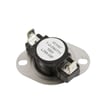
- Dryer thermal cut-off thermostat DC47-00016A
- Dryer high-limit thermostat DC47-00018A
- Samsung dryer heating element assembly DC93-00154A
- Dryer thermistor DC32-00007A
| Symptom | Most likely area | Typical first check |
|---|---|---|
| No heat | Heating circuit | Lint screen and vent path for blockage |
| Long dry times | Airflow/venting | Vent hood flap opens fully, duct not crushed |
| Loud rumble | Drum support | Inspect rollers for flat spots |
| No tumble | Drive system | Check belt condition and drum movement |
Poor airflow is the root cause behind many Samsung dryer complaints because it makes clothes dry slowly and can overheat the heater housing, which can open safety devices (thermal cut-off/high-limit) and stop heat.
Last updated: January 2026