

Is a 4x36 belt sander good for knife making?
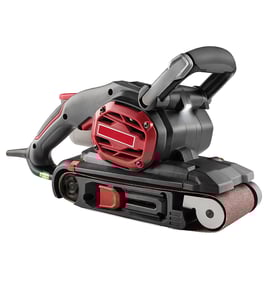
A 4x36 belt sander works for knife making, mainly for rough shaping, handle scales, and cleanup, but it is slower and less precise than a 2x72 grinder. Your Craftsman model 35122638 is a 2 x 8 inch belt and disc sander; it is best for small parts and light grinding, not primary bevel grinding.
How a 4x36 compares to Craftsman 35122638 (2 x 8 belt and disc)
A 4x36 gives you a longer belt and more usable platen area, which helps with smoother bevels and better belt life. The 35122638 uses a very short 2 x 8 belt, so it heats up faster and is harder to control on long blade bevels.
| Tool type | Best knife making uses | Main limitation |
|---|---|---|
| 4x36 belt sander | Profiling, rough bevels on small blades, handle shaping | Slower than 2x72; limited belt selection |
| Craftsman 35122638 (2 x 8 belt and disc) | Handle scales, small profiling, deburring, sharpening touch-ups | Very short belt; fast heat buildup; difficult to keep bevels even |
| 2x72 belt grinder | Bevel grinding, fast stock removal, consistent geometry | Higher cost and space |
What we recommend for best results
- Use the belt sander for handles, profiling, and light cleanup; use the disc for flattening and squaring small parts
- Keep pressure light and make short passes to avoid overheating the edge
- Change belts often; dull abrasives create heat and chatter
- Use a simple grinding jig or tool rest whenever possible for repeatable bevel angles
- Keep a water cup nearby and cool the blade frequently during grinding
Belt grit starting points (general)
- 60 to 80 grit: rough shaping
- 120 to 220 grit: refine scratches and geometry
- 400 grit and up: pre-finish blending (light pressure)
Why it matters
Knife steel loses performance when the edge overheats during grinding. With short-belt machines like the Craftsman 35122638, heat control and light passes are the difference between a usable blade and a softened edge.
For general safety practices before doing any DIY work, use are diy appliance repairs safe.
Last updated: February 2026
What are the disadvantages of a belt sander?
A belt sander like the Craftsman 35122638 2 x 8" belt & disc sander/grinder removes material fast, so the main disadvantages are reduced finesse on delicate work, a higher chance of gouging, and more dust and heat compared with lighter sanding methods.
Common disadvantages (and what they look like)
- Too aggressive for fine detail: it can round over edges and erase crisp corners quickly.
- Easy to gouge or create dips: pausing in one spot can leave a low spot that is hard to blend.
- Heat buildup: friction can scorch wood, soften finishes, or glaze the abrasive.
- Dust and debris: belt sanding produces a lot of fine dust that needs good collection and cleanup.
- Noise and vibration: extended use can be tiring and can reduce control.
- Consumable cost: belts wear, clog, and tear; coarse grits get used up quickly on heavy stock removal.
How we reduce the downsides on a 2 x 8 belt and disc sander
- Start with the least aggressive grit that will still do the job.
- Keep the work moving; use light, even pressure.
- Use the disc for controlled edge work and the belt for flattening and shaping.
- Clean belts often (a belt cleaning stick helps) and replace belts that are glazed or torn.
- Use dust collection and wear eye and dust protection.
Quick comparison: belt sander vs lighter sanding options
| Tool/method | Main strength | Main drawback |
|---|---|---|
| Belt sanding | Fast stock removal, flattening | Easy to over-sand and gouge |
| Random-orbit sanding | Smoother finish, fewer swirl marks | Slower material removal |
| Hand sanding | Best control on details | Slowest, inconsistent on large flats |
Why it matters
Belt sanders are designed for speed. When you match grit, pressure, and technique to the task, you get the benefit (rapid shaping) without the common problems (dips, burn marks, and uneven surfaces).
For general DIY safety practices before working on power tools, see are diy appliance repairs safe.
Last updated: February 2026
What are the main parts of a belt sander?
On the Craftsman 35122638 2 x 8" belt & disc sander/grinder, the main belt-sanding parts are the abrasive sanding belt, two rollers (drive and idler), the motor that turns the drive roller, and the belt-tracking/tension hardware that keeps the belt centered and tight during use. For a quick safety refresher before servicing, see are diy appliance repairs safe.
Main parts you will see on most belt sanders
- Abrasive sanding belt: The consumable belt that does the cutting.
- Drive roller (lower pulley/roller): Connected to the motor; pulls the belt.
- Idler roller (upper pulley/roller): Free-spinning roller that supports the belt and helps maintain tension.
- Tensioning mechanism: Spring, lever, or screw system that tightens the belt so it does not slip.
- Tracking adjustment: Fine adjustment that keeps the belt running centered on the rollers.
- Belt platen (backing plate): Flat support behind the belt for more even sanding (common on many designs).
How these parts work together
The motor spins the drive roller, which moves the abrasive belt around the roller pair. The idler roller and tension system keep the belt tight, while the tracking adjustment prevents the belt from walking off the rollers.
| Part | What it does | Common symptom if it fails/misadjusts |
|---|---|---|
| Sanding belt | Removes material | Poor cutting, glazing, burning wood |
| Drive roller | Moves the belt | Belt stalls or slips under load |
| Idler roller | Supports belt path | Belt wobbles, uneven sanding |
| Tension system | Keeps belt tight | Belt slips, squeals, won’t start smoothly |
| Tracking adjuster | Centers the belt | Belt runs off one side |
Why it matters
Knowing the drive roller, idler roller, tension, and tracking parts helps you diagnose the most common belt-sander issues (belt slipping, belt wandering, vibration) and choose the right repair approach before replacing components.
Last updated: February 2026
What is the procedure to replace the belt on the belt sander?
To replace the sanding belt on your Craftsman 35122638 2 x 8" belt and disc sander/grinder, we unplug the tool, release belt tension, remove the old belt, install the new belt in the correct direction, then re-tension and adjust tracking so the belt runs centered without rubbing.
Safety first
- Unplug the sander before opening guards or touching the belt path
- Wear eye protection and a dust mask; sanding dust is hazardous
- Keep loose clothing, hair, and jewelry away from rotating parts
- Keep fingers clear of the belt and rollers when test-running
- Reinstall all guards and covers before normal use
Belt replacement procedure (typical for this Craftsman style)
- Disconnect power (unplug).
- Open the belt guard/cover to access the belt and rollers.
- Release belt tension using the tension lever/knob (or spring-loaded idler release).
- Slide the old belt off the drive roller and idler roller.
- Install the new belt:
- Use the correct replacement belt size for the machine (most 2 x 8" belt and disc sanders use a 2-inch wide belt that is much longer than 8 inches).
- Follow the directional arrow printed on the belt, if present.
- Make sure the belt is fully seated on both rollers.
- Reapply tension by returning the tension lever/knob to the operating position.
- Track the belt: plug in, stand to the side, bump the switch on briefly, then turn the tracking knob in small increments until the belt runs centered.
Tracking quick guide
| Symptom | Likely cause | Fix |
|---|---|---|
| Belt walks to one side | Tracking needs adjustment | Turn tracking knob slightly; re-test |
| Belt rubs a guard | Belt not centered or not seated | Stop, re-seat belt, then re-track |
| Belt flutters or hops | Belt damaged or tension incorrect | Replace belt; confirm tension is set |
Why it matters
Correct belt tension and tracking reduce vibration, prevent premature belt wear, and protect the rollers and platen. A centered belt also sands flatter and keeps the tool safer to use.
For general DIY safety practices before servicing power tools, use are diy appliance repairs safe.
Last updated: February 2026