Owner’s manual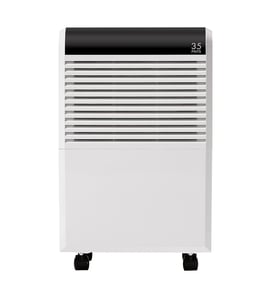


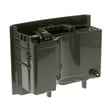

What is the life expectancy of a GE dehumidifier?
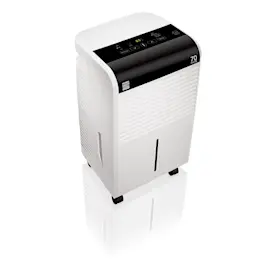
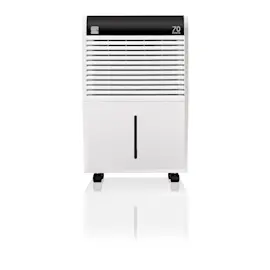
A GE residential dehumidifier like model APEL70LWQ1 typically lasts 5 to 8 years with normal seasonal use and routine cleaning. Heavy, year-round basement use and poor airflow (dirty filter, blocked grille) commonly shorten life by stressing the compressor and fan.
- Light use (seasonal, clean air path): 7 to 10 years
- Average home use: 5 to 8 years
- Heavy use (damp basement, runs daily): 3 to 6 years
| Usage pattern | What we usually see | Best way to extend life |
|---|---|---|
| Seasonal, moderate humidity | Longest lifespan | Clean filter monthly in season |
| Daily basement operation | Mid-range lifespan | Keep coils and airflow clear |
| Very dusty environment | Shorter lifespan | Clean grille, filter, bucket often |
We see the biggest reliability gains when you keep airflow and drainage working correctly.
- Clean or replace the air filter regularly (a clogged filter reduces airflow and can lead to coil frost)
- Wash and dry the bucket; keep the bucket area free of slime or debris
- Confirm the unit is level so water drains into the bucket correctly
- Keep the top discharge and intake grille clear (no curtains, boxes, or tight corners)
- If you use a drain hose, keep it straight and sloped downward to prevent kinks and backups
Helpful model-specific references:
- Cleaning steps and operating tips are in the owner's manual.
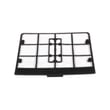
- If your filter is damaged or won’t come clean, replace it with the dehumidifier air filter WK85X21721.
A dehumidifier is a small refrigeration system. When airflow is restricted or water handling is inconsistent, the unit runs hotter and longer, which accelerates wear on the compressor, fan motor, and electronic controls.
- The unit runs but doesn’t remove moisture after cleaning the filter and confirming good airflow
- You repeatedly get frost on the coil in normal room temperatures
- Water handling problems persist even after cleaning the bucket area and confirming proper hose/bucket setup
Last updated: February 2026
How many square feet will a 70 pint dehumidifier take care of?
A 70-pint dehumidifier like the GE APEL70LWQ1 is typically sized for large spaces; in real homes, it commonly handles about 1,000 to 2,500 sq. ft. depending on how damp the area is, how enclosed it is, and how well air can circulate. For best results, follow the placement and operating guidance in the owner's manual.
Use these ranges as a practical sizing guide for a 70-pint unit.
| Space condition | Typical coverage range | What you will notice |
|---|---|---|
| Very damp (wet basement, frequent seepage) | ~1,000 to 1,500 sq. ft. | Bucket fills fast; unit runs often |
| Damp (musty smell, condensation at times) | ~1,500 to 2,000 sq. ft. | Steadier humidity control |
| Moderately damp (seasonal humidity) | ~2,000 to 2,500 sq. ft. | Shorter run times |
Even with the same 70-pint rating, performance changes a lot by conditions and setup.
- How enclosed the area is: dehumidifiers work best in an enclosed space with doors and windows closed.
- Airflow around the unit: allow roughly 12 to 18 inches of clearance on all sides for circulation.
- Room temperature: moisture removal drops in cooler spaces; operation is intended above 41°F (5°C).
- Moisture source strength: seepage, laundry, showers, and cooking add load.
- Layout: a basement unit has little effect on adjacent closed rooms without good air movement.
If your space is larger than the ranges above, we recommend either:
- Choosing a higher-capacity unit, or
- Using two dehumidifiers placed in separate zones, or
- Improving airflow between rooms (open doors, add a fan) so one unit can “see” the whole area.
If the space is too large for the dehumidifier’s capacity, humidity stays high, the compressor runs longer, and you may see issues like slower water collection or frost cycles in cooler basements.
Last updated: February 2026
How many hours a day should you run a dehumidifier?
For your GE APEL70LWQ1 dehumidifier, run it as long as needed to reach and maintain your target humidity (typically 45% to 50% RH). On first use, run it continuously for 24 hours; after that, the humidistat cycles runtime based on moisture levels.
The humidity set control lets you choose 35% to 80% RH in 5% steps, or NS (Nonstop) for continuous operation.
- First-time setup: run 24 hours continuously to pull down moisture
- Everyday comfort: set 45% to 50% RH and let it cycle
- Very damp areas: lower the setpoint (35% to 40%) or use NS for maximum removal
- Noise-sensitive times: switch fan speed to Medium or Low after humidity drops
- Continuous drain: NS runs continuously until the bucket is full, or until a hose drain removes water
For the exact button sequence and feature details, use the APEL70LWQ1 owner's manual.
Daily runtime depends on the moisture load and airflow in the space.
- Room size and how well doors and windows are sealed
- Starting humidity and ongoing moisture sources (basement dampness, laundry)
- Airflow clearance around the unit (blocked intake or discharge)
- Filter condition (restricted airflow reduces moisture removal)
- Room temperature (auto defrost can extend overall run time)
| Goal | Setting | Typical result |
|---|---|---|
| General comfort | 45% to 50% RH | Cycles on and off |
| Faster dry-down | 35% to 40% RH | Longer run times |
| Maximum removal | NS (Nonstop) | Runs continuously until full or drained |
- Keep the front and back airflow paths clear
- Clean or replace the filter; use the dehumidifier air filter WK85X21721
- Make sure the bucket is fully seated so the unit can run
Running to a humidity target prevents over-drying, saves energy, and reduces nuisance bucket-full shutoffs while keeping moisture under control.
Last updated: February 2026