Installation guide
 Owner’s manual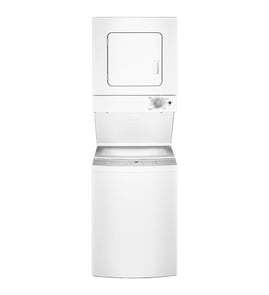



Where is the serial number on a GE Laundry Center?
On the GE GUD24ESSJ0WW stacked laundry center, the model and serial number tag is located in the dryer section. Open the dryer door and look for the tag on the door opening area (the manual calls out: “Open Dryer door for Model and Serial number tag”). See the GUD24ESSJ0WW owner's manual for the exact tag callout.
Where to look (quick checklist)
- Open the dryer door fully.
- Check the door opening (the front frame just inside the dryer door).
- Look along the inner edge of the opening where labels are typically placed.
- Use a flashlight; the tag can be easy to miss in low light.
- Write down both the model number and serial number exactly as shown.
What the tag looks like and what to record
The tag typically includes the model number, serial number, and sometimes electrical ratings.
| Item on tag | What to write down | Why you need it |
|---|---|---|
| Model number | GUD24ESSJ0WW | Ensures diagrams and parts match your exact unit |
| Serial number | Letters and numbers as printed | Helps identify production details for service and support |
Why it matters
Using the correct model and serial number prevents ordering the wrong GE washer/dryer parts and helps match troubleshooting steps to the right configuration.
Ordering parts with your model number
Once you have the model number, you can order replacement parts for your GE GUD24ESSJ0WW from the parts list for this model, or search by model number on Sears PartsDirect.
Last updated: February 2026
Why is my GE washer leaving my clothes soaking wet?
If our GE GUD24ESSJ0WW washer is leaving clothes soaking wet, the most common causes are an incorrect spin selection, a load that cannot balance for full-speed spin, or a drain problem that leaves water in the tub. Start by matching the cycle to the fabric and confirming the washer drains completely (see the owner's manual).
Quick checks that fix most “wet clothes” complaints
- Rebalance the load: Mix large and small items; avoid washing one heavy item by itself.
- Confirm the spin choice matches the load: Some cycles use a lower spin, and some fabrics feel wetter after a cold rinse.
- Run a Rinse and Spin: If clothes come out much drier, the issue is usually cycle selection or load balance.
- Reduce detergent: Too much detergent can create excess suds that interfere with proper draining and spinning.
- Check the lid is fully closed: This model uses a lid safety feature that prevents spinning with the lid up.
Drain and spin problem signs (what to look for)
If you notice any of the symptoms below, focus on the drain system and spin drive components:
| What you notice | What it usually points to | What to do next |
|---|---|---|
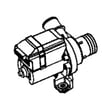
| Water still in basket at end of cycle | Drain restriction or weak pump | Inspect drain hose for kinks and clogs; check pump inlet for debris; replace the laundry center washer drain pump WH23X26206 if it will not evacuate water reliably |
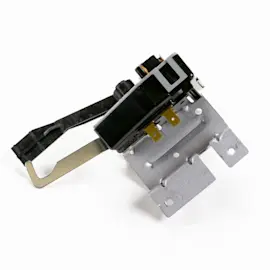
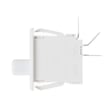
| Washer drains but barely spins or stops and restarts | Load out of balance or lid lock issue | Rebalance load; confirm lid closes firmly; if the lid will not lock consistently, test/replace the washer lid lock WH44X10288 |
| Agitates but spin is weak, noisy, or slips | Worn belt or drive issue | Inspect belt for glazing, cracking, or looseness; replace the washer drive belt WH01X20436 if worn |
Why it matters
A washer that cannot drain fully or reach full spin speed leaves water trapped in the fabric. That extra water increases dry time, can cause musty odors, and puts extra strain on the washer drive system over time.
Safety and setup notes we follow
- Disconnect power before checking the drain pump area or any wiring.
- Never wash items dampened with flammable liquids.
- Load items loosely and do not wrap long items around the agitator; both can prevent proper movement and spin balance.
Last updated: February 2026
How do I find the right GE part number?
For your GE GUD24ESSJ0WW stacked laundry center, the right part number comes from matching the exact model number on the appliance ID tag to the parts diagram and parts list for that model. Use the GUD24ESSJ0WW owner's manual to confirm where to find the model tag and key service notes.
Steps we use to match the correct part
- Find the model number and serial number on the appliance’s ID tag (do not use a similar-looking model).
- Match the model number exactly: GUD24ESSJ0WW.
- Use the model’s parts diagrams to identify the part by location and description.
- Cross-check the part description against your symptom (noise, no heat, no drain, won’t spin).
- Confirm any revision notes or wiring labels before disconnecting anything (important for controls).
Common examples for this model
If your symptom points to one of these areas, these are common part identifiers you can match to the diagram:
| Symptom | Likely area | Example part on this model |
|---|---|---|
| Dryer squeals or scraping | Drum support/glides | Dryer drum glide bearing WE03X37319 |
| Washer won’t lock or start | Lid lock system | Washer lid lock WH44X10288 |
| Washer won’t drain | Drain pump | Laundry center washer drain pump WH23X26206 |
| Washer won’t agitate/spin well | Belt/drive | Washer drive belt WH01X20436 |
Why it matters
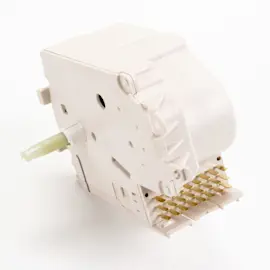
GE laundry centers often share similar-looking parts across nearby model numbers, but small differences (mounting, wiring connectors, timer versions) can cause a wrong-order fit issue. Matching by model number first, then by diagram position, gets the correct GE part number the first time.
Ordering tip
Once you identify the correct part ID and description for GUD24ESSJ0WW, order directly from the parts list for this model, or search by your full model number on Sears PartsDirect if you are shopping across multiple appliances.
Last updated: February 2026
How to order GE appliance parts?
For your GE GUD24ESSJ0WW laundry center, we recommend ordering replacement parts directly from the parts list for this model so you get the correct fit. Use the model number from the rating label, then confirm the part ID before checkout; you can also search by model on Sears PartsDirect.
How to order the right part (fast and accurate)
- Find the full model number on the unit’s rating label and match it exactly: GUD24ESSJ0WW.
- Identify the failed symptom (no heat, not draining, won’t start, noisy drum) and locate the matching part category.
- Match by part ID (best) and then cross-check the part name.
- If multiple versions appear, compare your original part’s markings and mounting style.
- Keep your serial number handy in case your unit has production changes.
Common parts customers order for this model
| Symptom | Part to check | Example part on this model page |
|---|---|---|
| Washer won’t lock or start | Lid lock | Washer lid lock WH44X10288 |
| Washer won’t drain | Drain pump | Laundry center washer drain pump WH23X26206 |
| Dryer squeals or thumps | Drum glide bearing | Dryer drum glide bearing WE03X37319 |
| Dryer runs but won’t heat | Heating circuit components | Dryer high-limit thermostat WE4M137 |
Before you place the order
- Unplug the laundry center before inspecting parts.
- For electrical parts (timers, control boards, thermostats), label wires before disconnecting.
- If you are replacing water supply hoses, plan to replace them on a 5-year interval to reduce leak risk.
Why it matters
Ordering by the exact model number and part ID prevents wrong-part returns and gets your GE stacked laundry center back to washing, spinning, heating, and venting correctly with fewer delays. For model-specific diagrams and part identification help, use the installation guide and the owner's manual.
Last updated: February 2026