Owner’s manual
 View engine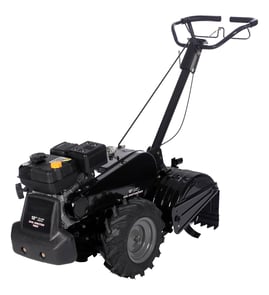



Where is the model number on a Craftsman rear tine tiller?
On the Craftsman rear-tine tiller model 917296030, the model number is printed on the product ID label; it’s typically located on the tine shield/guard area or on the frame near the front of the tiller. The exact label location is shown in the 917296030 owner's manual.
Look for a sticker or metal tag with the model number (and often the serial number) in these spots:
- On the tine shield (tine guard) near the tines
- On the main frame rail, usually on the left or right side
- Near the front of the tiller, behind or below the engine area
- Around the handle support area (uprights where the handles mount)
- On older labels, the print may be faint; use a flashlight and wipe off dirt/oil
If the label is hard to read, these steps help confirm you have the correct Craftsman model:
- Clean the label area with a rag and mild degreaser; avoid soaking decals
- Write down the full model number exactly as shown (for this unit it’s 917.296030 in the manual)
- Match the model number format on parts diagrams (often shown without the dot as 917296030)
- If you’re comparing parts, use the diagram callouts in the manual to confirm assemblies
The model number ties your tiller to the correct parts list and diagrams, such as the tine shield and tine assembly breakdowns in the manual.
| What you’re doing | Why the model number matters | Example part type |
|---|---|---|
| Ordering replacement parts | Prevents wrong fitment across similar Craftsman/Husqvarna-built tillers | Drive belt, clutch cable, tine hub |
| Using diagrams | Ensures the correct exploded view and key numbers | Tine shield, handles, gearcase |
| Looking up specs | Confirms features like tine width and engine class | 17-inch tine width class |
Craftsman rear-tine tillers often look similar across multiple model numbers; using 917296030 ensures you’re matching the correct tine shield, tine assembly, and drive components for your exact machine.
Last updated: February 2026
Are Craftsman rear tine tillers any good?
Yes. Craftsman rear-tine tillers like model 917296030 are a strong choice for breaking new ground and working heavy soil because the counter-rotating tines bite aggressively and the machine is built for real garden prep. Long-term satisfaction depends most on routine belt, cable, and tine maintenance using the specs in the 917296030 owner's manual.
A rear-tine, counter-rotating design is typically considered “good” when it can dig without constantly riding up, and when wear items are easy to service.
Common strengths we see with this style of Craftsman tiller:
- Strong digging action in compacted or rocky soil (counter-rotating tines pull into the ground)
- Better control than many front-tine tillers when you set depth correctly
- Serviceable wear parts (belt, cable, tines, pins) that restore performance
- Clear safety and operating guidance in the manual (guards in place, avoid overloading)
Many “not good” experiences trace back to setup, adjustment, or normal wear parts.
Check these first:
- Tiller surges forward or bucks in hard ground: reduce depth and speed; the manual warns tines can catch and propel the unit forward
- Poor drive or slipping under load: inspect the drive belt and tension; a worn belt is a top cause (see rear-tine tiller drive belt 591372401)
- Drive control feels loose or too tight: adjust cable tension; the manual describes setting about 5/8-inch cable stretch with the control engaged
- Tines don’t dig well anymore: worn or bent tines reduce depth and shredding; replace when the tine gap exceeds 3-1/2 inches
- Frequent breakage at the tines: shear pins are designed to break to protect the transmission; replace only with the correct type listed in the repair parts section
| Symptom | Most likely cause | Best next step |
|---|---|---|
| Won’t pull itself forward | Worn/slipping belt | Inspect/replace belt, verify tension |
| Hard to control in hard soil | Too deep, too fast | Shallow passes, slower speed |
| Shallow tilling | Worn/bent tines | Inspect tine wear and spacing |
| Stops when it hits roots/rocks | Shear pin breaks (normal protection) | Clear jam, replace shear pin |
Rear-tine tillers earn their reputation in tough soil, but they only feel “powerful” when the drive system is tight and the tines are sharp. Keeping up with belt condition, cable adjustment, and tine wear is what preserves the digging performance you bought it for.
Last updated: February 2026
What kind of oil do you use in a Craftsman tiller?
For the Craftsman rear-tine tiller model 917296030, we use high-quality detergent engine oil that meets API SF-SJ; SAE 30 is the standard choice for warm weather (above 40°F), and SAE 5W-30 or 10W-30 works for cooler temperatures. Oil capacity is 19 oz. (check the 917296030 owner's manual for the fill and level-check steps).
Use the viscosity that matches your outdoor temperature range:
- Above 40°F: SAE 30
- Cooler weather: SAE 5W-30 or 10W-30
- Quality spec: Detergent oil rated API SF-SJ
- Capacity: 19 oz.
- Tip: Multi-viscosity oils can increase oil consumption in warmer temps; check the level more often.
| Temperature range | Recommended oil | What to watch for |
|---|---|---|
| Above 40°F | SAE 30 | Best all-around for warm-weather tilling |
| 40°F and below | SAE 5W-30 or 10W-30 | Easier starting; check level more frequently |
We recommend doing this on a level surface and before each work session.
- Shut the engine off and let it cool briefly
- Remove the oil fill cap/dipstick
- Wipe dipstick clean, reinsert, then read the level
- Add oil slowly to avoid overfilling
- Recheck level and tighten the filler plug securely
Keeping fresh oil in the crankcase is one of the easiest ways to extend engine life.
- Change oil every 25 hours of operation
- Change oil at least once per year (even if you do not hit 25 hours)
- Check oil level before starting and after each 5 hours of continuous use
Correct oil viscosity and the right fill level protect the engine from overheating and accelerated wear, especially when the tiller is working hard in compacted soil.
Last updated: February 2026
How much does a Craftsman rear tine tiller weigh?
The Craftsman rear-tine tiller model 917296030 weighs 96 lb. Use that weight to plan safe loading and service work because the machine can shift quickly when you tip it back, remove a wheel, or work around the tines.
We use the published specification for model 917296030.
- Treat 96 lb as the machine weight for handling and transport planning
- Add extra allowance for fuel, oil, and any installed accessories
- Use the manual for safe lifting, blocking, and service positions: 917296030 owner's manual
A rear-tine tiller concentrates weight over the transmission and tines; stability matters as much as total weight.
- Use a ramp for truck loading; avoid dead-lifting into a bed
- Secure the frame and handlebar with tie-down straps during transport
- Block the transmission or frame before removing a wheel to prevent tipping
- Wear gloves when handling tines and tine hardware
- Keep the tiller upright when possible to reduce fluid spills
| Situation | What 96 lb means | Best practice |
|---|---|---|
| Loading into a vehicle | Too heavy for most one-person lifts | Ramp plus a helper or a winch |
| Moving across soft soil | Rolling resistance increases effort | Use the wheels, avoid dragging |
| Service work (wheels, belt guard, tines) | High tip-over risk when tilted | Solid blocks under the transmission |
If you are working on the tine assemblies, these model-matched fasteners and retainers are commonly handled:
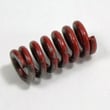
- Spring retainer 532003146 (retains pins and linkage hardware)
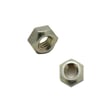
- Lawn & garden equipment crownlock nut 596322601 (crownlock nut used in tine assembly hardware)
Knowing the correct weight helps prevent back injuries, avoids tip-overs during maintenance, and helps you choose the right ramp, straps, and blocking before you start.
Last updated: February 2026