Owner’s manual
 View engine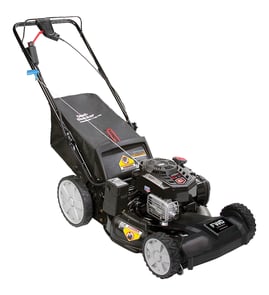


What kind of gas do you put in a Craftsman push mower?
For Craftsman model 917376673, use unleaded regular gasoline; the owner’s manual lists a 1.6-quart fuel capacity and specifies unleaded regular as the correct fuel type. For fuel handling and storage details, follow the 917376673 owner's manual.
What to use (and what to avoid)
- Use fresh, clean unleaded regular gasoline.
- Avoid stale fuel; old gas is a common no-start cause.
- Do not use fuel contaminated with water or dirt.
- Use a clean gas can; replace it if it starts to rust.
- Keep fuel away from ignition sources; let the engine cool before storage.
Quick fuel checklist for best starting
- Fill with fresh unleaded regular (not last season’s gas).
- If the mower has been sitting, drain/replace old fuel before troubleshooting.
- Store fuel in an approved container and keep the cap sealed.
- If you suspect bad fuel, check the air filter and spark plug next.
Fuel specs at a glance
| Item | Spec for Craftsman 917376673 | Why it matters |
|---|---|---|
| Fuel type | Unleaded regular | Helps prevent hard starting and poor running |
| Fuel capacity | 1.6 quarts | Prevents overfilling and spills |
| Storage guidance | Do not store gas season-to-season | Reduces stale-fuel no-start issues |
Why it matters
Using the correct fuel and keeping it fresh prevents common small-engine problems like hard starting, surging, and stalling. The manual’s troubleshooting list specifically calls out stale fuel and water in fuel as frequent causes of a mower that will not start.
Last updated: February 2026
What is the life expectancy of a gas-powered lawn mower?
Most gas-powered walk-behind lawn mowers last 8 to 10 years with normal residential use and routine maintenance. For Craftsman model 917376673, following the maintenance schedule in the 917376673 owner's manual helps the engine, drive system, and deck components reach that typical lifespan.
What affects mower lifespan the most
A mower’s service life is usually determined by engine care, blade/deck wear, and how it’s stored.
- Maintenance consistency: yearly spark plug and air filter service keeps the air-fuel mixture correct
- Blade condition: a sharp, balanced blade reduces vibration and stress on the crankshaft
- Deck cleanliness: grass buildup holds moisture and accelerates rust
- Drive system condition (self-propelled): belt, pulleys, and transmission wear over time
- Storage habits: fuel system prep before storage prevents hard-start issues next season
Maintenance milestones to plan for
The manual calls out key annual items that directly extend engine life.
| Interval | What to do | Why it matters |
|---|---|---|
| Before each use | Check for loose fasteners, obvious damage | Prevents small issues from becoming failures |
| Each season (at least yearly) | Replace spark plug; clean or replace air filter; inspect blade | Improves starting, power, and engine longevity |
| Before storage (30+ days) | Clean mower; lubricate; prep fuel system | Reduces corrosion and fuel-related no-start problems |
Parts that commonly wear out first (and are normal)
These are “expendable” items on most gas mowers; replacing them on time is normal upkeep.
- Blade and blade adapter (inspect for wear or damage)
- Drive belt on self-propelled models (example: belt 532157769)
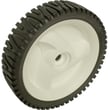
- Wheels and traction components (example: lawn mower wheel 532433121)
- Cables and controls (stretching, binding, or fraying over time)
Why it matters
Knowing the 8 to 10 year expectation helps you decide whether to tune up and replace wear parts (blade, belt, wheels) or move on if the engine or deck is heavily worn. Good maintenance and clean storage usually make the difference between an early failure and a full service life.
Last updated: February 2026
How to find Craftsman model number?
For a Craftsman walk-behind mower like model 917376673, the model number is printed on the mower’s model label and also shown on the cover of the 917376673 owner's manual. Match the number on the mower to the parts list to ensure you get the correct blade, belt, wheels, and drive parts.
Where to look on the mower
Check these common walk-behind mower label locations first:
- Rear of the deck near the discharge opening or rear door
- Top of the deck near the engine mounting area
- Between the rear wheels on the back of the deck
- On the handle bracket area (lower handle mounts)
- Near the height adjuster area on the deck
What you should write down (and why)
Record the full model number exactly as shown, plus any serial or product number on the same label.
| What to capture | Example | Why it matters |
|---|---|---|
| Model number | 917376673 | Identifies the correct parts diagrams and part numbers |
| Serial number | (varies) | Helps confirm production run and compatible revisions |
| Engine info | Briggs & Stratton 625 Series | Helps when ordering engine-specific tune-up parts |
Quick fit-check using parts you can recognize
Once you have the model number, compare a few obvious parts to confirm you are in the right parts list:
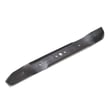
- A 22-inch deck blade is common on this model; see lawn mower 22-in deck mulching blade 532406713
- Self-propelled drive systems often use a V-belt; see belt 532157769
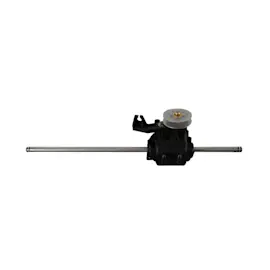
- If the mower will not self-propel, the drive system parts list includes items like lawn mower transmission assembly 532415226
Why it matters
Craftsman model numbers can look similar, but small differences change the blade adapter, drive cable, belt routing, and wheel hardware. Using the exact model number prevents ordering the wrong replacement parts and avoids installation issues.
Last updated: February 2026
Is it cheaper to repair or replace a lawnmower?
For a Craftsman walk-behind mower like model 917376673, it’s cheaper to repair when the fix is a normal wear item (blade, belt, cable, wheel) or basic tune-up work. Replacing makes more sense when a major drive or engine repair approaches about half the cost of a comparable new mower.
Quick decision guide (repair vs replace)
- Repair when the mower still starts and cuts well, but has a wear issue (blade, belt, wheel, cable).
- Repair when the problem is maintenance-related (dirty air filter, old spark plug, grass buildup under the deck).
- Replace when the engine has severe internal damage (low compression, heavy knocking, persistent smoking).
- Replace when the drive system needs multiple major components at once (transmission plus pulley plus related hardware).
- Replace when the deck is structurally failing (severe rust-through or cracking that affects safety and cut quality).
Common repairs that are usually cost-effective
These are typical “high value” repairs on a gas walk-behind mower because parts are straightforward and labor is limited:
| Symptom | Likely fix | Example part for 917376673 |
|---|---|---|
| Poor cut, ragged grass tips | Replace or sharpen blade | Lawn mower 22-in deck mulching blade 532406713 |
| Self-propel won’t pull consistently | Replace worn drive belt | Belt 532157769 |
| Wheels wobble or don’t roll smoothly | Replace wheel or related hardware | Lawn mower wheel 532433121 |
| Drive feels weak or slips under load | Inspect/replace transmission components | Lawn mower transmission assembly 532415226 |
Why it matters (cost, reliability, and warranty)
Your 917376673 owner documentation calls out “expendable” wear items such as blades, blade adapters, belts, air cleaners, and spark plugs as normal maintenance items. Keeping up with these basics usually restores performance at a much lower cost than replacing the whole mower. For maintenance intervals and adjustment procedures, follow the 917376673 owner’s manual.
Before you decide, do these 5 checks
- Scrape grass buildup from under the deck (built-up grass hurts cut quality and airflow).
- Replace the spark plug yearly or every 100 hours (whichever comes first).
- Clean or replace the air filter element; don’t oil the cartridge.
- Check the blade for wear and balance; replace if bent, cracked, or badly worn.
- If it’s self-propelled, inspect the belt and drive components for glazing, stretching, or debris.
Last updated: February 2026