Owner’s manual
 Error Codes


How many cubic feet is Kenmore freezer Model 25328262801?
The cubic-foot capacity for Kenmore upright freezer model 25328262801 is listed in the product specifications for that exact model. The fastest way to get the correct number is to check the specifications section of the 25328262801 owner's manual or the model/serial data plate inside the cabinet.
We use these model-specific spots first because they identify the exact configuration you own:
- The model/serial tag inside the freezer (commonly on the upper left interior wall on upright models)
- The specifications section of the 25328262801 owner's manual
- Any rating label that lists “capacity” or “cu. ft.”
- The original sales sticker or product literature (if you still have it)
If the label is missing or unreadable, you can estimate interior volume using measurements.
- Measure interior width, depth, and height in inches (usable space)
- Multiply to get cubic inches
- Divide by 1,728 to convert to cubic feet
- Subtract space taken by thick insulation, shelves, and the evaporator cover for a more realistic “usable” estimate
| What you’re calculating | Formula | Notes |
|---|---|---|
| Interior cubic inches | W x D x H | Use inside measurements only |
| Cubic feet estimate | (W x D x H) / 1,728 | Gives a close approximation |
Knowing the correct cubic feet helps you compare storage to other upright freezers, plan shelf and bin organization for airflow, and match expectations for temperature recovery after door openings.
Last updated: January 2026
Is there a reset button on a Kenmore upright freezer?
On the Kenmore upright freezer model 25328262801, there typically is not a single dedicated “reset” button; most resets are done by cycling power or using the temperature control panel (if your unit has electronic controls). For model-specific control details, use the 25328262801 owner's manual.
- Power reset: Unplug the freezer (or switch off the breaker) for 5 minutes, then restore power.
- Control-panel reset (electronic models): Use the UP button for warmer and DOWN button for colder; allow several hours for temperature to stabilize after changes.
- Alarm reset (deluxe electronic models): If the buzzer sounds, press ALARM OFF to silence it; the indicator can keep blinking until safe temperature returns.
- Temperature control knob (mechanical models): Turn the knob slightly, then wait several hours for the temperature to stabilize.
- Confirm the freezer is plugged in and the outlet has power.
- Make sure the door closes and seals fully; a poor seal can cause warm temps and frost.
- Verify the control setting was not bumped warmer.
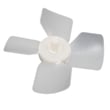
- Listen for the evaporator fan; if it is not running, airflow and cooling suffer.
- Check for heavy frost buildup that suggests a defrost system problem.
| Symptom | What it often points to | What we usually do next |
|---|---|---|
| Warm freezer, heavy frost on back wall | Defrost system not clearing frost | Test defrost components; see freezer defrost heater 5304496687 |
| Alarm beeping, light blinking | Temperature not yet safe or door left open | Press ALARM OFF; verify door seal and airflow |
| Runs a lot, temps drift | Door not sealing or poor airflow | Level unit, check gasket, avoid overpacking |
A “reset” can clear a temporary control glitch, but repeated alarms or warming usually means an airflow, door-seal, or defrost issue that needs a targeted fix to protect food and prevent compressor overwork.
Last updated: January 2026
What are the most common issues with 25328262801?
The most common issues we see with the Kenmore 25328262801 upright freezer are warm temperatures, heavy frost buildup, unusual noises, and a door that will not seal tightly. These problems usually trace to the defrost system, airflow components, or the temperature control.
- Freezer not cold enough or thawing: temperature control issues, poor airflow, or a compressor start problem
- Frost or ice building up on the back wall: defrost heater, defrost thermostat, or defrost timer problem
- Clicking, buzzing, or humming: compressor start components, fan motor, or vibration from panels
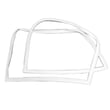
- Door hard to close or frost around the door: worn or warped door gasket, hinge alignment
- Water or ice at the bottom: drain restriction, drain hose routing, or drain tube insulation issues
- Set the control to a colder setting and allow 24 hours for temperatures to stabilize.
- Confirm the door closes squarely and seals all the way around.
- Listen for the evaporator fan and check for blocked vents or overpacked shelves.
- Look for a solid frost sheet on the rear interior panel (classic defrost failure clue).
- If the unit is clicking and not starting, unplug it for 5 minutes and retry.
| Symptom | Likely system | Example part for this model |
|---|---|---|
| Frost buildup, warm temps | Defrost system | Freezer defrost heater 5304496687, defrost timer 5304518034 |
| Door frost, poor seal | Door sealing | Freezer door gasket 5304507201 |
| No power or intermittent power | Electrical supply | Upright freezer power cord 297366805 |
| Poor airflow | Air management | Freezer air baffle 297192903 |
A freezer that runs warm or frosts up often runs longer than normal, which can spoil food and increase energy use. Catching a defrost or door-seal problem early also helps prevent strain on the compressor.
For control settings, defrosting guidance, and diagnostic steps tailored to this Kenmore model, use the owner's manual.
Last updated: March 2026