

Does KitchenAid make a washer?
Yes. KitchenAid has sold washers in the past, and the KitchenAid KAWE578BAL1 is a KitchenAid-branded washer model. If you are maintaining this unit today, we can help you identify and replace common wear parts used in the wash and spin systems.
What this means for your KAWE578BAL1
KitchenAid washers like KAWE578BAL1 share many serviceable components with other direct-drive style top-load designs, so parts support is typically focused on mechanical items such as couplings, clutches, and agitator components.
Common parts customers replace include:
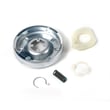
- Coupling 285753A when the motor runs but the washer will not agitate or spin
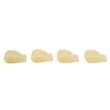
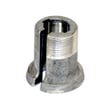
- Agitator dog 80040 when the agitator moves poorly or “ratchets”
- Clutch 285785 when the basket struggles to reach full spin speed
- Switch 285671 when the washer will not run because the lid safety circuit is not closing
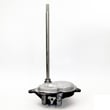
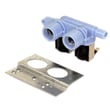
- Mixing valve 285805 when fill temperature is incorrect or water flow is inconsistent
Quick checks before ordering parts
These checks help confirm whether you are dealing with a part failure versus a load or setup issue:
- Verify the lid closes fully and the lid strike area is not broken
- Reduce load size and redistribute items if the washer bangs or stops during spin
- Confirm both hot and cold supply valves are fully open
- Check inlet screens for sediment if fill is slow
- Listen for motor sound with no agitation or spin (often points to a drive issue)
Symptom-to-part guide (fast reference)
| Symptom | Most likely area | Example part for KAWE578BAL1 |
|---|---|---|
| Won’t agitate, may still drain | Drive connection | Coupling 285753A |
| Agitator slips or won’t “grab” | Agitator mechanism | Agitator dog 80040 |
| Spins weakly or smells hot | Spin engagement | Clutch 285785 |
| Won’t start or stops when lid opens | Lid safety circuit | Switch 285671 |
Why it matters
Knowing KitchenAid made this washer helps you shop by the exact model number KAWE578BAL1, which prevents mismatched parts and reduces repeat repairs, especially for drive and agitation components.
Last updated: February 2026
Is 4.8 cubic feet a large capacity washer?
Yes. A 4.8 cubic feet washer is considered a large to extra-large capacity size, which is great for families and bulky items. For a KitchenAid washer like model KAWE578BAL1, that capacity typically means fewer loads and better room for comforters and towels.
What “large capacity” means in real use
Most washers fall into these rough capacity groupings:
| Capacity (cu. ft.) | Common label | Best for |
|---|---|---|
| 3.0 to 3.9 | Standard | Singles, couples, smaller loads |
| 4.0 to 4.5 | Large | Families, mixed weekly laundry |
| 4.6 to 5.5+ | Extra-large | Bulky items, fewer loads |
At 4.8 cu. ft., you are solidly in the extra-large range.
How to get the best results with a 4.8 cu. ft. tub
Even with a big tub, performance depends on loading and cycle choices:
- Load loosely; don’t pack items down.
- Keep bulky items balanced (for example, one comforter plus a few towels).
- Use the right water level and cycle for the fabric type.
- Measure detergent carefully; too much can cause residue and odors.
- If the washer shakes during spin, redistribute the load and re-level the cabinet.
Why it matters
A larger capacity helps you wash more per cycle, but overloading can reduce cleaning, increase vibration, and strain drive components. If you notice poor agitation or weak turnover in a top-load design, worn drive parts such as the agitator dog 80040 can also affect wash action.
Related DIY help
For better day-to-day performance and fewer re-washes, we recommend how to use your washing machine efficiently.
Last updated: February 2026
Which KitchenAid do I have?
For your KitchenAid washer model KAWE578BAL1, the quickest way to confirm exactly what you have is to read the model/serial tag on the washer cabinet (typically under the lid or along the rim). That tag is the official identifier you will use to match parts and diagrams.
Where to find the model number on a KAWE578BAL1 washer
Most top-load KitchenAid washers place the model/serial label in one of these spots:
- Under the lid on the top rim of the cabinet
- Around the lid opening near the tub
- On the rear of the control console or back panel area
- On the back of the washer cabinet
If the label is worn, wipe it gently with a damp cloth and read it under bright light.
What to write down (so parts match the first time)
Record these details from the tag:
- Model number (example: KAWE578BAL1)
- Serial number (helps date the unit and confirm production run)
- Brand (KitchenAid)
- Any type/series wording printed near the tag
Quick check table
| What you’re checking | What it tells us | Why you need it |
|---|---|---|
| Model number (KAWE578BAL1) | Exact washer design | Ensures correct parts fit |
| Serial number | Production run details | Helps avoid look-alike part mix-ups |
| Component style (agitator vs. not) | Drive and wash system type | Guides troubleshooting and part selection |
Why it matters
KitchenAid washers can look similar across model families, but internal drive parts (like the coupling, clutch, or gear case) can differ. Using the exact model number prevents ordering the wrong replacement part.
If you’re trying to identify the washer by a symptom
If your goal is really “which style of KitchenAid washer is this?” based on how it behaves, these common parts often point to the design:
- Agitator not moving well: agitator dog 80040
- Washer won’t agitate or spin: coupling 285753A
- Slipping or weak spin: clutch 285785
- Loud grinding or oil leak symptoms: gear 3360629
For broader troubleshooting steps, use washer common questions.
Last updated: February 2026