Installation guide
 Owner’s manual


Is Amana a low-end brand?
Amana is generally positioned as a value-priced (budget-friendly) appliance brand, and that fits well with the straightforward, no-frills design of the Amana washer model NTW4516FW1. In practical terms, you’re typically paying for core washing performance and simpler features rather than premium finishes or advanced smart options.
What “value brand” usually means for NTW4516FW1 owners
- Fewer extra features compared with premium lines (for example, fewer specialty cycles or smart connectivity)
- Simple controls and cycle selections designed for everyday loads
- Lower upfront cost, with repairs often focused on common wear parts
- HE (High Efficiency) detergent use is required for best results and to reduce oversudsing
For operating basics and cycle behavior (like lid locking and auto-sensing fills), we recommend checking the NTW4516FW1 use and care manual.
How to think about “low-end” vs “right fit”
“Low-end” can sound negative, but for many households it simply means “good essentials at a lower price.” Here’s a quick way to compare:
| What you care about most | Amana value approach | Premium approach |
|---|---|---|
| Upfront price | Typically lower | Typically higher |
| Features | Core cycles and options | More specialty cycles and add-ons |
| Complexity | Simpler controls | More electronics and features |
| Repair focus | Common mechanical/electrical parts | More feature-related components |
Why it matters
Knowing Amana’s value positioning helps set expectations: you can get reliable day-to-day washing performance, but you may not get the same feature set, noise reduction, or cycle customization found in higher-tier brands.
Last updated: January 2026
How to hard reset Amana washing machine?
For Amana washer model NTW4516FW1, the manufacturer documentation does not describe a specific “hard reset” procedure with a required timer. The most reliable reset is a basic power cycle: disconnect power briefly, then restore power and restart a cycle; see the NTW4516FW1 use and care manual.
Reset options that are safe for NTW4516FW1
- Press START/STOP/PAUSE/UNLOCK LID to pause or cancel the cycle (press and hold about 3 seconds to cancel).
- Unplug the washer (or turn off the dedicated breaker if it’s hard-wired).
- Wait about 1 minute.
- Restore power.
- Select a cycle and press START/STOP/PAUSE/UNLOCK LID to test.
If the washer still won’t respond
These checks are model-appropriate and align with common causes listed in troubleshooting:
- Confirm the outlet has power; reset a tripped breaker or replace a blown fuse.
- Make sure the lid is fully closed; the washer will not run with the lid open.
- Wait for the lid to unlock if the washer was spinning; it can take several minutes.
- Avoid tightly packing the load; redistribute items evenly.
What a power cycle helps (and what it usually won’t)
| Symptom | Power cycle may help | More likely next step |
|---|---|---|
| Control seems “stuck” after a power interruption | Yes | Restart cycle and observe lights/sounds |
| Lid Locked light issues or won’t start with lid closed | Sometimes | Inspect lid lock and strike alignment |
| Won’t drain or leaves clothes wet | Rarely | Check drain hose setup and pump path |
Why it matters
A power cycle can clear a temporary control glitch, but repeated failures usually point to an operating condition (lid not closed, unbalanced load) or a component issue.
Parts to consider if symptoms match
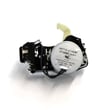
If the washer won’t start and the lid-lock behavior seems abnormal, the compatible replacement is the washer lid lock W11307244.
Last updated: January 2026
How long do Amana washers last?
We can’t confirm an exact expected lifespan for the Amana NTW4516FW1 from model-specific documents because the use & care information focuses on operation, maintenance, and warranty terms, not a “years of life” rating. In typical household use, many washers reach roughly 8 to 12 years, and good care can help extend that.
What we can confirm for NTW4516FW1
The model’s documentation emphasizes maintenance and proper use as the best way to reduce wear and avoid common problems.
- Use only HE (High Efficiency) detergent and measure carefully.
- The lid locks for higher spin speeds; wait for it to unlock before opening.
- Run the Clean Washer cycle regularly (the guide recommends about every 30 wash cycles).
- Leave the lid open between uses to help the tub dry.
- Keep the washer level to reduce vibration and off-balance stress.
For the exact maintenance steps and cycle guidance, follow the NTW4516FW1 use and care manual.
What most affects washer lifespan (any brand)
These factors usually determine whether a washer reaches the high end of typical service life.
- Overloading/tight packing: strains the drive system and suspension.
- Unbalanced loads: increases vibration and wear during spin.
- Too much detergent or non-HE detergent: can cause oversudsing, residue, and draining issues.
- Skipping cleaning: buildup can lead to odors and performance problems.
- Coins and small items in pockets: can get into the drain path and damage components.
Quick reference: habits that help
| Habit | Why it helps | Suggested timing |
|---|---|---|
| Use correct HE detergent amount | Reduces oversudsing and residue | Every load |
| Clean Washer cycle | Helps control odor-causing buildup | About every 30 cycles |
| Keep loads balanced | Reduces vibration and wear | Every load |
| Verify washer is level | Helps prevent “walking” and suspension stress | At install, then as needed |
Why it matters
Most “short lifespan” complaints come from preventable issues (oversudsing, chronic off-balance spinning, or poor draining). Reducing those stresses helps protect high-wear parts like the lid lock, drive system, and drain pump.
If you’re seeing slow draining or a constant humming during drain, the drain system is a common place to check; a compatible replacement is the washer drain pump W10919003.
Last updated: January 2026